





It was spring 2025 and the hunt was on.
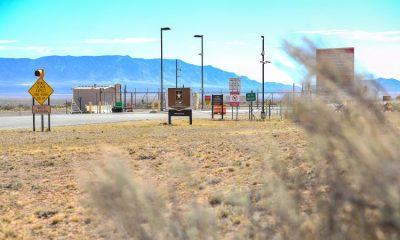
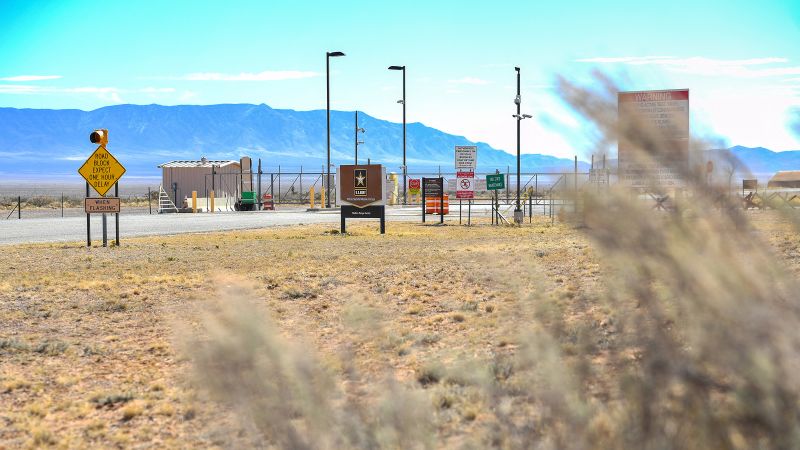
American authorities near a sensitive Army missile testing facility in New Mexico had spotted a quadcopter-style drone flying in such a way that suggested it was conducting reconnaissance in restricted airspace around the range.
It wasn’t the first time. Just months earlier, in fall 2024, a similar drone was seen flying a similar pattern over the same base, leading agents with US Customs and Border Protection on a roughly 35-mile chase, multiple current and former US officials said.
Using helicopters and drones and taking “absolutely beautiful video,” a former US official said, the border agents tailed the drone until it crossed into Mexican airspace, where they had to turn back. They never learned who was operating the drone, or why.
But this time, officials set a trap.
For roughly five days, amid dust storms and bad weather, the drone flew in and out over White Sands Missile Range. A task force made up of officials from a hodgepodge of agencies — the Army, the FBI, the Department of Homeland Security, even the small office in the Pentagon that tracks UFOs — studied the drone’s patterns of movement, collected intelligence on it, and tried to understand who was operating it and why.
Finally, using electronic warfare tools, they forced the drone to land in a parking lot on the base. Their first step was to make sure the drone wasn’t armed with explosives, according to the former official familiar with the incident.
Meanwhile, officials were watching a group of Chinese nationals in a rented Mercedes RV parked nearby. According to the former US official and another source familiar with the matter, the people had flown into New York, rented the RV, and driven across the country to Las Vegas to pick up a third person before turning south and beelining for White Sands.
There was another person nearby, too: a Chinese woman who had arrived in Texas on a cruise ship, rented a car and driven to White Sands National Park nearby, where she would remain behind the gates after the park’s closing.
Later, both of the sources said, the FBI would tell military and CBP officials that the people were believed to have ties to Chinese intelligence.
Officials watched the two vehicles, trying to understand how they related to each other and to the drone itself.
Eventually, both groups were detained: The group in the RV was picked up by military officials near the base and turned over to federal authorities, according to the source familiar with the incident.
The woman in the park was ticketed and released by the Department of the Interior, according to the former US official.
CNN was unable to learn what happened to any of them afterward. But officials were sure the two groups were connected: According to one of the sources, identifying information related to the woman was found in the RV.
The Army and the FBI did not respond to a request for comment before publication. CBP declined to comment on the specific incident, citing routine policy against commenting on reported incursions. A spokesperson with the Chinese Embassy denied knowledge of the episode.
“The false narrative regarding China engaging in espionage activities is entirely devoid of factual basis or evidence, consisting of nothing more than baseless speculation and sensationalist hype,” the spokesperson said.
The episode is one of countless incursions by drones into US airspace over military facilities and other restricted government areas, often flown by hobbyists, cartels ferrying drugs to a third destination, or tourists — but sometimes believed to be flown by foreign agents conducting spy operations.
The proliferation of cheap, easy-to-operate drone technology has made it relatively simple for ordinary people to conduct what at least appears to be drone surveillance — and incredibly difficult for the US government to track and prevent it. That new, chaotic reality has left the government scrambling to catch up.

The nature of any ties to Chinese or other intelligence services is often frustratingly opaque to counterintelligence officials across the government. Investigations involve a matter of gut instinct and guesswork that make it hard to secure more than a petty prosecution for operating a drone in a restricted airspace, current and former officials say.
China is believed to pressure or incentivize ordinary civilians into doing what one official termed “nuisance surveillance” over a variety of military targets, some highly sensitive, some less so. In other instances, those sources say, Chinese nationals inside the US appear to take it upon themselves to spy with no direct order from a Chinese intelligence official.
US officials are worried about the potential for something worse: a lone-wolf-style terrorist attack on critical US infrastructure or civilian targets. Although two US officials with knowledge of the latest intelligence said there’s no indication of an active plot by Iranian proxy groups or other terror groups like ISIS, the obvious opportunity is there.
The recent theft of 15 pesticide drones in New Jersey deeply alarmed American officials, one of the officials said, because of their potential as a delivery system for a chemical weapons attack. Authorities eventually recovered the drones.
Military officials are also publicly warning that a swarm of drones could overwhelm air defenses in the US homeland. One military official described a Ukrainian drone operation in June 2025, dubbed Operation Spiderweb, as a sobering depiction of what’s possible. Ukraine used 117 drones to destroy at least a dozen Russian warplanes parked at air bases thousands of miles from the front lines.
Those fears have sparked an energetic push across the government to develop and field sophisticated counter-drone equipment to a broad group of authorities — including state and local police and military bases.
The White Sands operation was deemed a success by US authorities, according to two people involved or briefed on the operation, showcasing a successful interagency process.
But the problem is much bigger than White Sands. And just who in the US government is supposed to be in charge, nobody is quite sure.
“The problem is it’s everyone’s problem — so it’s no one’s problem,” said one US official.
There is no single body in the US responsible for detecting, deterring or defeating these incursions in either government or civilian airspace — what the national security community now short-hands as “C-UAS,” or counter-unmanned aircraft systems.
In late 2023 under President Joe Biden, when a mysterious swarm of drones flew over an Air Force base in Virginia for 17 days, some officials who worked on the situation described it as a leaderless free-for-all.
The situation was so chaotic that officials in the Joint Chiefs of Staff — a part of the military that is supposed to advise, not participate in operations — stepped in to create a task force to try to bring order to the situation, according to one of the former US officials.
“It was a circus, it was embarrassing,” this person said. “That’s not in their mandate. But they saw a vacuum.”
After that incident, then-Secretary of Defense Lloyd Austin designated Northern Command, the military command responsible for homeland defense, as the coordinating authority for small drone incursions at bases.
Since then, Northern Command has established a protocol: Whenever an errant drone is spotted over a military base, it convenes a teleconference between the base, local law enforcement, FBI, DHS, the military services and anybody else who might have a counter-drone system nearby. If the base isn’t capable of mounting its own defenses, they sort out who’s going to transport it and pay for its use.
That system has worked well, the military official said.
“I’ve seen it move from, ‘Who owns [the problem]?’ to, ‘We all own it, and we all have a role to play in it,’” this person said.
Sometimes, the Pentagon office tasked with identifying and analyzing “Unidentified Anomalous Phenomena” — the government’s term for UFOs — is also called because it has specialized equipment designed to track flying objects of an unknown origin. As it did in White Sands, the UAP office can provide a common operating picture for officials tracking drones.
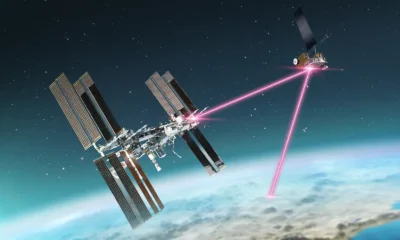
The Pentagon in 2025 also established a task force to coordinate counter-drone technology and techniques across the military. It is exploring directed energy weapons such as lasers and high-powered microwaves that officials hope can cheaply disable drones. DHS in January established a similar office.
There have still been prominent failures.
In two back-to-back misadventures in February, the Federal Aviation Administration closed the airspace over El Paso, Texas, after the Defense Department failed to coordinate with the aviation agency before it allowed CBP to test a counter-drone laser system, sources told CNN at the time. The move effectively shut down the city’s airport for eight hours.
About two weeks later, the US military accidentally shot down an unmanned aircraft operated by CBP with a laser about 50 miles south of El Paso.

When it comes to federal facilities, large civilian gatherings and critical infrastructure — installations not under the military’s authority to protect — federal officials have responded by trying to expand the number of entities with access to counter-drone training and equipment and the authority to use it.
The CIA received new authorities from Congress in 2026 for its police to disable drones in the air in the US and force them to the ground when they threaten agency facilities. Congress also expanded state and local governments’ ability to do the same, amid a recognition by lawmakers that no single federal agency could protect against the sheer number of illegal drone flights across the country.
DHS and the FBI have provided extensive support for large, public gatherings — classic “soft targets” — in recent months. Earlier this year, federal officials charged multiple people who they claimed discussed plots to use drones and a gunman to attack a UFC event at the White House. The FBI established no-drone zones around World Cup sites this year, and said that by the week before the final match, it had detected nearly 1,600 illegal drones and confiscated more than 700.
But officials say there are still some gaping security vulnerabilities. One example, according to one of the US officials: No one is sure who is responsible for protecting the data centers that are privately owned but house an enormous amount of sensitive government data for agencies like the CIA.
Right now, it’s the purview of local law enforcement — who may not have the capabilities they need to defend against the threat.
When it comes to apparent espionage efforts by China to use drones to spy on military sites in the United States, officials struggle to describe the scope of the problem. This is largely because confidently attributing any one incursion to a Chinese intelligence operation is almost impossible. Officials say that China uses civilian cut-outs to do its dirty work — students and Chinese-origin Americans with family in mainland China whom they can pressure — not trained intelligence officers.
“It’s not like MSS officers are just running wild through the US,” one of the US officials said, referring to China’s espionage service.
In fall 2024, federal officials caught a Chinese national piloting a drone over Vandenberg Space Force Base during a military satellite launch, arresting him at the San Francisco airport as he prepared to board a flight to China. Investigators found aerial photos on his devices of locations in Arkansas, Texas and China. But ultimately, prosecutors were able to only secure a guilty plea from 34-year-old Yinpiao Zhou for flying a small drone into restricted airspace.
A second charge, for failure to register an aircraft, was dismissed as part of the plea agreement. Zhou was sentenced to four months in federal custody.
During the 2023 episode over the Virginia Air Force base, Coast Guard personnel boarded a Chinese-flagged frigate off the East Coast under the guise of a routine safety check, according to multiple sources. But they found nothing definitive to link the ship to the drones.

Current and former US officials say the number of instances of true Chinese espionage flights is likely relatively low.
China’s intelligence-gathering apparatus is “decentralized,” one former counterintelligence official said. Communist party authorities make public their priorities, and “intelligence entrepreneurs” sometimes take it upon themselves to try to collect information that would be valuable, this person said.
The FBI is often tracking Chinese nationals who do strange things: “Driving for 24 straight hours, sleeping in their car, and then go home,” for example, that person said. “That kind of stuff happens a lot, it’s weird, sometimes it’s unexplained.”
Within the government, US officials often seem to speak definitively about attribution, a kind of wink-wink-nudge-nudge suggestion that a given incursion was China.
But because it’s so hard to definitively link any one strange behavior or drone flight to a specific directive from the Chinese intelligence services, some officials think the threat is overblown.
“A lot of these people are guilty of just being Chinese,” the former counterintelligence official said, adding that most of the operators the FBI encounters are hobbyists.
As for a broader campaign of coordinated Chinese surveillance drones in the US?
“I look at this as a conspiracy theory in the making,” the former official said.
Were the people at White Sands more than just low-level cut-outs or “intelligence entrepreneurs”? Officials at DHS and the Defense Department came away with the impression that the FBI thought so. How firm that attribution really was, CNN was unable to determine.
The operation at White Sands, the other former US official said, was “a success story.”
“But we’re far from being done and we’re still very, very vulnerable.”