
Trending
Céline Dion Opens Up About Stiff-Person Syndrome and Performing Again
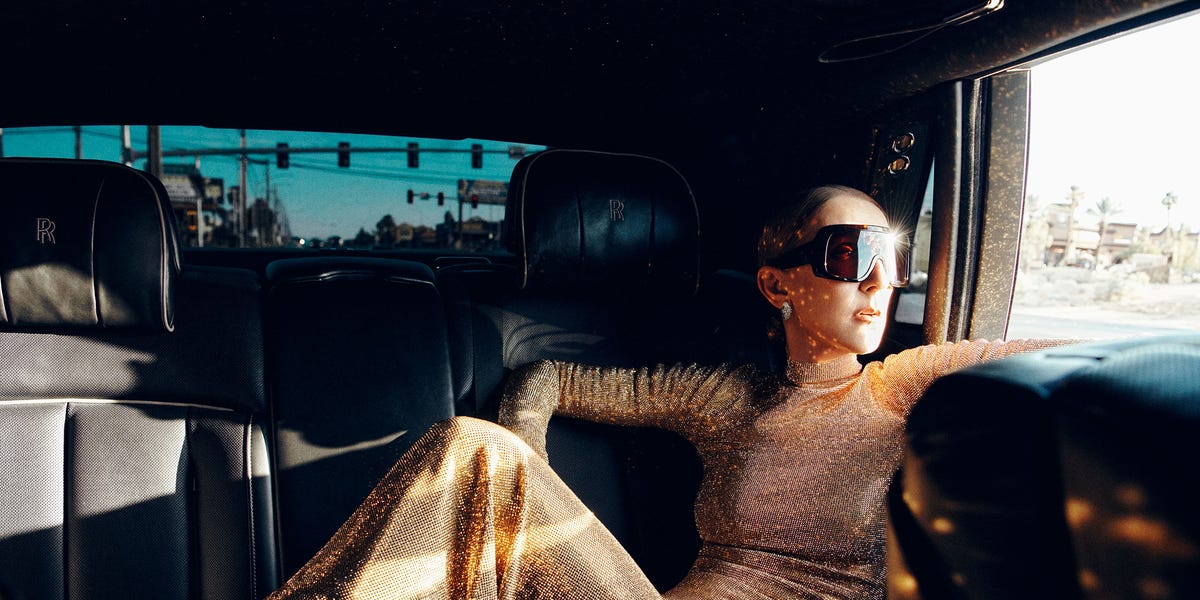

Somewhere in the bowels of Palms Casino Resort, just off the Las Vegas Strip, is a recording studio that has seen countless victories. Michael Jackson recorded tracks for the reissue of his seminal Thriller album here; Lady Gaga recorded Harlequin, the first compelling concept album tied to a Hollywood film in years. One evening in June, though, something even more extraordinary is happening: Céline Dion is doing Pilates. She stands with her leg up on a ballet barre, wearing a nude leotard with a lace-trimmed high neck. The singer is lithe and poised, her hair in a perfect bun, mascara coating her lashes. With ease, she slides her leg along the barre, stretching into a wide split.
This victory is hard-won: In 2022, Dion was diagnosed with stiff-person syndrome, an extremely rare autoimmune neurological disorder that can cause muscle stiffness tantamount to paralysis. At times, Dion was in such debilitating pain that she could barely walk. Some days, she’d have to take a high dose of Valium simply to function. “It is a progressive condition. I don’t like to say ‘disease.’ Disease makes you go like this,” she says, scrunching her nose: “ ‘Kevin, you’re such a disease.’ ” Though she has the bearing of royalty, Dion has the personality of a Muppet, never leaving much time between cracking a joke or Tetris-ing her body into another position. (Because SPS can freeze her muscles into place, she likes to keep moving.)

In some ways, stiff-person syndrome was a cruel twist of fate. That Dion, the youngest of 14 children from a poor family (one bath a week!) in a small-town suburb of Montreal, would become one of the best-selling singers of all time, an icon to the gays/all of Canada (but Quebec especially)/lovers of heartbreak/West Indians/movie-soundtrack aficionados, inspiring a fervor strong enough to make gods jealous, felt like a one-in-a-million chance, a miracle. That stiff-person syndrome is believed to affect only one or two people per million proves that luck goes both ways.
The room is tricked out with weights, a treadmill, and a reformer machine in addition to the ballet barre. I am encouraged to take a seat next to the piano. Her trainer, Naomi, tells her she’s getting more flexible, which makes Dion slightly panic: “Too flexible?” (Thankfully, no.) Dion has performed only once in the past six years—at the Paris Olympics—and has been itching to return to the stage.

It’s not just that performing has been her life since she was 12. Having to disappoint her fans—canceling shows at the last minute with no firm explanation before suspending an entire tour in 2023—made her feel insane, unreliable, and rudderless. What’s worse is that she felt like she’d lied to her fans. She had experienced symptoms for 17 years before receiving a formal diagnosis in 2022; before then, she’d cancel a show citing a sinus infection or cough when, in reality, the kinds of health challenges she was confronting were far more profound. In the 2024 documentary I Am: Céline
Dion, viewers saw what she had been living with: the pain punching holes in her voice; the handfuls of benzos she needed to take to get through the day; an SPS episode that left her stricken and crying, unable to move or communicate.
Dion talks about performing as if it is her earthly duty, a covenant between herself and her divine talent. That she has regained control of her body and its ability—and was able to announce, as she did earlier this year, a five-week residency in Paris, beginning in mid-September—is tantamount to a miracle.


After Pilates wraps up, Dion sits with me, covered in a thin monogrammed sweater and dusty-rose track pants. A humidifier near her is set to precisely 23 degrees Celsius. John, her co-manager, shows her a photo of her sons at the Stanley Cup Finals. (Does she like hockey? “No, I love my kids. That’s different.”)
Now that Dion can finally perform again, it is as if her life, a lost item, has been returned to her. She announced the news in an Instagram post in March, calling it a 58th-birthday present to herself: “This year, I’m getting the best birthday gift of my life. I’m getting the chance to see you, to perform for you.” She said she was feeling strong, excited, and a little nervous but ready to come back. Tickets sold so quickly that she has already started selling dates for a three-week residency in May 2027. “It’s
been so long, I would like to offer them something to show how I’ve missed them,” Dion says.

Annie Horth, her head of wardrobe and creative adviser, promises something “grandiose,” a show that will use broad architectural strokes to reveal the diva’s many dimensions. “She goes from intimate and romantic to a vocal powerhouse, so we are creating something where she navigates that,” Horth says.
Dion’s as-yet-undiagnosed symptoms began to flare up in 2020, coinciding with the onset of the pandemic. She continued isolating for three more years, in part because she didn’t want fans to see her and assume that she was having a full, happy life but still canceling on them. During this time, she fell in love with nature. “I love trees so much, and I had this vision of myself trying to disappear through the leaves,” she says. But it was fall, and the leaves fell, so everyone could see her, their baskets in hand. She couldn’t produce the apples they’d always come to her for. “I was trying to tell them, I’m sorry, I don’t have any apples to give you anymore.” Then she heard a voice: “But we did not come for the apples; we came for the tree.”


To Dion, this is a true revelation. But this is who she’s always been, earnest and strange, in a way that allows people to access their emotions. She is so deeply herself that it’s contagious.
Dion has been maligned for making corny “no-brow” music since she was an adolescent. From the late ’90s into the aughts, Dion’s name became shorthand for schlock and too-muchness. But there’s something about her—besides the voice—that perseveres, keeps her part of the cultural conversation. What some see as corny, others see as earnestness so powerful that it can withstand the shifting waves of cool. Being born a poor, French-speaking Quebecois made her an outsider in her own country. And yet she’s managed to unite people through her love for love. For years, Dion’s music has been a place for catharsis, for releasing emotion without caring about how it makes you look.
As a child in Quebec, Dion dreamed of being a gymnast after seeing Nadia Comaneci earn perfect scores at the 1976 Olympics. “She was the idol of every girl my age,” she exclaims, eyes wide, still as awed as the day it happened. “They didn’t even have space on their freaking board because she had a perfect 10 and they didn’t know how to write one!” Other talents presented themselves, and then she became too tall, so she woke herself up from that dream. But she made three goals for herself, the first of which she jumps out of her chair to illustrate: “I wanted to sit straight, and I could not. I basically sat like this.” She hunches her back briefly, then ambles back into the chair, settling with her legs crossed. The others were to have the ability to touch her toes and to do splits. Now she can do all three.
Dion’s entire body is pliable, especially her face, which is an instrument she uses nearly as deftly as her voice. Depending on the emotion, her upper lip will recede back to her nose or jut out like she’s trying to touch someone with it. Her eyebrows are always on the move. To say that she is prone to breaking out into song is to say something like “Las Vegas can be warm”—a dramatic minimization. Dion sings as punctuation, intensifier, transition, evidence of joy; over two hours, she sings everything from “That’s Not My Name,” the electro-pop handclapper by the Ting Tings, to “Here Comes the Bride” because someone comes into the room carrying white flowers, to Cyndi Lauper’s “True Colors” because honesty is a virtue, to “Ce n’était qu’un rêve,” her first single, which her mother wrote for her. It’s why, in addition to being known as one of the finest singers of her generation, she’s also made her mark as a meme queen, her off-the-cuff moments endlessly clipped around the internet. While in the middle of telling me about her love for climbing trees—“I’m a monkey”—she scampers four feet up the scaffolding on the wall, extending her arm out to me, like God did to Adam.

It was uncomfortable to put her interior life on display in the documentary, but then again, the reason she’s had this unbelievable life in the first place is her fans. They deserved answers; in many ways, the only reason she got answers—a diagnosis after almost two decades of symptoms—was that she had the status afforded to her by her fans. “They paid for tickets,” she says. “They bought my records. They gave me that luxury. So the least I can do is tell them that I’m alive.”
After her diagnosis, Dion committed to intense rehabilitation: new meds, physical therapy, vocal therapy, immunotherapy. There are no FDA-approved treatments for the condition, so in 2024 her foundation donated $2 million for research into autoimmune neurological disorders. In preparation for the Paris shows, Dion is doing 90-minute Pilates sessions three times a week; on two other days, she takes ballet classes with a local company. She describes this period as falling and getting back up repeatedly. She is proud of herself for achieving something that her body wasn’t “born to do.” And best of all, she’s done hiding inside and is reemerging into public life. Now that she is better, she returns back to work, even the annoying parts. But she recognizes that her relationship with her fans goes both ways. “Well, girl,” she says, talking to me but addressing herself, “if you don’t want to sign autographs and you don’t want to get yourself pretty and you don’t want to be disturbed because your pasta is going to get cold, you can always stay home. But look at what you have.”


Singing was one of the Dion family businesses. Operating her father’s piano bar in Charlemagne, Canada, about 40 minutes from Montreal, was another. The entire family ran the place; her brothers played piano, her sisters sang, and her mother cooked French fries, “peeling the potatoes in the buckets of cold water,” Dion says, pantomiming everyone’s routines. Occasionally, young Dion would be allowed to sing one or two songs before her mother shooed her back home. Eventually, people started to call the bar to ask if the little girl would be singing that night. “Ten years old and I’m in a bar. I could’ve been arrested,” she says. “But you know what? The police officers joined and sang with us.” She smiles. “There was not a lot of crime then.”
Her life changed when she met the music producer René Angélil, who became her manager starting from age 12. They began dating when Dion was 19, and their lavish 1994 wedding at the Notre-Dame Basilica of Montréal, when Dion was 26 and Angélil was 52, was broadcast on television. Their 26-year age difference understandably ruffled feathers, but the pair remained happily married until Angélil died of throat cancer in 2016.
Dion released her first single at 13, which made her a Quebecois celebrity, representing French-speaking Canada on a national stage. After winning Eurovision for Switzerland in 1988 when she was 20 (because the competition doesn’t have a citizenship requirement, countries can recruit noncitizens), she began recording music in English and released her first English-language album, Unison, in 1990, cementing her crossover appeal. She has always maintained, though, her allegiance to the French language, and she speaks to her three children in only French, letting them learn English and Spanish in school.
We all know what happened next: the number-one hits, the best-selling albums, the Grammys, the world tours. Dion became a colossus of pop music, an acknowledged diva up there with Aretha Franklin and Whitney Houston, inspiring the next generation of belters. The Australian singer-songwriter Sia recalls watching one of Dion’s concert films as a teenager where Dion evoked the sound of every instrument on stage with her: “At one point, she mimicked the bass solo, and then she mimicked the flute solo, and then she mimicked the guitar solo, and she mimicked the drums,” says Sia. “That was one of the moments that made me want to be a singer.”


“My love for ballads is definitely a direct pass down from her,” says Adele. “She’s dramatic, and I love being a drama queen.” One night during Adele’s Las Vegas residency, she spotted Dion in the audience and burst into tears, leaving the stage to embrace her. That Adele could have such a residency is also Dion’s legacy: Her 2003–2007 “A New Day …” show redefined the Las Vegas musical residency. It was no longer the last resort for fading stars but rather an opportunity for record-busting extravaganzas. “A New Day…” is still the highest-grossing residency of all time.
If Dion’s life has been marked by extreme highs, there have also been profound lows. In 2016, she lost one of her brothers and her husband within two days of each other. In 2003, the day she found out her father had died, she still performed that night. There was no better way for her to work out her feelings than to dive directly into them, held by the same people who had kept her afloat for decades.
She kept insisting on finding personal strength on stage and through her fans, so I ask: What is it about you that makes them love you so much? She tuts while she thinks. “It’s got to be because I’m an open book,” she says. As if on cue, the lights flicker. She has to be this way, she explains; if she kept everything to herself, she couldn’t be herself. She couldn’t live her life. “I’m honest, and it’s not always pretty,” she says. “Sometimes it’s happy things, sometimes it’s sad, but it’s called life.” No one knows this more than her. “Instead of questioning life, can you live life? So I’m living my
life, girl. I’m living the life.”
This story appears in the September issue of
.
Hair: Shay Ashual; makeup: Lauren Parsons; production: Casa
Projects. Special thanks to Caesars Palace Las Vegas.
Meet the 2026 Icons

Charlotte Rampling

Gabbriette

Anna Sawai

Cara Delevingne

Chris Fleming

Alysa Liu

Kim Gordon

Julie Mehretu

Trending
ESPN founder Bill Rasmussen dies at 93

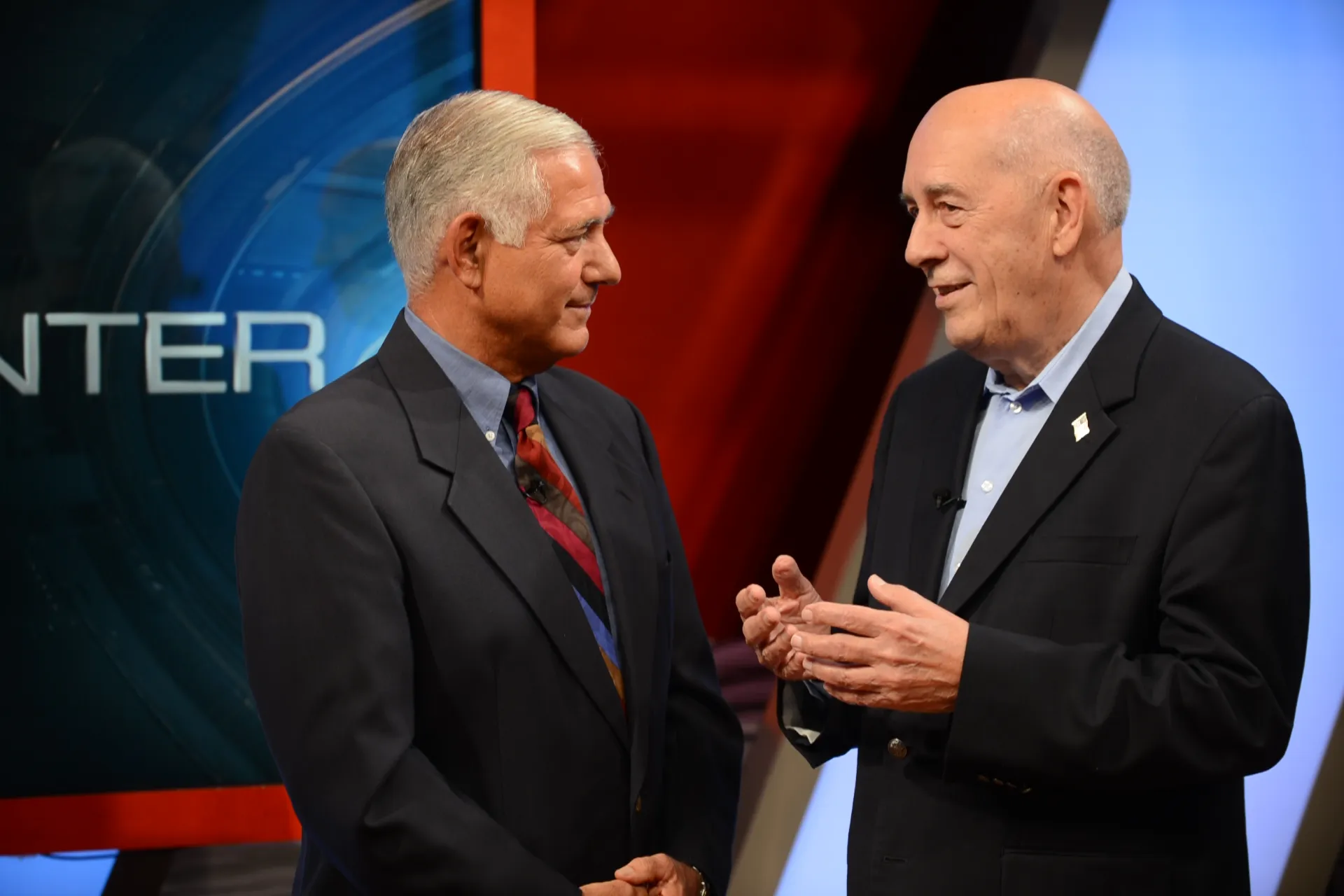
(Photo by Rich Arden / ESPN Images)
William F. Rasmussen, the sports fan-turned broadcaster and entrepreneur whose out-of-the-box idea of a 24-hour cable sports network, ESPN, changed forever the landscape of sports media, passed away today, August 18, 2026, at the age of 93 from the effects of Parkinson’s Disease.
“Bill was a remarkable man – a visionary and an innovator who conceived the idea of a network entirely devoted to sports,” said ESPN Chairman Jimmy Pitaro. “Quite simply, none of us would be here today if it wasn’t for Bill’s passion and all the hard work and entrepreneurial spirit he put into building ESPN in the late 1970s – key aspects of our company culture that still carry on to this day.”
Pitaro added: “One of my greatest thrills since joining ESPN was getting to know Bill on a personal level. I will always cherish the memory of catching the ceremonial first pitch that he threw at Fenway Park in Boston in celebration of our 40th anniversary. His legacy will always be a part of ESPN.”
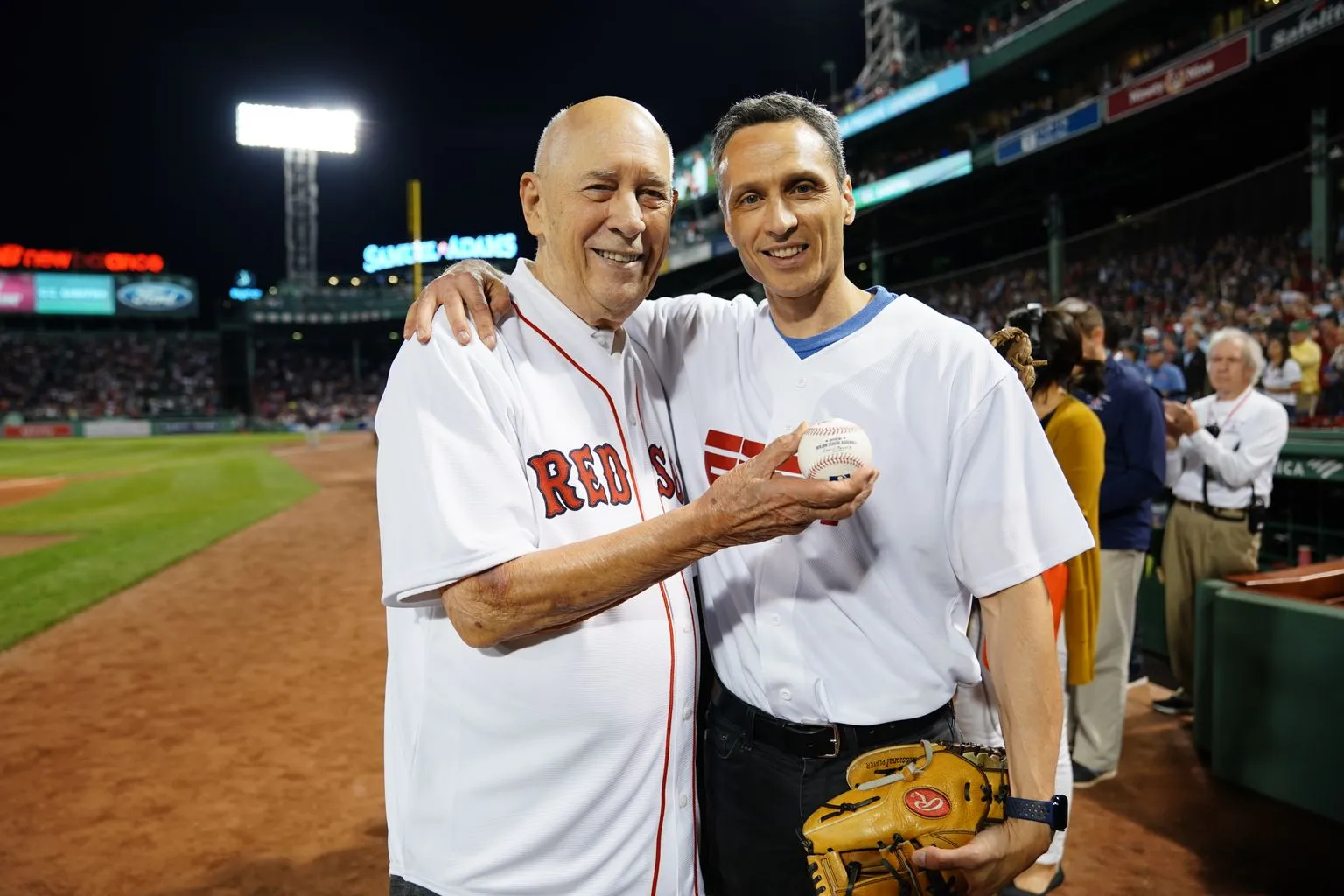
(Photo by Joe Faraoni / ESPN Images)
Rasmussen was predeceased by his wife of 56 years, Lois, in 2011 and is survived by two sons – Scott Rasmussen and his wife Laura and Glenn Rasmussen – his daughter Lynn Van Hollebeke and her husband Louie, seven grandchildren, Andy, P.J., Wil, MaryAnn, Donna, Jessica and Sarah, one great grandson, Otto, and one great granddaughter, Adelaide. In addition to his wife, Bill was predeceased by his brothers Robert and Donald Rasmussen, sister Vivien and grandson Justin Van Hollebeke.
The Birth of ESPN
In 1978, Rasmussen, a former sports broadcaster and public relations executive, and his son Scott started investigating the just-emerging technology of satellite delivery of television. On a Friday afternoon in August 1978, Rasmussen and Scott were stuck in traffic on Connecticut’s Interstate 84 while travelling to the New Jersey shore. They were discussing possible programming for their newly acquired satellite transponder from RCA. On a lark, Rasmussen blurted out the idea to create a network devoted only to sports. Sports fans both, father and son instantly thought they had a great idea.
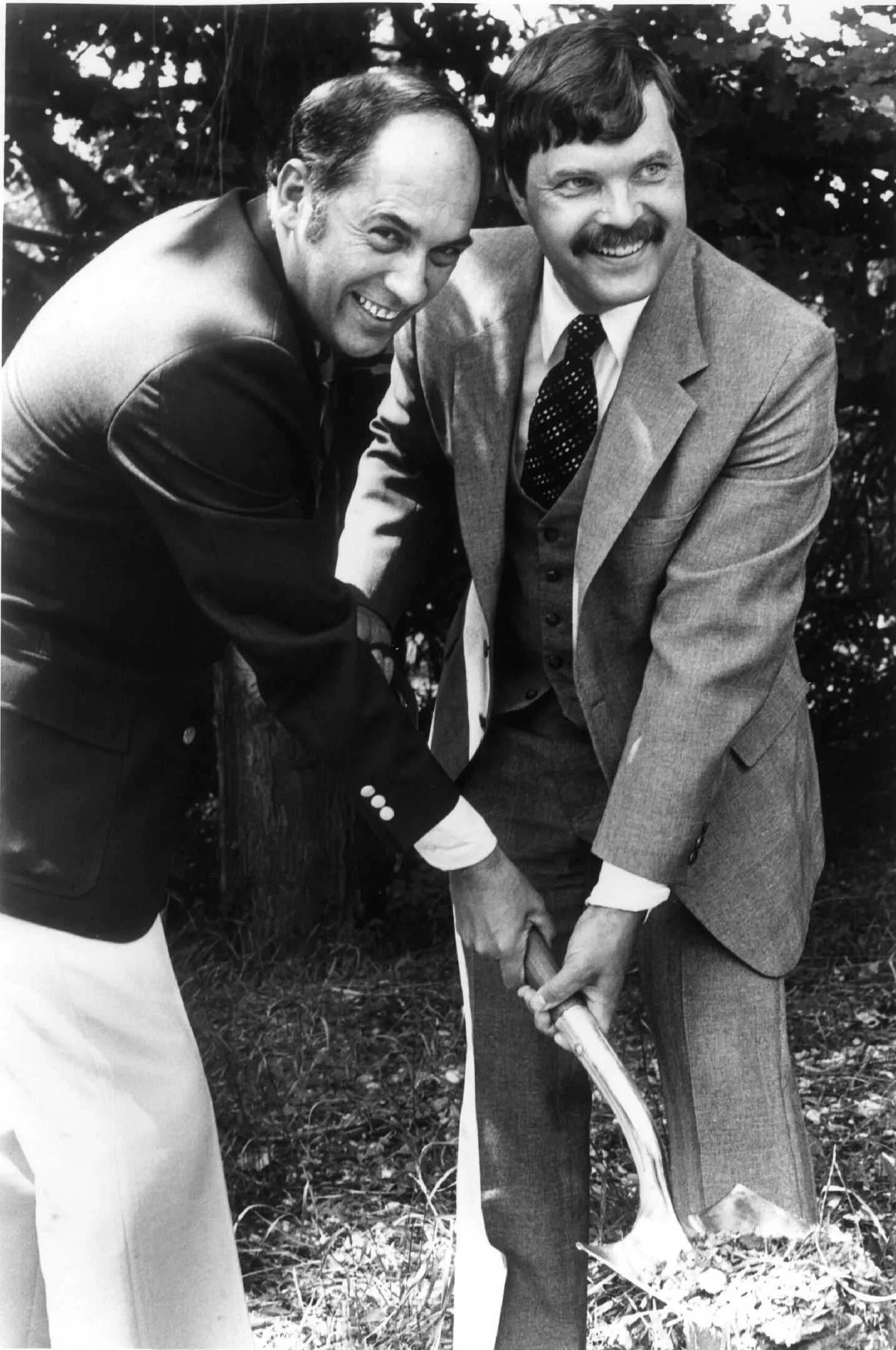
In time, their idea grew from a service showing Connecticut sports to state residents to a 24-hour national sports network. Bolstered by financial backing from the Getty Oil Co., a contract for programming with the NCAA and an advertising agreement with Anheuser-Busch – then the largest sponsorship deal in cable history – the Entertainment and Sports Programming Network (changed to ESPN, Inc. in 1984) launched in 1.4 million homes at 7 p.m. ET on September 7, 1979. A short introduction was followed by the opening show, SportsCenter hosted by Lee Leonard and George Grande.
From Day One to today, more than four decades later, SportsCenter – the program that has aired the most episodes in television history – has been the backbone of the network and its signature show, redefining the genre of sports news on television.
Impact at ESPN
As ESPN’s founder and first president, Rasmussen shaped the early successes of the company and laid the foundation for its strong future. His passion for sports and love of innovation through both technology and creative programming remain ESPN hallmarks. In July 1979, Rasmussen was named ESPN Chairman, succeeded as President by Chet Simmons, formerly President of NBC Sports. In addition to SportsCenter, under Rasmussen’s leadership the network introduced around the clock sports programming and groundbreaking coverage of the early rounds of the NCAA men’s basketball tournament in the spring of 1980, which drew national attention for the fledgling outfit.
“Bill was our George Washington and a good friend,” said veteran anchor Chris Berman, who joined ESPN three weeks after the original network launch in 1979. “He was such a grateful person and every sports fan can be grateful for Bill. He wasn’t a glass half-full guy; his glass was always overflowing with optimism. He greeted everyone with a smile and we can all smile knowing Bill’s legacy.”
In 1994, Rasmussen made Sports Illustrated’s “Forty for the Ages,” a listing of sports figures who significantly altered and elevated the world of sports in the second half of the 20th century. Also that year, USA Today called him “The Father of Sports Television.”
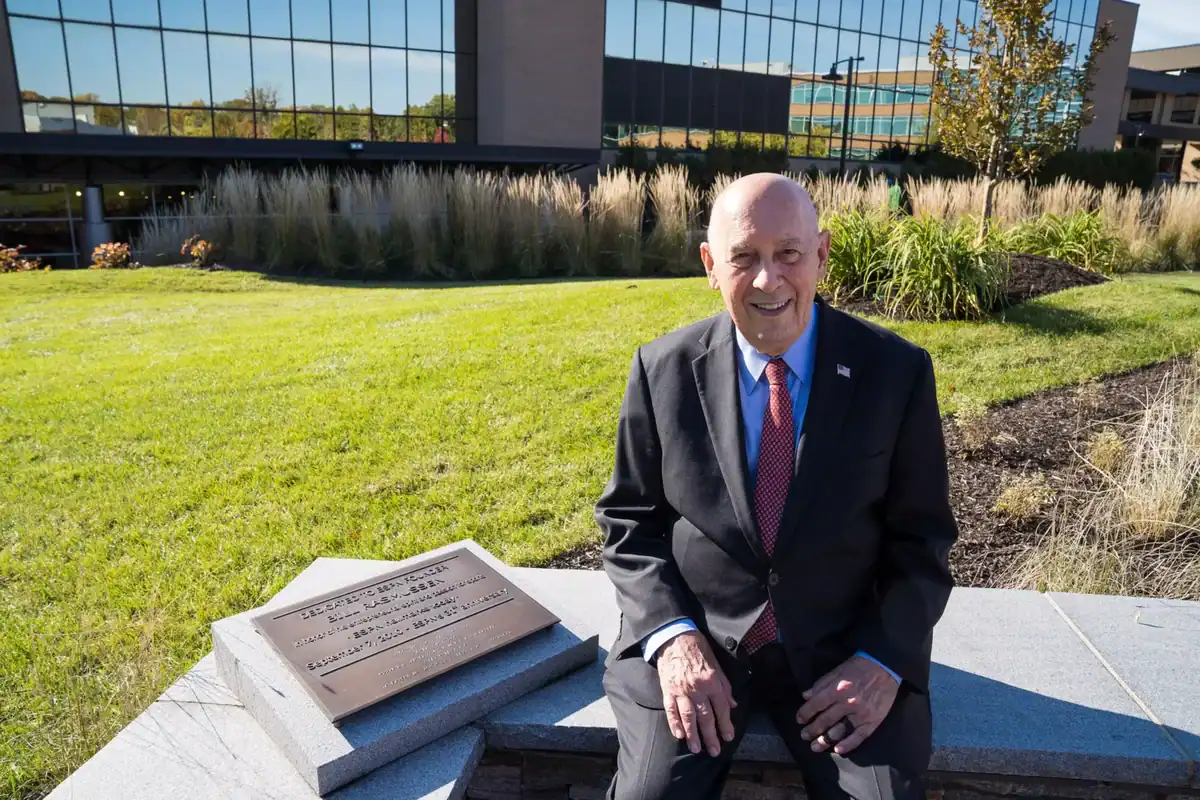
From its humble beginnings in Bristol, Conn. – about 80 employees at launch in one, unfinished building on less than an acre (bought sight unseen) – ESPN has grown to comprise more than 5,900 employees around the world, eight U.S. television networks plus the sports programming on ABC, the leading sports app and direct-to-consumer service for sports, ESPN Audio, leading social and digital platforms, and more, including endeavors on virtually every continent.
Before ESPN
Born October 15, 1932, in Chicago and raised in nearby Columbus Manor, Ill., Rasmussen was an avid athlete as a youth, earning an invitation to a minor league affiliate of the Detroit Tigers. He chose, however, to attend DePauw University in Greencastle, Ind., where he received a bachelor’s degree in economics. After graduation in 1954, he served in the United States Air Force and later earned an MBA from Rutgers University.
After a successful entrepreneurial venture in the advertising business, Rasmussen’s career in the media began at WTTT radio in Amherst, Mass., in 1962. In 1965, he moved to WWLP-TV, Springfield, Mass., where he spent eight years as sports director and two years as news director. During these years, he handled numerous football, basketball, baseball and hockey play-by-play assignments on both radio and television. In 1974, he joined the New England Whalers of the World Hockey Association as communications director, serving until the conclusion of the 1977-78 season.
After ESPN
Rasmussen left an active role at ESPN in October 1980. He then served as a consultant to sports rights holders and media companies. He also remained active with his own start-up ventures in sports, often involving media.
After publicly disclosing his Parkinson’s Disease diagnosis in 2019, Rasmussen became an ambassador for Parkinson’s patients through both the American Parkinson Disease Association and The Michael J. Fox Foundation for Parkinson’s Research.
Rasmussen was active in numerous charity events, including nine years with the acclaimed Winged Foot Scholarship Program, and five years with a Senior PGA TOUR event, and was a frequent participant in celebrity charity golf events throughout the country.

(Photo by Nick Caito / ESPN Images)
Among his other honors and awards, Rasmussen was named to the Sports Broadcasting Hall of Fame in 2025, Rutgers University’s Wall of Fame in 2002, DePauw University’s Media Wall of Fame in 2012, and in 2001 received the prestigious Order of Achievement from Lambda Chi Alpha. In 1997, he was inducted into the Connecticut Sports Museum and Hall of Fame. Rasmussen was named to The Sports 100, honoring the 100 most important people in American Sports History.
In 2019, Rasmussen had the honor of throwing the ceremonial first pitch with ESPN Chairman Jimmy Pitaro making the catch at a New York Yankees-Boston Red Sox Major League Baseball game at Fenway Park in celebration of ESPN’s 40-year anniversary.
Rasmussen was a popular guest on the speaking circuit relating his entrepreneurial adventures and was a frequent guest on business and sports radio talk shows to discuss his entrepreneurial career. Rasmussen also authored two books, “Sports Junkies Rejoice! The Birth of ESPN” and most recently “ESPN: One Giant Leap for Fankind,” published in 2023. Rasmussen collaborated with Tenero Productions for a documentary and book project “Sports Heaven: The Birth of ESPN” on his life and the launch of ESPN that was released in 2026.
In lieu of flowers, donations may be made to https://www.apdaparkinson.org.
-30-
Trending
Dave Marsh, Bruce Springsteen biographer and music critic, dies at 76
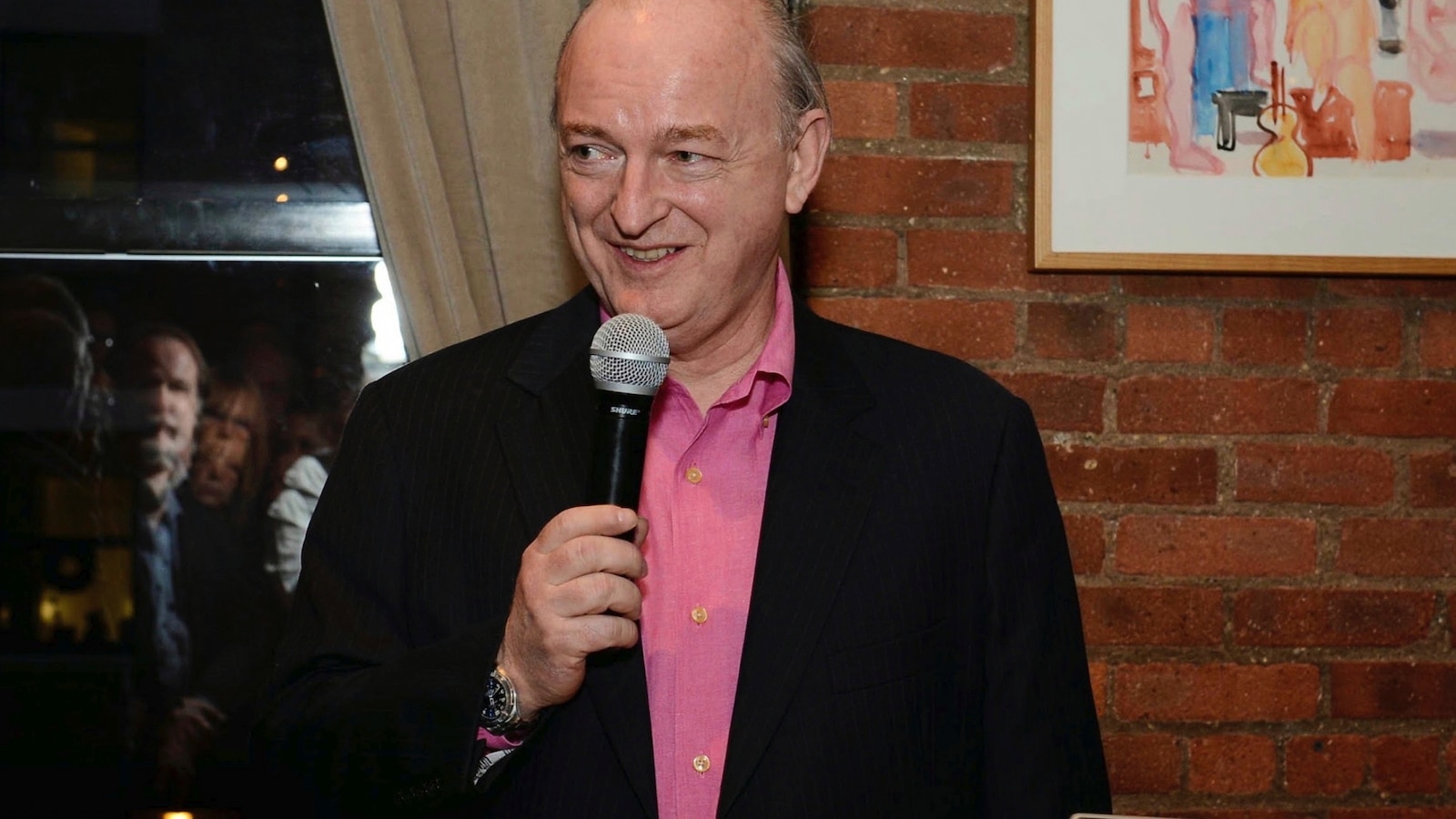
Dave Marsh, a longtime music critic who wrote several influential books about Bruce Springsteen, including the early biography “Born to Run,” has died. He was 76.
Marsh died Friday in Connecticut, his friend Jeffrey St. Clair, a co-editor of the online magazine Counterpunch, told The Associated Press. St. Clair said Marsh had been suffering from a degenerative brain disease for several years. Jim Rotolo, the SiriusXM radio host, announced Marsh’s death on his social media accounts.
Springsteen paid tribute to Marsh in an Instagram post, writing that the loss had left the band “heartbroken.”
“My great friend Dave, with his straight out of Detroit attitude, was a true Rock ‘n’ Roll lifer. He was soulful, intelligent, heartfelt, opinionated, bruising and often fantastically argumentative,” Springsteen wrote. “He deeply believed in what I was trying to accomplish and his lifetime of support meant the world to me.”
Steven Van Zandt also wrote a remembrance on Instagram, writing “he was fearless, relentless, arrogant, everything you’d want in a RocknRoll troublemaker. And by the way, a tremendous writer.”
Marsh was an early champion of Springsteen, writing about him for Creem magazine and penning his first Rolling Stone cover story in 1978. In 1979 his biography “Born to Run: The Bruce Springsteen Story” was released and became a best seller. He followed it in 1986 with “Glory Days: Bruce Springsteen in the 1980s.” Legend has it that he was the one responsible for getting Jon Landau, Springsteen’s longtime manager and record producer, to his first Springsteen concert.
Born in Pontiac, Michigan, in 1950, Marsh dropped out of Detroit’s Wayne State University in 1969 to write for the new rock magazine “Creem,” where Lester Bangs was among his friends and mentors. Springsteen wasn’t Marsh’s only subject, but he was always close by. In 1979, he married Barbara Carr, who would go on to be Springsteen’s co-manager alongside Landau for decades. The rocker even attended their wedding.
He and Carr also devoted much effort to The Kristen Ann Carr Fund, a charity that they started named after their daughter who died from sarcoma at age 21 in 1993. Later that year, Springsteen hosted a benefit concert at Madison Square Garden, where they raised $1.5 million.
Marsh also wrote “The Heart of Rock & Soul: The 1001 Greatest Singles Ever Made,” a biography of The Who, and a book about The Kingsmen hit “Louie Louie.” In recent years he was a frequent co-host and guest on the E Street Nation SiriusXM channel.
___
National Writer Hillel Italie contributed from New York.
Trending
Oprah distances herself from Dr Phil and Dr Oz over their politics

NEWYou can now listen to Fox News articles!
Talk show legend Oprah Winfrey distanced herself from Dr. Phil McGraw and Dr. Mehmet Oz, two stars she helped turn into national media personalities who have since become associated with conservative politics.
Winfrey spoke to Emmy Magazine about her career and was asked how she felt about McGraw and Oz now.
“People criticize me for Dr. Phil and Dr. Oz, because of their politics or their views,” she said, recalling that during a lengthy legal battle in the late ‘90s, “Dr. Phil, he was so practical, so down-to-earth, so real. And he would ride in the car with me every morning on the way to trial, where I’m literally sitting on trial for six weeks.”
McGraw and Oz have become political figures in recent years. Oz, endorsed by President Donald Trump, ran for U.S. Senate in Pennsylvania in 2022 before being defeated by Sen. John Fetterman. While McGraw has not endorsed either party, he appeared at Trump’s Madison Square Garden campaign rally in October 2024, and accompanied ICE personnel during Chicago immigration raids alongside Trump border czar Tom Homan.
Oz was nominated by Trump and approved by the Senate to become Administrator for the Centers for Medicare & Medicaid Services in 2025 as the president returned to office.

Oprah Winfrey takes the stage on Day 3 of the Democratic National Convention (DNC) at the United Center, in Chicago, Illinois, U.S., August 21, 2024. (Mike Segar/Reuters)
“I felt that he was so instrumental in helping me. I thought, ‘Oh, you could help a lot of people. You should come on my show,’” she added.
For Dr. Oz, she recalled, “He explained practical things like colon cancer and bowel movements. I thought he had the language for explaining medical things in a way that was helpful to me. I thought it would be helpful to many other people. And that is how they ended up on the show.”
“Everybody has their own path in life, and it has not one thing to do with me, and I don’t have one thing to do with them,” she concluded. “At the time, the reason and intention behind me giving them their breaks was I thought they had valuable information to share that had been meaningful to me.”
ALEXANDRIA OCASIO-CORTEZ SHRUGS OFF PAST ‘DEFUND THE POLICE’ COMMENTS, JOKING ‘WOKE 1 WAS CRAZY’
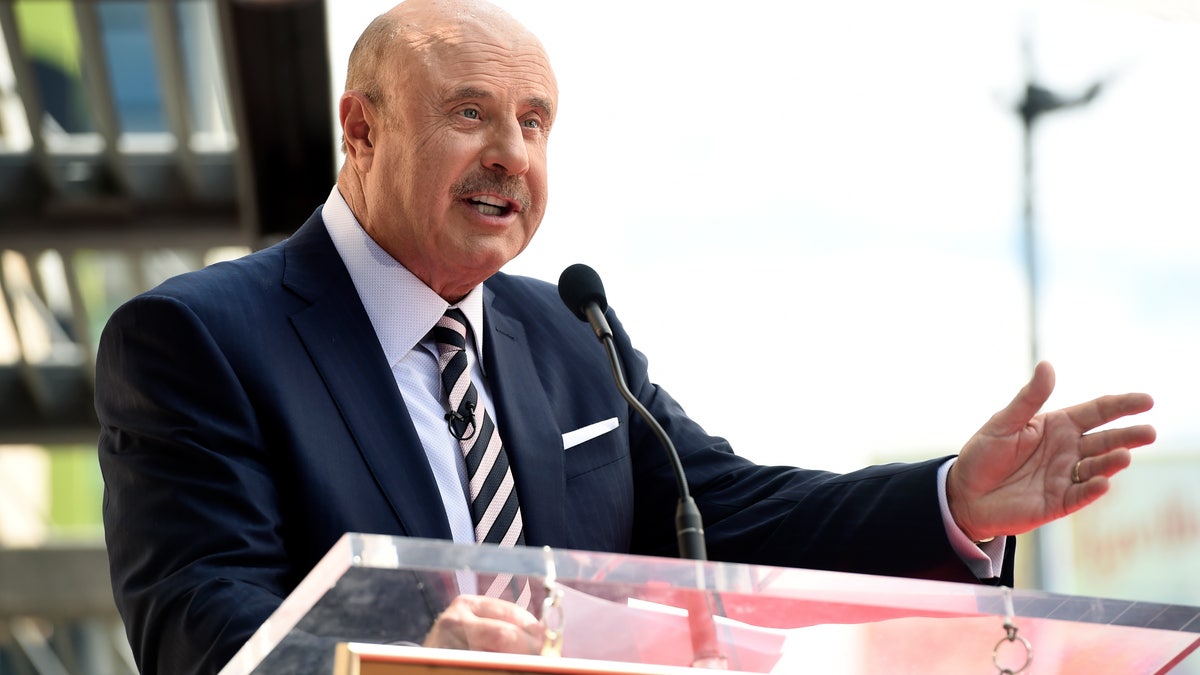
While Dr. Phil McGraw has declined to reveal who he voted for in 2024, he has become a prominent commentator associated with conservative politics.
The managing editor of Media Research Center’s NewsBusters, Curtis Houck, told Fox News Digital that Winfrey appears to have no qualms about engaging in politics herself.
“Oprah certainly doesn’t have a problem with being friends with progressives or anyone willing to take on Trump,” he said.
“Oprah wants us to feel bad for woke Prince Harry and Meghan or the woman in the Coldplay kiss cam. She herself is stuck on Woke 1,” Houck added, referring to the term Rep. Alexandria Ocasio-Cortez used in an attempt to shrug off far-left identity politics as a thing of the past.
CLICK HERE FOR MORE COVERAGE OF MEDIA AND CULTURE

Administrator for the Centers for Medicare & Medicaid Services Dr. Mehmet Oz speaks ahead of U.S. Vice President JD Vance at the 128th Air Refueling Wing Hangar on July 8, 2026, in Milwaukee, Wisconsin. (Scott Olson/Getty Images)
CLICK HERE TO DOWNLOAD THE FOX NEWS APP
“Oprah and her friend/CBS ‘Journalist’ Gayle King can continue promoting whatever causes they want or pal around with the Obamas, but they shouldn’t be seen as non-partisan by any stretch. While I’m sure they’re incredibly grateful to her, Dr. Phil and Dr. Oz should be allowed to have their own opinions and not be framed as the exclusive partisans,” he concluded.



Céline Dion Opens Up About Stiff-Person Syndrome and Performing Again
Somewhere in the bowels of Palms Casino Resort, just off the Las Vegas Strip, is a recording studio that has...
Frank Beard, Beardless Drummer for ZZ Top, Dies at 77
The only member of the Texas power trio without a beard, he propelled the band’s blend of boogie, Southern rock...


See Rosie O’Donnell’s politically charged ‘Kimmel’ hosting debut (Video)
Rosie O’Donnell is back in the hosting seat. Nearly 25 years after “The Rosie O’Donnell Show” went off the air,...


ESPN founder Bill Rasmussen dies at 93
Bristol, CT – August 13, 2012 – ESPN Studio B: George Grande (l) and Bill Rasmussen during a promo for...


What Can We Actually Find on an Exoplanet? Part 2: A Machine to Find Another Earth
(This is Part 2 of a series on what we can actually find on an exoplanet. Read Part 1 first.)...


Dave Marsh, Bruce Springsteen biographer and music critic, dies at 76
Dave Marsh, a longtime music critic who wrote several influential books about Bruce Springsteen, including the early biography “Born to...


Vin Diesel, Meadow Walker, Jordana Brewster and more
The 25th anniversary special screening of “The Fast and The Furious” was held in Los Angeles on August 17. Stars including Vin...


Erosion reveals decades-old infrastructure ‘relics’ in Newport Beach
A series of powerful hurricane-driven swells have surfaced forgotten remnants of Newport Beach’s infrastructure that lay buried beneath sand and...


Oprah distances herself from Dr Phil and Dr Oz over their politics
NEWYou can now listen to Fox News articles! Talk show legend Oprah Winfrey distanced herself from Dr. Phil McGraw and...
How Ukraine’s Satellites Help Drive Its War Drones
Ukrainian drone teams have a powerful new tool: near real-time information on troop movements and locations.


‘House of the Dragon’ Showrunner on the Season 3 Ending, Series Finale Plans
Warning: Major spoilers ahead for “House of the Dragon” season three. As season three of “House of the Dragon” comes...


Heather Graham makes waves in Italy and more star snaps
Isla Fisher braves a rainy day in NYC, Dua Lipa snaps a selfie and more snaps…


What Can We Actually Find on an Exoplanet? Part 1: The Atmospheric Fingerprint
In 1990, the Voyager 1 spacecraft, then six billion kilometers from Earth and destined to become humanity’s most far-flung emissary,...


Nate Bargatze Sets Guinness World Record: Comedy Tour Tickets Sold
Nate Bargatze and his “Big Dumb Eyes” just set a Guinness World Record. The Tennessee-born comedian has officially sold the...


Lindsay Clancy trial highlights gaps in treating postpartum psychosis : NPR
Lindsay Clancy is charged with murdering her children. Her defense argues she was suffering from severe postpartum mental illness. David...


SoCal man dismembered mom’s body, put it in trash, is found not guilty
A Southern California man who killed his mother, dismembered her corpse and left the remains in a dumpster near their...


Hayden Panettiere, ‘Nashville’ and ‘Heroes’ actress, dead at 36
Hayden Panettiere, an actress best known for her starring roles in “Nashville” and “Heroes,” has died. She was 36. “It...


Kaitlin Olson on the ‘Hacks’ Finale and Losing Her Father
His lungs turned fibrotic and what followed was, in Olson’s words, “a long, slow, miserable event.” Doctors intubated and sedated...
Indiana Prepares for More Rain After Days of Deadly Storms
Since last week, hazardous weather has caused seven deaths, forced people from their homes and required some to be rescued...


Nick Reiner blocked from $1.5M trust due to ‘slayer statute’: docs
Nick Reiner’s request to gain access to his $1.5 million trust to cover his court fees and commissary items has...


Mark Cuban tells Rep. Ro Khanna he doesn’t grasp startup business
FOX Business contributor Josh Schafer discusses the California Democratic Party’s endorsement of a billionaire tax and raises questions on the...


The Planet That Lied About Its Own Spin
Every so often a piece of research comes along that isn’t really about a discovery, it’s about a mistake we...


Major Food Recall Expands To Trader Joe’s, Walmart, Target & More As 345 People Get Sick
Taylor Farms can’t catch a break this summer—and neither can we. Hot on the heels of the ongoing Cyclospora outbreak...


Hurricane Lala disrupts Los Angeles flights to Hawaii
Hurricane Lala disrupted travel between Los Angeles and Hawaii on Saturday, canceling flights from LAX to destinations across the islands...


Selena Gomez’s lawyer responds to lawsuit against singer, her mom
Selena Gomez’s lawyer didn’t mince words in his response to the lawsuit against the singer and her mother, Mandy Teefey,...


How will the position shake out for the Seahawks?
RENTON, Wash. — It’s one of the more interesting position battles for the Seahawks this training camp. Gone is Super...
Central Synagogue Attack Rattles Jewish New Yorkers
The police said a man on Friday night struck a congregant at the prominent Upper East Side synagogue, as Jews...


Day 10 Bears camp notebook: Rookie Malik Muhammad, vet Xavier Woods playing more as secondary depth is tested
LAKE FOREST, Ill. — How thin is the Bears’ secondary after a spate of injuries happened during training camp at...


Bella Hadid, Gigi Hadid, Cardi B, Anne Hathaway and more
Star snaps of the week: Bella Hadid, Gigi Hadid, Cardi B, Anne Hathaway and more Martin Short sneaks up on...


The Brightened Night Sky Nobody Actually Wanted
I have spent a good part of my life pointing telescopes upward and trying to persuade people to look up...


Curt Cignetti bets big on Indiana’s 17-man transfer class in repeat title quest
Nothing gold can stay in Indiana. Nick Marsh, the most decorated receiver the Hoosiers have ever pulled out of the...


Man shot and killed by deputies after firing at Edison employees, authorities say
A bizarre and violent series of events unfolded in the Inland Empire Friday after a man opened fire on Southern...


Jaafar Jackson Discusses Studying Michael Jackson’s Moves Since Age 3
NEW! TV Theatre Newsletter Get all the top news & discounts for TV & beyond. No password required. Jaafar Jackson...


Taylor Swift and Travis Kelce’s private life as newlyweds
Taylor Swift and Travis Kelce are finding that married life is “Actually Romantic.” “They’re both just so excited that they’re...


Potentially historic El Nino takes shape, with far-reaching US and global impacts expected
El Nino conditions continue to intensify and are likely to be very strong, resulting in a potentially historic event in...
Stock Trading in Congress Becomes an Attack Line in Midterm Campaigns
Republican and Democratic challengers are both using the issue to attack members of Congress as unethical, seizing on a common...


9 Years Later, the Anya Taylor-Joy Thriller Everyone Missed Is Finally Available To Watch on Streaming
While Sergio Gutiérrez Sánchez’s 2017 psychological thriller Marrowbone arrived early on in Anya Taylor-Joy’s career, it hasn’t achieved the same...


A Rare Extragalactic Stellar Stream Reveals Hidden Dark Matter
Scientists have discovered a rare star formation hidden in a distant galaxy, unlike anything seen before beyond the Milky Way....


Christy Knowings’ ‘All That’ castmates ‘hit hard’ over her death at 46 as Kenan Thompson leads tributes
Kenan Thompson was “hit hard” by the death of his former “All That” co-star Christy Knowings, who died Tuesday at...


Man used screwdriver to kill wife and daughter at Minnesota daycare, police say
MINNEAPOLIS (AP) — A man used a screwdriver to fatally stab his wife and their 7-year-old daughter inside a Minnesota...


Effort to ban genetically modified animals dies in California Legislature
SACRAMENTO — Proposed legislation to protect animals from “Frankenstein”-like medical experimentation died in the state Senate on Thursday, and supporters blame election...


Let’s Put Tarik Skubal Back on the Tigers
Gary A. Vasquez-Imagn Images The Detroit Tigers are one of the hottest teams in baseball. Since the calendar flipped to...

Perez Hilton’s sister gives update on celeb blogger’s injuries, details his ‘long road’ of recovery
Warning: The content below contains graphic details. Perez Hilton (real name: Mario Armando Lavandeira Jr.) remains hospitalized after his devastating...
Kennedy Center Board Decides to Inscribe Trump’s Name on Building
The vote to add “Restored and Renovated by President Donald J. Trump” is an aggressive test of a judge’s order...


Hands-on report: Marvel’s Wolverine – PlayStation.Blog
It’s been a big week for fans of Marvel’s Wolverine, starting with the announcement of sharp-looking PS5 hardware and accessories....


Two Million X-Ray Sources, and One Cluster That Doesn’t Fit
Clusters are the largest gravitationally bound things in the universe, thousands of galaxies held together in a vast reservoir of...


Injuries Reported After Two-Vehicle Crash at Franklin Blvd and Florin Road in Sacramento – Sacramento Injury Attorneys Blog
Injuries Reported After Two-Vehicle Crash at Franklin Blvd and Florin Road in Sacramento An injury crash at Franklin Blvd and...


Kourtney Kardashian miscarriage and more
Travis Barker is opening up like never before. The Blink-182 drummer stars in the new Hulu documentary, “Travis Barker: Louder...

L.A. reaches deal on cost recovery for 2028 Olympics, amid warnings
A divided Los Angeles City Council finalized a deal with organizers of the 2028 Summer Olympic Games aimed at controlling...


빅팀을 이겼다” 도스 산토스 LAFC 감독, 손흥민 70분 침묵에도 “이겼으니 좋다
OSEN 2026.08.10 07:40 업데이트 정보 더보기 옵션버튼 글자 크기 조절 글자크기 확대 축소 인쇄 인쇄 공유 공유 [사진] ⓒGettyimages(무단전재 및...
Trump Wants the M.M.R. Vaccine Split Into Three Separate Shots. Doctors Say It’s a Bad Idea.
President Trump is calling for immunizations for measles, mumps and rubella to be given in individual jabs in three different...


Ariana Grande goes Instagram-official with on-again boyfriend Ricky Alvarez after announcing break from the spotlight
Ariana Grande officially hard-launched her on-again boyfriend, Ricky Alvarez, on Instagram. The “Petals” songstress took to the platform Wednesday to...


Deportivo de A Coruña vs Real Madrid: Club Friendlies stats & head-to-head
Head to Head Key, Deportivo v Real Madrid Deportivo de A Coruña Real Madrid W Deportivo de A Coruña won...


The Nostalgic Architecture of the Obama Presidential Center
Books & the Arts / August 11, 2026 The nostalgic architecture of the Obama Presidential Center Where hope even has...


How to Find Lunar Ice? Moonquakes to the Rescue!
The surface of the Moon is a bleak and forbidding place that could be hiding a lot of water ice...

‘Roseanne’ star defends sitcom’ axing over comedian’s tweets
Former child star Michael Fishman became emotional while laying out his thoughts on the “Roseanne” reboot’s cancellation back in 2018....


How to watch Las Vegas Raiders vs. Arizona Cardinals on August 13, 2026 | Preseason Week 1
Raiders Pregame Live on FOX5 (Las Vegas) Before kickoff, watch coverage on the team’s current matchup with last-minute news, transactions...


Becerra, Hilton offer promises on AI, gas prices, healthcare — and contrasting views
Sacramento — The two candidates for California governor came to Sacramento on Tuesday offering policy agendas that were both sweeping and vague...


Series Preview: Seattle Mariners at New York Yankees
This roadtrip has loomed large since last year, when the schedule first came out. Regardless of how the standings would...
El-Sayed’s Winning Path in Michigan
A swing-state Democratic Senate nominee needs to keep saying this: Jews have a right to a Jewish homeland.


Lizzo models teeny purple string bikini to ring in ‘Fat Liberation Month’
Lizzo posed poolside in a sparkly purple Yitty string bikini to celebrate “Fat Liberation Month” on Sunday. Instagram/lizzobeeating Lizzo has...


Star Wars Zero Company: A New Hope for Turn-Based Tactics
Summary Star Wars Zero Company arrives August 27, 2026 on XBOX Series X|S. A turn-based tactics game with RPG...


Seven Needles, 800,000 Haystacks – Universe Today
Quasars are the brightest sustained objects in the universe, the cores of distant galaxies where a supermassive black hole is...


The 9 Senate seats most likely to flip in 2026
With less than three months until Election Day, the general election fight for control of the US Senate is in...


Jessica Alba stuns in tiny bikini as she celebrates final weeks of summer
Jessica Alba is packing plenty into the final stretch of summer. The 45-year-old actress shared a series of photos highlighting...


Typo by San Francisco police led to violent arrest of innocent driver
Two officers with the San Francisco Police Department spotted what they thought was a stolen car being driven through the...


Pensión Mujeres Bienestar: Calendario TENTATIVO de registro para cobrar 3,100 pesos
Las mujeres de entre 60 y 64 años que buscan incorporarse a la Pensión Mujeres Bienestar podrían tener una nueva...
Flock Cameras Can Track Every Car in America. Police Love Them. Citizens Don’t.
In Texas, there’s one thing liberals and conservatives agree on: They don’t want cameras trained on their cars.
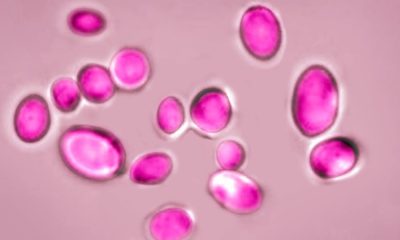

Texas leads US in cases of dangerous fungal infection
article Candida auris is a yeast responsible for many infections. Resistant to most antifungal drugs, this fungus causes several deaths...


Keke Palmer shares blistering ‘warning shot’ as fans fear Sean Evans ‘fumbled’ romance
Shots fired. Keke Palmer shared a cryptic message about her dating life amid her alleged romance with “Hot Ones” host...


Ancient Maltese Seafarers Likely Navigated By The Stars
Malta might be the last place one might expect there to be a convergence of archeoastronomy and early cosmology. Today,...


Dakota Ditcheva breaks both hands in PFL New York win
It seems that Professional Fighters League fans will be waiting a while to see Dakota Ditcheva compete again. Dakota Ditcheva...


Dust storm warning issued for metro Phoenix area
A dust storm warning was issued by the National Weather Service in Phoenix at 7:59 p.m. on Sunday, Aug. 9....


Elderly couple dies in Santa Monica home fire
The Santa Monica Fire Department is investigating an early-morning blaze on Sunday that claimed the lives of an elderly couple...


‘House of the Dragon’ Season 3 finale: Helaena, Ormund’s fate revealed
Warning: Spoilers ahead! Do not proceed unless you’ve watched the Season 3 finale of “House of the Dragon.“ “House of...


🔴 EN VIVO: Alianza Valledupar vs. Bucaramanga
Quiero unirme al canal de WhatsApp de Win Sports Si quieres disfrutar de la emoción del deporte, suscríbete a Win...
Israel Rejects Trump’s 15-Point Plan to Disarm Hamas
President Trump’s Board of Peace announced an agreement last month that aimed at Hamas’s giving up its weapons alongside an...


Boeing 737 Max operators told to check fuselages for cracks | Boeing
The US aviation regulator has ordered inspections of the fuselages of Boeing 737 Max planes for possible cracks in a...


‘Highlander’ star Christopher Lambert, 69, collapses at Pittsburgh Comic-Con
“Highlander” actor Christopher Lambert suffered a medical emergency while attending the Steel City Comic-Con in Pittsburgh. At the annual convention...


Astronomers Find a New Object from the Early Universe Using Webb Data
Since it became operational in 2022, the James Webb Space Telescope (JWST) has released some truly breathtaking views of the...


HighSchoolOT Jamboree postponed to Monday, Aug. 10, due to inclement weather :: HighSchoolOT.com
Six minutes into J.H. Rose vs. Rolesville, the second game of a five-game slate on Saturday, the HighSchoolOT Jamboree at...


Firefighters battling brush fire in Burb
Firefighters were battling wildfires Saturday in Burbank and Santa Clarita. Walnut fire The Walnut fire was burning near DeBell Golf...


QVC host reacts to viral on-air blooper
QVC host Toni Brattin has publicly commented on her viral on-air blooper that saw her mistakenly refer to a “blowout”...


Leaking oil tanker sinking further off Oman
BEIRUT (AP) — A sanctioned tanker carrying nearly 1 million barrels of oil appears to have become further submerged in...
The U.S. Is Burning Through Weapons in Iran. Russia and China Are Taking Note.
The Iran war has depleted U.S. weapons stockpiles, resulting in a significant erosion of firepower. A more drawn-out Iran conflict...


Tribute to Puskas in Budapest
The St. Stephen’s Cathedral in Budapest hosted an emotional tribute to Puskas in the hours leading up to the preseason...


SpaceX Junk Hits the Moon. Not a Good Sign
On Wednesday, August 5th, at 06:35 UTC (11:35 p.m. PDT; 2:35 a.m. EDT), a 13.8-meter (45-ft) long, 4,000 kg (9,000...

‘The Simpsons’ actress Nancy Cartwright predicts when hit show will end
“The Simpsons” could have an end date in sight — at least according to one of its longtime stars. Nancy...


Jobs report July 2026:
The U.S. economy saw an unexpected declined in jobs during July while the unemployment rate edged lower, the Bureau of...
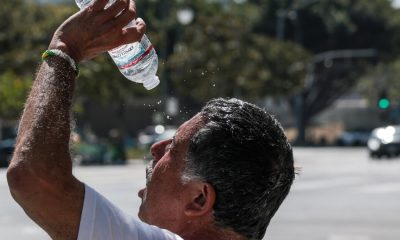

Searing heat on tap for SoCal this weekend, with more fire danger ahead
Wide swaths of California will face searing temperatures over the weekend, with forecasters issuing a heat advisory for non-coastal areas...


Supercomputer predicts the MLB Wild Card standings after the trade deadline
--> With the MLB trade deadline behind us, the playoff picture is starting to take focus. There is no predicting...


Reese Witherspoon’s father, John, rushed to hospital after being found near pool at Nashville home
Reese Witherspoon’s father, John Draper Witherspoon, was rushed to the hospital Friday, Page Six can confirm. A source tells us...
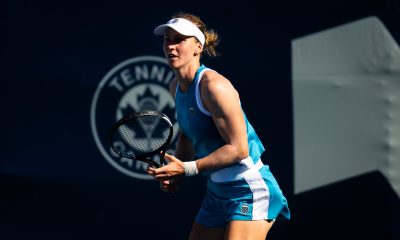

Former finalist Samsonova escapes Tjen in tight Toronto tilt
Skip to main content Home Videos Former Finalist Samsonova Escapes Tjen In Tight Toronto Tilt Must-See Action Rybakina saves two...
A Generation on Antidepressants Searches for the Exit
Many people feel that antidepressants block their true emotions, but they don’t have guidance about how to get off these...


Meet Carrie Coon’s famous actor husband with 16-year age gap — and their two children
Carrie Coon, 45, has been married to Tracy Letts, 61, since 2013. The White Lotus star’s husband is also heavily involved...


Scientists Watch as a Distant World’s Atmosphere Shrinks and Thins
As dwarf planet Pluto moves along in its distant, high-obliquity 248-year orbit, its atmosphere is changing. That’s because it’s beginning...


Country star Hannah Dasher says famous, married celebrity once slid into her DMs
Country singer Hannah Dasher revealed that a famous, married celebrity once slid into her direct messages on social media, but...


Jonathan Majors, Daily Wire Film ‘Run Hide Fight’ Trailer, Release Date
EXCLUSIVE: Here is your first full trailer for Jonathan Majors‘ comeback movie, Run Hide Fight: Infidels, a sequel of sorts...


Act of road rage leads CHP to huge weapons cache, authorities say
A California driver pulled alongside another motorist on the 10 Freeway and pointed a gun — and it was that...


Lionsgate Studio Boss Gives Update On Production Start, Release
Lionsgate Motion Picture Group Chairman Adam Fogelson gave an update on the highly anticipated sequel to the studio’s Michael Jackson...


‘The Devil Wears Prada 2’ costumes worn by Anne Hathaway, Meryl Streep headed for auction
Christie’s is auctioning off a slate of costumes and accessories from “The Devil Wears Prada 2,” including this colorful Gabriela...
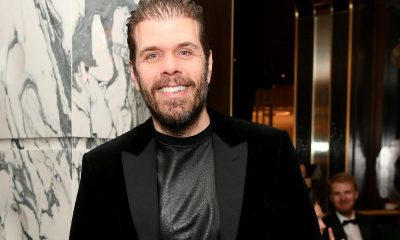

Perez Hilton’s family says he’s ‘able to communicate’ after ‘suicide attempt’
Perez Hilton’s family is sharing another update on the celebrity blogger’s condition one day after his “suicide attempt.” “This has...
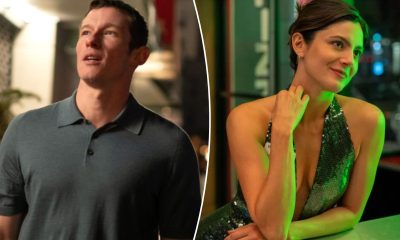

Sex is legal once a year in lame rom-com
movie review ONE NIGHT ONLY Running time: 102 minutes. Rated R (sexual material, language, and brief nudity). In theaters Aug....


Barry Manilow cancels Lexington, Kentucky concert minutes before show
Barry Manilow abruptly canceled his Tuesday night concert in Lexington, Ky., marking the second time the show has been postponed...


Meghan Markle makes a splash on her 45th birthday with poolside photos
Another candle on the cake. Meghan Markle took to Instagram Tuesday to share photos of her jumping into a pool...


No Way Home’ actress dead at 82
Actress Mary Rivera has died. Rivera, known for her role in 2021’s “Spider-Man: No Way Home” as the character Ned...


Emily Ratajkowski models strappy bikinis on vacation in Greece
Emily Ratajkowski packed multiple wraparound bikinis for her recent trip to Greece. emrata/Instagram Instagram’s bikini queen is back. Emily Ratajkowski...


James Van Der Beek’s widow shares tender tribute on first wedding anniversary since his death
James Van Der Beek’s widow, Kimberly, shared a touching message about the actor on what would have been their 16th...


Modest Mouse boots guitarist Simon O’Connor from tour after allegations he sent inappropriate messages to minor
Modest Mouse has booted guitarist Simon O’Connor from its upcoming North American tour after he was accused of sending inappropriate...


Vincent Pastore mourned by ‘Sopranos’ cast after his death
The “Sopranos” cast is mourning the loss of one of their own. Shortly after news broke that Vincent Pastore, who...


Slipknot’s Sid Wilson fired after nearly 30 years — months after his split from Kelly Osbourne: report
Slipknot has fired DJ and keyboardist Sid Wilson after nearly 30 years — and just months after the rocker’s split...


Read the full Nancy Guthrie ransom note with chilling details that proved 84-year-old was kidnapped
Authorities have released the full contents of the alleged ransom notes sent after Nancy Guthrie’s disappearance from her Arizona home...


Shania Twain reveals she was ‘kicked around’ by her parents in ‘very violent’ childhood home
Shania Twain revealed that she grew up in a “very violent” home where she and her sisters were physically abused...
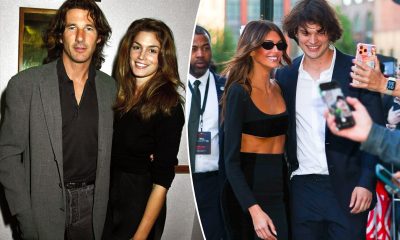

Kaia Gerber and Homer Gere address parents’ ‘90s marriage (Video)
It’s a match made in nepo-baby heaven. At “The Shards” premiere, Kaia Gerber dished to Entertainment Tonight about working with...


Megan Moroney cuts Denver concert after three songs as she fights back tears
Country star Megan Moroney was forced to cancel her Colorado concert mid-set on Tuesday night, telling fans through tears she...


Zendaya wore this Prada lip balm on her ‘Odyssey’ and ‘Spider-Man’ press tours
Page Six may be compensated and/or receive an affiliate commission if you click or buy through our links. Featured pricing...


Here’s how to watch ‘The Devil Wears Prada 2’ on Hulu
Page Six may be compensated and/or receive an affiliate commission if you click or buy through our links. Featured pricing...


‘Baywatch’ star Brooks Nader is red hot for summer and more star snaps
‘Baywatch’ star Brooks Nader is red hot for summer and more star snaps Brooks Nader sizzles on the beach while...


Inside top Comic-Con activations from ‘Lanterns’ to ‘Percy’
While A-list celebs from Ryan Gosling to Johnny Depp appeared at San Diego Comic-Con to promote their blockbuster studio projects,...
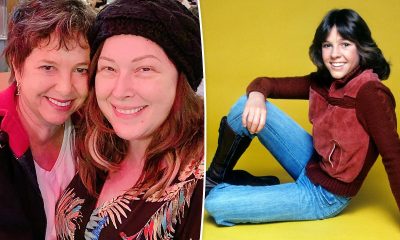

Rarely-seen ’80s star Kristy McNichol appears in ‘fangirl’ Carnie Wilson’s selfie
Carnie Wilson had a “fangirl” moment with Kristy McNichol decades after the actress’ retirement. “Totally fangirling!!!” the singer, 58, recently...


Usher boots fan off stage after her painfully awkward response to his seductive dance moves
Usher quickly put a stop to sexily serenading a fan onstage after she got visibly uncomfortable. In a now-viral moment...
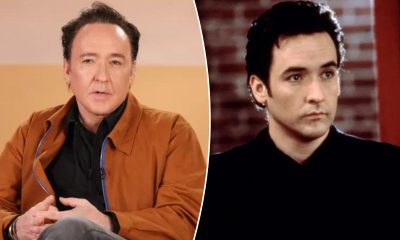

John Cusack reveals why he stepped away from Hollywood after decades of films
John Cusack opened up about why he’s largely taken a step back from Hollywood. The “Being John Malkovich” star, 60,...


Kelly Clarkson shares rare love life update
Kelly Clarkson defended her right to remain single during a recent Las Vegas residency show. “People are like, ‘Oh, why...


Eric Dane called ‘Euphoria’ his most ‘profound’ work amid ALS battle
Eric Dane believed that “Euphoria” was “the most profound experience” of his career. Dane appeared in the documentary special, “Euphoria:...


Bret Michaels undergoes emergency surgery after performing 3 concerts in ‘intense’ pain
Bret Michaels revealed he underwent an unexpected surgery after experiencing “intense” pain from a kidney stone. The Poison frontman, 63,...


Johnny Depp is nearly unrecognizable at Comic-Con promoting new movie
Johnny Depp stunned fans by showing up at San Diego Comic-Con Thursday dressed as Ebenezer Scrooge. The “Sleepy Hollow” actor...


Kayla Nicole vying for ‘DWTS’ role after Taylor Swift, Travis Kelce’s wedding
Kayla Nicole is ready to sashay into the ballroom. “Kayla Nicole would love to appear on ‘Dancing With The Stars.’...


Chadwick Boseman’s family fighting over late actor’s estate
Chadwick Boseman’s family members are feuding over his estate, nearly six years after his tragic death. According to documents obtained...


Heidi Montag wears pink bedazzled latex bodysuit for festival performance
Heidi Montag is back in her pop star era. The “Hills” alum channeled Barbie as she performed an hour-long set...


Zendaya gives cheeky response to fan’s marriage proposal
Zendaya is happy to let everyone know she’s off the market for good. The “Dune” actress, 29, had the perfect...


‘Godzilla vs Kong’ child star Kaylee Hottle dead at 19 after tragic car accident
The deaf actress played Jia in the 2021 movie, reprising the role in 2024 for “Godzilla X Kong: The New...


’90 Day Fiancé’ star shares major update on daughter’s alarming medical emergency
“90 Day Fiancé” star Armando Rubio emotionally shared that his daughter, Hannah, has been discharged from an Arizona hospital after...


Vice President JD Vance’s wife, Usha, gives birth to baby No. 4
Vice President JD Vance’s brood just got bigger. The politician’s wife, Usha Vance, has given birth to the couple’s fourth...


2026 FIFA World Cup Halftime Show: The Muppets, Ted Lasso, and more
Madonna, BTS, Shakira, and Justin Bieber had some tricks up their sleeves…
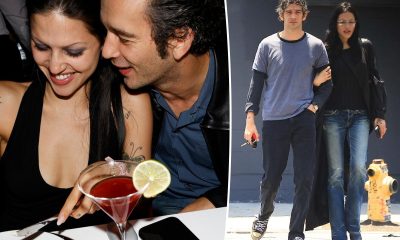

Matty Healy and Gabbriette Bechtel marry in star-studded LA wedding at Madonna’s former estate
Matty Healy and Gabbriette Bechtel are married. The 1975 frontman, 37, and the model, 28, tied the knot Saturday in...


‘Today’ show intruder spotted on live TV before storming studio
The crazed man who stormed the “Today” show set on Thursday was seen in the background of one of the...


Savannah Guthrie flees NYC after ‘Today’ show intruder incident
Savannah Guthrie is skipping town just one day after an intruder lunged at co-anchor Craig Melvin at the “Today” show...


Taylor Swift and Travis Kelce’s wedding guests reveal new details on ‘legendary’ night
Kyle and Kristin Juszczyk both summed up Taylor Swift and Travis Kelce’s recent nuptials with one word: “Legendary.” “It was...


Seth Rogen kept thanking Penélope Cruz while filming ‘The Invite’ sex scene
Seth Rogen admitted he couldn’t stop thanking and apologizing to Penélope Cruz while filming a sex scene for their new...


This Coach bag is over 40% off for the Nordstrom Anniversary Sale
Page Six may be compensated and/or receive an affiliate commission if you click or buy through our links. Featured pricing...


New York Knicks star Tyler Kolek reveals A-lister he wants on celebrity row
New York Knicks point guard Tyler Kolek is hoping NFL legend Tom Brady will join celebrity row next season. “He’s...


Vrai makes the best lab-grown diamond earrings — just ask Taylor Swift
Page Six may be compensated and/or receive an affiliate commission if you click or buy through our links. Featured pricing...


Zendaya wears angel wings at ‘The Odyssey’ NYC premiere
Zendaya made a show-stopping appearance at “The Odyssey” premiere in New York City, donning ethereal angel wings on the red...
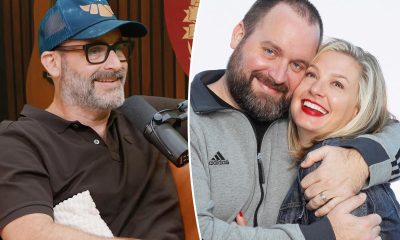

Tom Segura hinted at Christina Pazsitzky divorce before breakup bombshell
Comedian Tom Segura hinted at his split from wife Christina Pazsitzky by not wearing his wedding ring on his latest...
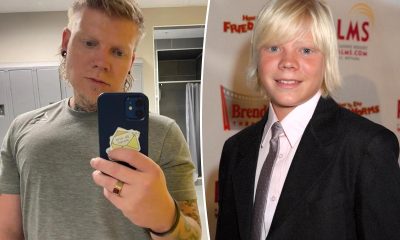

‘How to Eat Fried Worms’ child star Blake Garrett’s cause of death revealed
“How to Eat Fried Worms” star Blake Garrett’s cause of death has been confirmed. The former child star died on...


Jay-Z’s final Yankee Stadium concert marred by hours-long delays amid security breach: reports
Jay-Z’s final concert as part of his three-day Yankee Stadium residency was marred by hours-long delays – after hordes of...


Sacha Baron Cohen shows up at Wimbledon dressed as iconic character Ali G
Amid reports that Sacha Baron Cohen is secretly filming a new Ali G movie, the star showed up dressed as...


Aaron Lewis says his politics led the music industry to turn its back on him
Aaron Lewis is opening up about why he thinks industry executives have cast him aside. During a recent interview on the...


Bunnie Xo reveals real reason she deleted her divorce podcast episode — and the shocking amount of money she made from it
Bunnie Xo doesn’t want her painful divorce from Jelly Roll to be a “permanent headline.” The influencer addressed taking down...
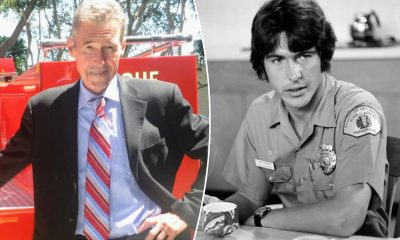

Randolph Mantooth, ‘Emergency!’ star who played Johnny Gage, dead at 80
Randolph Mantooth, the actor best known for playing firefighter-paramedic Johnny Gage on NBC’s hit 1970s series “Emergency!,” has died. He...


Prince Harry, Meghan Markle’s kids reunite with grandpa King Charles for first time in 4 years
Prince Harry and Meghan Markle’s kids reunited with their grandfather King Charles for first time in four years, Page Six...


‘Real Housewives’ star reveals son was involved in starting a wildfire
Where there’s smoke, there’s fire. “Real Housewives of Orange County” star Jennifer Pedranti confirmed the “rumblings” Thursday that one of...


Taylor Frankie Paul’s ex Dakota Mortensen scolded by judge for son, 2, riding motorcycle
Dakota Mortensen was scolded by a judge for driving his and Taylor Frankie Paul’s 2-year-old son, Ever, on a motorcycle....


Justin Baldoni breaks silence on shocking Blake Lively settlement
Justin Baldoni is speaking out after settling his long legal battle with Blake Lively. In a video the “Jane the...


Why Charles Barkley declined invitation to Taylor Swift and Travis Kelce’s wedding
Charles Barkley revealed that he turned down an invitation to attend Travis Kelce and Taylor Swift’s New York City wedding....


Bunnie Xo, 46, spotted making out with 24-year-old reality star at estranged husband Jelly Roll’s bar
Bunnie Xo has moved on from her split from Jelly Roll with a much younger man. The “Dumb Blonde” podcast...


Prince Harry ‘happy to be back in the UK’ despite security concerns keeping Meghan Markle, kids away
Prince Harry marked his return to the UK by supporting his dear friend Misan Harriman during Monday night’s premiere of...


Le Bilboquet denies entry out East during horrid storm that left trees falling at Calissa
No reservation? No safety! A violent thunderstorm wreaked havoc in Sag Harbor on Saturday amid July 4 celebrations, tearing trees...


Lionel Richie shares health update after dizzy spell forced concert cancellations
Lionel Richie thanked his fans for their support after suffering a health scare on stage which forced him to cancel a string...


Chris Pratt, wife Katherine Schwarzenegger have family outing after actor’s ex Anna Faris’ rare divorce revelation
Chris Pratt and his wife, Katherine Schwarzenegger, were feeling patriotic as they celebrated the Fourth of July with family. Pratt,...


Taylor Swift’s teacher Kirk Schwabe dies after cancer battle on same day as singer’s MSG wedding to Travis Kelce
Taylor Swift’s former teacher died on the same day as her wedding to Travis Kelce in New York City. Kirk...


Selena Gomez glitters in gold Oscar de la Renta dress at Taylor Swift, Travis Kelce wedding
Selena Gomez wore a gold Oscar de la Renta gown to Taylor Swift and Travis Kelce’s wedding. Instagram/@renatocampora No champagne...


Bunnie Xo makes very surprising announcement after Jelly Roll marriage split
Bunnie Xo is heading back to school after her breakup from country artist Jelly Roll. The “Dumb Blonde” podcast host,...


Inside Taylor Swift and Travis Kelce’s rehearsal dinner
Taylor Swift and Travis Kelce celebrated their rehearsal dinner with 100 of their closest family and friends in a venue...


Blake Lively, Ryan Reynolds flee NYC ahead of Taylor Swift, Travis Kelce’s wedding
Blake Lively and Ryan Reynolds were snapped far away from Taylor Swift and Travis Kelce’s star-studded rehearsal dinner. Lively, 38,...


‘This world is so f–ked’
Frankie Muniz’s estranged wife has his back. After the actor deleted his initial divorce announcement and uploaded a new one...
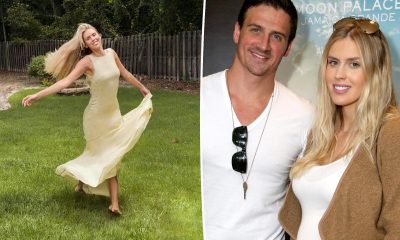

Ryan Lochte’s ex-wife Kayla Rae Reid celebrates being ‘finally free’ as divorce is made official
Kayla Rae Reid is celebrating her divorce from Olympic swimmer Ryan Lochte more than a year after they separated. “As...


Staggering six-figure cost of Taylor Swift and Travis Kelce’s MSG wedding police presence revealed
Champagne problems. The police presence at Taylor Swift and Travis Kelce’s upcoming Madison Square Garden wedding will reportedly cost a...


Spencer Pratt makes new claim about Daveigh Chase’s death
Spencer Pratt claimed in a bold new social media post that “Lilo & Stitch” star Daveigh Chase died because she...


Streaming date, where to watch
Page Six may be compensated and/or receive an affiliate commission if you click or buy through our links. Featured pricing...


Meghan Markle’s Heidi Merrick slip dress was just restocked
Page Six may be compensated and/or receive an affiliate commission if you click or buy through our links. Featured pricing...


Jane Seymour admits one workout is completely off-limits at 75: ‘I’m way too A-type’
Jane Seymour has one surprising fitness confession at 75. Seymour relies on a routine that’s kept her energized for decades — one...


Kanye West drops staggering six figures on masquerade-themed birthday party with wife Bianca Censori
Kanye West reportedly spent nearly $400,000 on a masquerade-themed birthday party at the Château de Versailles in France. The Grammy...


Aaron Lewis stunned after Taylor Swift merch ships with shredded pages from his album
Taylor Swift’s latest merch drop left country artist Aaron Lewis stunned after pages from his upcoming album turned up shredded...


Jennifer Lopez shares intimate photos from twins’ graduation ceremonies
Jennifer Lopez’s love for her twins don’t cost a thing. The singer, 56, took to Instagram on Thursday to share...


26 celebrity-worn Prime Day clothing and shoe deals start under $8
Page Six may be compensated and/or receive an affiliate commission if you click or buy through our links. Featured pricing...
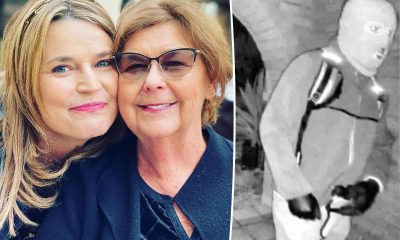

Person claims to have video of Nancy Guthrie with kidnapper in bombshell new ransom letter
Someone claims to have a video of Nancy Guthrie with her kidnapper in a bombshell new ransom letter. The letter...


Country star Kane Brown suffers freak golf ball accident
Country star Kane Brown is thanking his lucky stars after he was hit by a golf ball at a high...
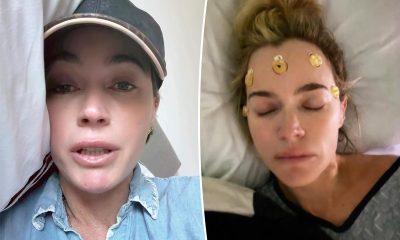

Teddi Mellencamp gives rare update on what ‘cancer recovery looks like’ in tearful video
Teddi Mellencamp posted a vulnerable video revealing what her cancer recovery looks like. “This is what recovery looks like. One...


Clay Aiken says Kelly Ripa feud sparked ‘most catastrophic week’ of his life
Clay Aiken spoke out about the moment he contentiously placed his hand over Kelly Ripa’s mouth more than two decades...


Singer Jewel reveals shoplifting addiction while homeless nearly destroyed her
Jewel was once homeless and suffering from debilitating mental health issues before transforming her life and becoming a successful singer and...


Heartbreak behind the scenes at ‘Today’ for Savannah Guthrie
“It was a sad day,” behind the scenes of the “Today” show on Tuesday, as Savannah Guthrie broke down in...


Cozy Earth, Apple and more
Page Six may be compensated and/or receive an affiliate commission if you click or buy through our links. Featured pricing...


I tried Bethenny Frankel’s ‘outrageous’ $48 BaubleBar necklace
Page Six may be compensated and/or receive an affiliate commission if you click or buy through our links. Featured pricing...


Where the Cannes Lions jet-setters eat, drink and stay on the Riviera
As the world’s biggest brands, A-listers and power players descend on the French Riviera for Cannes Lions, Page Six asked...


Blake Lively grocery shops while former BFF Taylor Swift throws bachelorette party with closest pals
Blake Lively was snapped running errands solo Friday as her former BFF, Taylor Swift, spent the weekend celebrating with her...


Rod Stewart, 81, stops Utah concert to use oxygen tank onstage after nearly fainting
Rod Stewart was forced to use an oxygen tank onstage when he nearly fainted during his Utah concert on Friday...


Taylor Swift-approved singer scores invite to her wedding celebration with Travis Kelce: report
Sombr will remember the night. The singer has scored an invite to pal Taylor Swift and Travis Kelce’s wedding celebration....


Daveigh Chase’s mom breaks silence on actress’ death
Daveigh Chase’s mother, Cathy Chase, revealed her stunned reaction to her daughter’s death in an emotional new interview. “I was...


Hit 90s movie franchise returns after 24 years, star confirms
A hit film from the 90s and noughties is about to get revived after 24 years. Austin Powers, the comedy...


Bunnie Xo reveals the fight that led to Jelly Roll divorce filing in bombshell tell-all video
Bunnie Xo finally addressed her bombshell divorce from Jelly Roll after 10 years of marriage. “J and I have never...


Daveigh Chase’s former manager casts doubt on late actress’ alleged boyfriend’s GoFundMe
Daveigh Chase’s former manager is urging fans not to donate to the late actress’ alleged boyfriend Roy Hernandez’s viral GoFundMe....


‘Scream 2’ star mocked for ‘bitching’ about his low residuals from 1997 film
Your favorite scary movie isn’t raking in the residuals. After “Scream 2” star Craig Shoemaker took to Instagram to share...


‘Widow’s Bay’ Season 1 ended with a wild plot twist
Down by the bay… Warning: Spoilers ahead! Do not proceed unless you’ve watched the “Widows Bay” Season 1 finale, “We...


Casa Amor predictions, Kenzie’s secret makeout session, & Kayda, Zach’s Hideaway visit, VRT unpacks latest episodes
“Love Island: USA” is heating up as the islanders adjust to their new normal after the fan-voted recoupling shook up...


Amanda Seyfried claims she had to hire a bodyguard after Charlie Kirk criticism
Amanda Seyfried claims she was forced to hire a bodyguard after her controversial remarks about Charlie Kirk’s assassination. Speaking to...
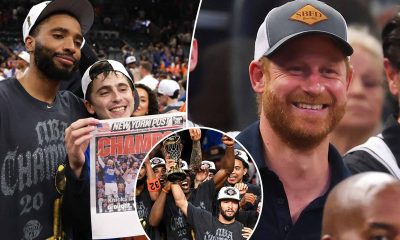

Yapping about Timothée Chalamet as an honorary Knick, Prince Harry’s surprise appearance & more
Ben Stiller is screaming court side, Prince Harry’s arrival was a surprise, Timothée Chalamet has champagne in his eyes, Knicks...


Producers step in after Mido gets into alarming fight with Debby and her friends
“90 Day Fiancé” producers stepped in after Mido and Debby got into an explosive argument on Sunday’s episode. Mido, 41,...


Jalen Brunson jokes about his plans after Knicks win — and it involves Mariska Hargitay
Dun dun. Jalen Brunson playfully joked about snagging a role alongside Mariska Hargitay on the crime series “Law & Order:...


Spike Lee denies Prince Harry’s handshake in awkward Knicks vs. Spurs game interaction
So much for doing the right thing. Spike Lee rejected Prince Harry’s handshake in an awkward moment at Saturday’s New...
-

 News2 weeks ago
Interstellar Travel: the Birth of Fusion Drives
-

 News2 weeks ago
Scientist Constructs “Big Picture” of Mars Water from Rover Data
-

 Trending2 weeks ago
Family pushes for answers after 3 people found dead in Rocky Mount home days after electricity cut :: WRAL.com
-
Trending2 weeks ago
Meet Carrie Coon’s famous actor husband with 16-year age gap — and their two children
-
Entertainment2 weeks ago
Sex is legal once a year in lame rom-com
-
News2 weeks ago
SpaceX Junk Hits the Moon. Not a Good Sign
-
Entertainment2 weeks ago
Perez Hilton’s family says he’s ‘able to communicate’ after ‘suicide attempt’
-
News1 week ago
Ancient Maltese Seafarers Likely Navigated By The Stars