
News
A Brief-ish History of SETI. Part VII: Brief Windows and Transcendence
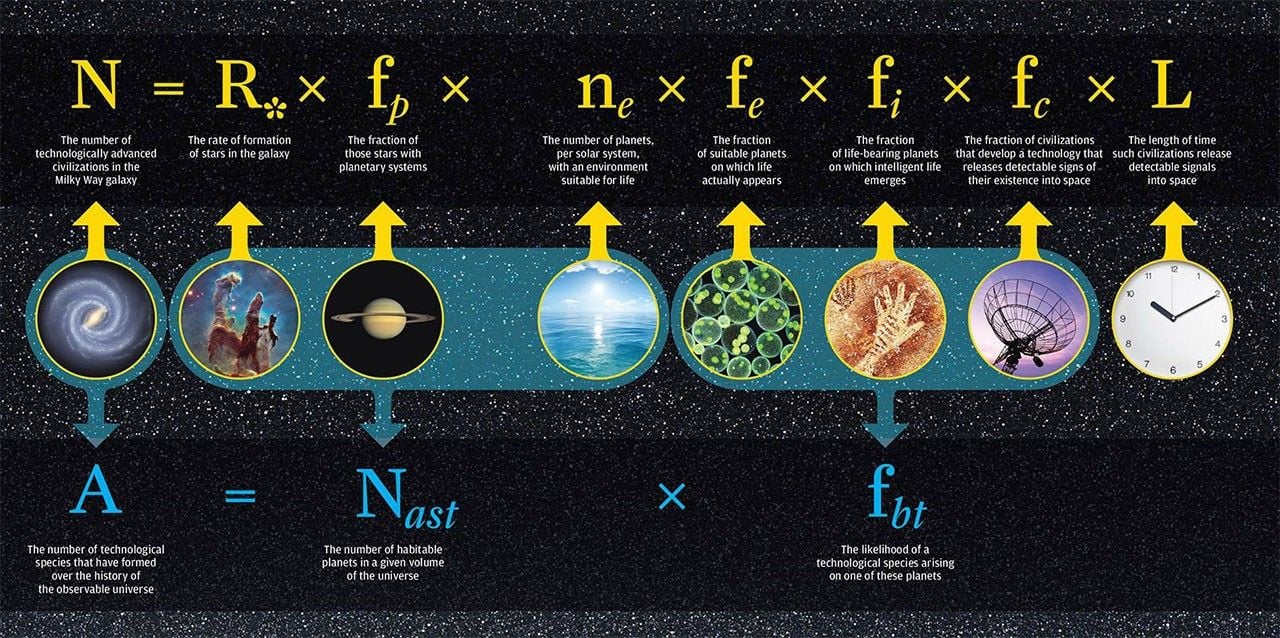
Welcome back to our continuing series on the Brief-ish History of SETI. In our previous installments, we looked at the early history and the first experiments in the Search for Extraterrestrial Intelligence (SETI), followed by the first example of a modern SETI survey (Project Ozma) led by famed Cornell professor Frank Drake, the Drake Equation, and the enduring legacy of both. This was followed by some of the most enduring theories about what advanced civilizations might look like, including our own someday.
Next, we examined the first attempt at Messaging Extraterrestrial Intelligence (METI) and what is still considered the best candidate for an extraterrestrial signal (the Arecibo Message and the WOW! Signal), followed by the first physical message sent to interstellar space. And in our last installment, we examined two fundamental (and related) theories on why humanity has neither seen nor heard from an advanced extraterrestrial civilization (ETC), and the possible implications for humanity.
Today, we will examine some of the more practical suggestions as to why humanity has neither seen nor heard from an advanced extraterrestrial civilization (ETC), consistent with many of the arguments Sagan and Newman argued in their seminal paper (nicknamed “Sagan’s Response“). We’ll also examine some of the most mind-blowing and exotic explanations that take the concept of advancement in a whole different direction (and a whole different level!).
The Longevity Factor
First up, there’s what this author likes to call the “Brief Window Hypothesis,” a proposed resolution to the Fermi Paradox that takes its cue from Frank Drake himself and from what he claimed was the most important parameter in his famous equation. This was none other than the time an extraterrestrial would have to transmit messages into space (L), otherwise known as the longevity factor. Basically, Drake posited that the lifetime of a civilization is finite, which was inspired by the very real possibility of nuclear annihilation during the Cold War.
This parameter has also inspired proposed resolutions to Fermi’s Paradox. One of the earliest examples came from German astrophysicist and radio astronomer Sebastian von Hoerner, a colleague of Frank Drake’s who participated in Project Ozma. In 1961, he penned a paper titled “The Search for Signals from Other Civilizations,” in which he argued that the existential window of a technologically-advanced civilization might be too short relative to the time it would take to make contact with another intelligent species. As he wrote:
We should not underestimate the power of two critical factors that can terminate the life of a civilization once the technical state has been reached. Science and technology have been brought forward (not entirely, but to a high degree) by the fight for supremacy and the desire for an easy life.
Both of these driving forces tend to destroy if they are not controlled in time: the first one leads to total destruction, and the second one leads to biological or mental degeneration. In summary, we assume that a state of mind not too different from our own will have developed at many places but will have only a limited longevity.
Another issue with most proposed resolutions to Fermi’s Paradox is the inherent assumption that advanced civilizations will experience exponential growth. In contrast, some researchers have presented scenarios in which ETIs were unable to sustain this growth pattern, which is why none have succeeded in becoming a galactic civilization. In 2009, Jacob D. Haqq-Misra of the Blue Marble Space Institute of Science (BMSIS) and Seth D. Baum of the Global Catastrophic Risk Institute (GCRI) argued this very point in a study titled “The Sustainability Solution to the Fermi Paradox.”
Essentially, they ventured that “[t]he absence of ETI observation can be explained by the possibility that exponential or other faster-growth is not a sustainable development pattern for intelligent civilizations.” Drawing on lessons from human history, Haqq-Misra and Baum showed that exponential growth has been a common feature, often to the detriment of the civilizations involved. This has led geologists to coin the term “Anthropocene,” which acknowledges that humanity is currently the single greatest determining factor in Earth’s evolution.
When applied to exo-civilizations, they claimed, the same tendency could explain why we don’t hear from aliens:
The Fermi Paradox ultimately concerns the spatial expansion of civilizations, but spatial expansion is closely linked with expansion in population, environmental impact, and resource consumption. For example, migration is often driven by resource shortages, which in turn may result from large population and/or environmental degradation. Likewise, migration to uninhabited regions can lead to resource surpluses, which can in turn drive population growth. Finally, [a] broadly expansionist policy can cause expansion in each of space, population, environmental impact, and resource consumption.
Another example comes from a 2018 book titled Light of the Stars: Alien Worlds and the Fate of the Earth, by astrophysicist Prof. Adam Frank. This work also drew on his 2018 study, “The Anthropocene Generalized: Evolution of Exo-Civilizations and Their Planetary Feedback,” which Frank conducted with an international team of colleagues. In both cases, Frank argued that the Anthropocene could offer a resolution to the Fermi Paradox by framing sustainability as a counterargument to exponential growth. Citing the Drake Equation, Frank stressed the following:
Earth is not unique. Even if, for example, Pc [the probability of a civilization arising on a habitable zone planet] were as low as 10-19, the number of technological civilizations like our own across the history of the visible Universe would still be large enough (Nc~1000) for statistically meaningful average properties of exo-civilizations to exist.
These average properties include, the average lifetime of a technological civilization. We note that represents the final factor in the Drake equation and, therefore, has a long history within the debate concerning exo-civilizations. Its importance for issues of sustainability are straightforward.
Other research has focused on the possibility that the window itself might be a function of distance, and civilizations that send out signals are unlikely to live long enough to get a response. This argument was made by Claudio Grimaldi and a team of scientists – including Dr. Frank Drake – in a 2018 study titled “Area Coverage of Expanding E.T. Signals in the Galaxy: SETI and Drake’s N.” where they made two key assumptions about the Drake Equation. First, they posited that ETIs emerge in our galaxy (N) at a constant rate. Second, they’ll only be able to send transmissions for a certain amount of time before they go extinct.
Long after these civilizations have died, these broadcasts will keep traveling outward at the speed of light (c). They would form an annulus (a donut-shaped wavefront) within which the radio signals would be detectable. The thickness of each annulus’ walls (measured in light-years) will correspond to how many years the civilization was able to broadcast radio signals to space before going silent. Two cases emerged based on the radiation shells being (1) thinner or (2) thicker than the diameter of the Milky Way (~100,000 light-years).
This is relative to the assumed lifetimes of advanced civilizations, which could be shorter or longer than the time it takes light to cross our entire galaxy (~100,000 years). In the first case, each annulus wall would be smaller than our galaxy and only fill a fraction of it, reducing the chance of a SETI detection. But depending on how often civilizations emerge, they found, these rings might fill our galaxy with signals and even overlap. In the second case, a ring would be thicker than our galaxy, but detection would depend on how many civilizations are broadcasting.
In the end, Grimaldi, Drake, and their colleagues found that the number of signals reaching Earth would be about the same in both cases. However, assuming that civilizations live for less than ~100,000 years, they determined that “the transmissions arriving at Earth may come from distant civilizations long extinct, while civilizations still alive are sending signals yet to arrive.” In other words, by the time humanity receives a message from an advanced civilization, that civilization would already be dead!
The Coming Singularity
Similarly, researchers have offered a reinterpretation of the longevity factor by citing the concept of the Technological Singularity. This concept is traced back to the famed Hungarian-American mathematician and physicist John von Neumann, who is also credited with the idea of self-replicating machines (aka. “Universal Constructors” or von Neumann probes). In 1958, his longtime colleague Stanislaw Ulam penned an essay, “John von Neumann (1903–1957),” in which he recounted a conversation the two once had concerning the changing pace of technological change:
“One conversation centered on the ever-accelerating progress of technology and changes in the mode of human life, which gives the appearance of approaching some essential singularity in the history of the race beyond which human affairs, as we know them, could not continue.”
The term has been popularized by authors such as Vernor Vinge, a former professor of computer science at San Diego State University (SDSU), and by computer scientist, author, futurist, and entrepreneur Ray Kurzweil. In 1993, Vinge wrote an essay titled “The Coming Technological Singularity,” in which he formalized arguments made previously in a presentation at the VISION-21 Symposium, sponsored by NASA Lewis Research Center and the Ohio Aerospace Institute. Central to both was Vinge’s assertion that humanity was on the verge of a major transformation resulting from the “imminent creation by technology of entities with greater-than-human intelligence.”
He further predicted that this transformation would occur between 2005 and 2030 and could be due to any of the following causes:
- *Computers that are “awake” and superhumanly intelligent*
- *Large computer networks and their associated users*
- *Computer/human interfaces that allow users to be considered superhumanly intelligent*
- *Biological science leading to improved natural human intellect*
Similar arguments were made by Jodrell Bank Center for Astrophysics Director Michael A. Garretta, who is also the Sir Bernard Lovell Chair of Astrophysics at the University of Manchester. In a 2025 paper titled “Blink and you’ll miss it – How Technological Acceleration Shrinks SETI’s Narrow Detection Window,” he revisited the “communication horizon” argument made by Carl Sagan in his 1973 paper, “On the detectivity of advanced galactic civilizations.”
As Garretta argued, highly advanced civilizations may undergo rapid technological acceleration to the point that they evolve “beyond recognizable or detectable phases.” Such “post-biological” lifeforms may opt to live in “radio quiet” regions and choose not to communicate, focusing on optimizing their environments instead. Meanwhile, Ray Kurzweil emphasized that the history of technological progress is guided by the “law of accelerating returns,” in which each new technological breakthrough accelerates the pace of development.
This trend, Kurzweil argues, will eventually reach a point of inflection where progress will no longer be measurable using our current metric.
The Trouble with Transcension
A related idea is the Transcenion Hypothesis, which was popularized by futurist John M. Smart, the CEO of Foresight University and founder of the Acceleration Studies Foundation. In his 2002 paper, titled ” Answering the Fermi Paradox: Exploring the Mechanisms of Universal Transcension, ” he argued that technological evolution could be the reason for the “Great Silence.”
Smart extended his arguments in a 2011 essay titled “The transcension hypothesis: Sufficiently advanced civilizations invariably leave our universe, and implications for METI and SETI.” Here, explained how “a universal process of evolutionary development guides all sufficiently advanced civilizations into what may be called “inner space,” a computationally optimal domain of increasingly dense, productive, miniaturized, and efficient scales of space, time, energy, and matter…”
Central to this hypothesis is the idea that Evolutionary Development (aka. evo-devo) is a fundamental dynamic in our Universe where biological and technological development simultaneously contribute to an “autopoietic” (self-reproducing) system. In particular, Smart considered how transcendent ETIs would relocate to the regions surrounding black holes since they are an ideal power source (the Penrose Process) and could enable all kinds of extreme physical science.
Central to the Transcension Hypothesis and other theories that focus on “environmental optimization” over expansion is the Barrow Scale. Proposed in 1998 by cosmologist John D. Barrow, this scale is the inverse of the famous Kardashev Scale, suggesting that advanced species would choose to occupy smaller and smaller scales of space. In his 1998 study, “Impossibility: Limits of Science and the Science of Limits,” Barrow observed that humans have benefited far more from extending their abilities to increasingly small scales than to larger ones, citing concepts like Moore’s Law.
This led Barrow to propose a possible extension to the Kardashev Scale known as “Microdimensional Mastery,” which classifies civilizations in the following way:
– Type I-minus: capable of manipulating objects over the scale of themselves*
– Type II-minus: capable of reading and engineering the genetic code*
– Type III-minus: capable of manipulating matter at the molecular level*
– Type IV-minus: capable of manipulating matter at the atomic level (i.e., nanotechnology)
– Type V-minus: capable of manipulating matter at the subatomic level (nucleus and nucleons)
– Type VI-minus: capable of manipulating the elementary particles of matter (quarks and leptons)
– Type Omega-minus: capable of manipulating the basic structure of space and time*
As you have probably gathered by now, the “Brief Window Hypothesis” and related ideas come down to a simple premise. Essentially, humanity has a limited amount of time to communicate with other intelligent species before they “go quiet.” On the one hand, the window could be the result of distance and the good old longevity factor, where civilizations inevitably die before their “annulus” of transmissions is detected and a reply is received.
On the other hand, the window could be the result of technology and the “Law of accelerating returns.” In this scenario, humanity has a limited amount of time to detect messages sent via traditional broadcasting technologies (such as radio waves). By the time a reply reached the intended recipient, they would have already advanced to a higher stage of technological development and would no longer be listening to that frequency. Similarly, a sufficiently advanced civilization may lose interest in making contact with others, preferring to live out its optimized existence in silence.
In short, civilizations either inevitably die or evolve to the point that we would lack the means to communicate with them (or maybe even recognize them). Both of these possibilities have significant implications for SETI, METI, and the prospect of humanity someday making contact with another intelligence. These theories represent another important milestone in the history of SETI, where scientists truly dug deep to answer the fundamental question, “Where is everybody?”
Tune in next time, where we’ll address one of the most pressing questions facing SETI researchers today: Is it time to update the Fermi Paradox, or let it go? We’ll also look at the new and exciting efforts to renew the search for intelligent life, thus proving finally that humanity is not alone in the Universe!

News
The Exciting Plan to Photograph an Alien Continent

Every exoplanet we’ve ever found has been, in some sense, invisible. We infer them from a star’s wobble, or a fractional dimming as a planet passes in front of it, or in the rare best cases, a single point of light too faint and too close to its star to show any detail at all. We know these worlds exist. We have never once seen what they actually look like. A new NASA funded concept study wants to change that, and the ambition is not just detecting an Earth like planet around another star, but resolving its actual surface, mapping its version of continents and oceans, from many light years away.
The star is roughly ten billion times brighter than an Earth sized planet reflecting its light, and the two sit so close together in the sky that separating them at all, let alone photographing surface features on the planet, has always seemed a technology generation or two away. The idea, led by physicist Paul Stankus, tackles this problem in two stages.

An artist’s concept of exoplanet Kepler 1649c, one of the closest Earth size, Earth temperate worlds found so far. The kind of planet a future surface mapping mission would target (Credit : NASA/JPL-Caltech)
The first is a new kind of instrument called a “dynamic hierarchical nulling” interferometer, essentially a way of combining light gathered from multiple apertures so precisely that it can cancel out starlight almost perfectly, while letting the much fainter planetary light through. The design aims for a contrast ratio of ten billion to one or better, in ordinary visible light, which is roughly the gulf in brightness between the star and the planet in the first place. It’s the difference between trying to spot a firefly next to a lighthouse, and actually managing to switch the lighthouse off.
The second stage is where things get properly bold. Once starlight is suppressed, you still need enough angular resolution to make out surface detail on the planet itself, and that requires an effective telescope far larger than anything physically buildable. Stankus’s solution is to fly two of these nulling instruments on separate spacecraft, stationed around 100 kilometres apart, and combine their beams using Michelson interferometry, a technique that lets two smaller instruments act together as one vastly larger virtual telescope. Cleverly, the nulling process doesn’t throw the starlight away entirely, it keeps it as a separate reference beam, which can then be used to keep the whole interferometric setup properly phased and aligned, like a conductor’s baton keeping two orchestras playing in time despite standing 100 kilometres apart.

An artist’s depiction of a starshade blocking a star’s glare so a trailing space telescope can image the far fainter planet nearby, the same 10 billion to one contrast problem the new nulling interferometer concept is designed to solve (Credit : NASA/JPL-Caltech)
Currently this is a NASA Innovative Advanced Concepts study, the agency’s programme for funding early, speculative ideas that are years, possibly decades, from any hardware. There’s no mission, no launch date, no guarantee it will ever leave the drawing board. But that’s rather the point of NIAC, to give genuinely ambitious ideas room to be explored before anyone commits real money to building them. If something like this ever did fly, it would mark the moment exoplanet science stopped simply proving worlds exist, and started actually mapping them.
Source : Mapping Alien Continents: Achieving Optical VLBI for Exoplanet Imaging
News
Employees flee fire inside TikTok headquarters in Culver City

Scores of employees rushed to evacuate a seven-story office building in Culver City that houses TikTok’s U.S. headquarters after an electrical fire ignited Wednesday.
People in the building reported hearing loud bangs when the fire began, and some employees had to be rescued from elevators amid power outages, according to Culver City Police Department spokesperson Jennifer Atenza.
Culver City police and fire personnel responded to 5800 Bristol Parkway at 2:14 p.m. and immediately evacuated the building, she said. The fire, which originated on the first floor, was believed to be caused by electrical issues. Firefighters were able to swiftly extinguish it, while a building engineer and staff from Southern California Edison continue to assess structural damage and electrical issues.
There were no injuries reported or indications of arson, Atenza said.
TikTok moved its Los Angeles-based operations into five floors of the building in January 2020. The 120,000-square-foot office space, featuring colorful murals and studios for content creators, has capacity for around 1,000 workers.
OnScene.TV contributed to this report.
News
With Blanche Nomination at Stake, Payouts to Trump Allies Continue
A seven-figure settlement is announced two days before a scheduled Senate committee vote on Todd Blanche’s nomination to be attorney general.



Brandon Nakashima v Jakub Mensik Betting Markets
Brandon Nakashima pays out $130 for every $100 bet to win against Jacob Mensik, the -160 favorite in this ATP...


The Exciting Plan to Photograph an Alien Continent
Every exoplanet we’ve ever found has been, in some sense, invisible. We infer them from a star’s wobble, or a...


Live updates: US renews strikes on Iran as widening war pulls in more countries
Saudi Arabia is getting pulled further into the Middle East conflict, conducting joint strikes with the US against Iraq this...


Megan Moroney cuts Denver concert after three songs as she fights back tears
Country star Megan Moroney was forced to cancel her Colorado concert mid-set on Tuesday night, telling fans through tears she...


Employees flee fire inside TikTok headquarters in Culver City
Scores of employees rushed to evacuate a seven-story office building in Culver City that houses TikTok’s U.S. headquarters after an...


New indictment sheds light on ‘Big U’ alleged disputes with rappers Nipsey Hussle, Future
Eugene “Big U” Henley, a Los Angeles Crips leader turned gang interventionist, allegedly solicited fellow jail inmates to murder or...
With Blanche Nomination at Stake, Payouts to Trump Allies Continue
A seven-figure settlement is announced two days before a scheduled Senate committee vote on Todd Blanche’s nomination to be attorney...


Comunicado oficial del FC Barcelona
La Junta Directiva del FC Barcelona se ha reunido hoy, miércoles 29 de julio, en sesión ordinaria en las instalaciones...


Zendaya wore this Prada lip balm on her ‘Odyssey’ and ‘Spider-Man’ press tours
Page Six may be compensated and/or receive an affiliate commission if you click or buy through our links. Featured pricing...


Overland couple killed in Guatemala after being deported by ICE
Lee este reporte en español. An Overland couple who had recently returned to Guatemala was found bound and shot to...


A Wandering Black Hole Meets a Wandering Star
What happens when a black hole and a star meet in the middle of nowhere in a galaxy? It sounds...


Costco $14M settlement: Washington shoppers may receive up to $500
Check out what’s clicking on FoxBusiness.com. Costco shoppers in Washington may be eligible to receive a cash payout after the...


Here’s how to watch ‘The Devil Wears Prada 2’ on Hulu
Page Six may be compensated and/or receive an affiliate commission if you click or buy through our links. Featured pricing...


Magnitude 4.2 earthquake rattles Northern California
A magnitude 4.2 earthquake was reported Tuesday at 7:40 p.m., eight miles from Healdsburg, Calif., according to the U.S. Geological...


West Indies v Pakistan: Justin Greaves takes five wickets for none in incredible spell
First Test, Tarouba (day three of five) West Indies 311 (Hope 92; Ali 4-50) & 126-7 (Chanderpaul 35, Abbas 3-14)...
Ukraine’s Strike on an Iranian Ship Could Bring Two Wars Closer
The attack in the Caspian Sea was an unusually direct encounter between two countries that have been on opposite sides...


‘Baywatch’ star Brooks Nader is red hot for summer and more star snaps
‘Baywatch’ star Brooks Nader is red hot for summer and more star snaps Brooks Nader sizzles on the beach while...
Access Denied
Access Denied You don’t have permission to access “http://www.wkyc.com/article/life/shopping/ikea-crocker-park-announcement-westlake-ohio-store-opening-spring-2027/95-755a2d1d-9484-4e9e-bad0-af7191b29405” on this server. Reference #18.aa847b5c.1785249754.1c62356c https://errors.edgesuite.net/18.aa847b5c.1785249754.1c62356c Source link


JWST Could Spot Volcanic “Exo-Ios” Around Super-Jupiters
Jupiter’s moon, Io, is the most volcanically active planetary body in the solar system, boasting hundreds of active volcanoes spewing...


Curiosity Mars rover inspects cracked wheel photo of the day for July 27, 2026
A photo of one of NASA’s Curiosity Mars rover’s wheels, taken by the rover using its Mars Hand Lens Imager...


Murder trial set for driver accused of killing 4 Pepperdine students
Driving at speeds of up to 104 mph, Fraser Michael Bohm whipped around a section of Pacific Coast Highway known...


Inside top Comic-Con activations from ‘Lanterns’ to ‘Percy’
While A-list celebs from Ryan Gosling to Johnny Depp appeared at San Diego Comic-Con to promote their blockbuster studio projects,...


Trump says U.S. has sold more than $13 billion of Venezuela oil since Maduro’s capture
US President Donald Trump makes an announcement on American Nuclear Innovation in the Oval Office of the White House in...
Why Restarting a Nuclear Power Plant Can Be Much Harder Than Expected
The first U.S. attempt at reopening a shuttered reactor has been held back by run-down equipment and a lack of...


Chicago weather forecast: Tornado Warning in effect for Cook, Will counties| Radar
CHICAGO (WLS) — Severe weather spawning tornado warnings are moving through the Chicago area Monday afternoon. A Tornado Warning is...


Rarely-seen ’80s star Kristy McNichol appears in ‘fangirl’ Carnie Wilson’s selfie
Carnie Wilson had a “fangirl” moment with Kristy McNichol decades after the actress’ retirement. “Totally fangirling!!!” the singer, 58, recently...


Black Hole Collisions Tell a Tale of Repeating Mergers
A black hole merger is one of the Universe’s more energetic, massive, and weird events. During such a collision, two...


Petro niega permiso para usar una guarnición militar de Colombia en posesión de De la Espriella
BOGOTÁ (AP) — A dos semanas de dejar el poder y durante uno de sus últimos actos oficiales, el presidente...


Gema Garoa está de luto por muerte de su padre
La actriz Gema Garoa se encuentra de luto. Este fin de semana le notificaron sobre la muerte de su padre....


Off-duty L.A. firefighter dies in highway collision with big rig
Los Angeles firefighters are mourning the death of a colleague in a crash in Whittier early Friday morning that involved...


Usher boots fan off stage after her painfully awkward response to his seductive dance moves
Usher quickly put a stop to sexily serenading a fan onstage after she got visibly uncomfortable. In a now-viral moment...


Kerry 1-17 Mayo 1-20: Mayo end 75-year All-Ireland wait with thrilling win at Croke Park
Kerry: Shane Murphy; Paul Murphy, Jason Foley, Dylan Casey (0-1); Graham O’Sullivan (0-1), Mike Breen, Gavin White; Mark O’Shea, Sean...
Berlin Pride Event Attacker Killed in Police Shootout, Officials Say
The confrontation with the suspect in what has been described as a likely act of Islamist terrorism occurred as a...


Apple TV 2026 Release Date, Rumors, and Expected Specs
Apple’s highly anticipated next-generation Apple TV is rumored to make its debut at the company’s September 2026 event. This potential...


John Cusack reveals why he stepped away from Hollywood after decades of films
John Cusack opened up about why he’s largely taken a step back from Hollywood. The “Being John Malkovich” star, 60,...


JWST May Be Missing Water Hidden Deep Within Mini-Neptune Worlds
Sub-Neptune exoplanets, exoplanets that are slightly smaller than Neptune, have been designated as the most common type of planet in...


Avengers Doomsday Reveals New Trailer at Comic Con: Doctor Doom
Marvel Studios chief Kevin Feige surprised San Diego Comic Con attendees with exclusive footage of “Avengers: Doomsday,” shown only to...


ICE shootings protested in Pasadena on National Day of Action
Approximately 50 demonstrators gathered Saturday morning in Pasadena as part of a national action to honor lives lost during immigration...

Gusty winds move through Phoenix metro
PHOENIX (AZFamily) — An outflow boundary is causing winds to gust in the lower elevations. 25 July 2026 3:40 PM...


Kelly Clarkson shares rare love life update
Kelly Clarkson defended her right to remain single during a recent Las Vegas residency show. “People are like, ‘Oh, why...
Inside the Rushed Effort to Get Trump His New Air Force One
A New York Times investigation found that President Trump’s push to speed delivery of the aircraft led to ballooning costs...


Predicting What the Kings Do With Final Two Roster Spots
--> The Sacramento Kings are nearly done with their 2026 offseason, but after waiving DeMar DeRozan in early July, they...


Lucky 13! Starship Deploys Starlink Satellites and Splashes Down Intact
SpaceX’s Starship super-rocket deployed operational next-generation Starlink satellites for the first time during its 13th flight test, which addressed snags...


Former IMMAF Champions Abdul Hussein and Magomed Tuchalov set for UFC debuts in Abu Dhabi
Paul Abraham IMMAF will once again be represented inside the Octagon this weekend. At UFC Abu Dhabi: Ankalaev vs. Guskov,...


Eric Dane called ‘Euphoria’ his most ‘profound’ work amid ALS battle
Eric Dane believed that “Euphoria” was “the most profound experience” of his career. Dane appeared in the documentary special, “Euphoria:...


This Long Beach spot is where food trucks are born
What do Ukrainian food, soft serve and Thai fusion tacos have in common? They’re all served out of trucks built...


A qué hora y dónde ver el partido Atlante vs. América de la Liga MX Apertura 2026 | TUDN Liga MX
Atlante vs. América es un partido atractivo por tratarse del regreso de un equipo histórico del futbol mexicano como lo...


Bret Michaels undergoes emergency surgery after performing 3 concerts in ‘intense’ pain
Bret Michaels revealed he underwent an unexpected surgery after experiencing “intense” pain from a kidney stone. The Poison frontman, 63,...


Trader who successfully shorted Tesla into earnings now sets sights on this high flyer
The bearish Tesla set-up we flagged ahead of Wednesday’s report has delivered most of what it can. Two ways forward:...
Measles Cases Hit New Record in U.S., as Vaccination Rates Wane
More measles cases have been reported in the United States in the last two years than in all the years...


Singer Chris Brown pleads guilty to affray over altercation at London nightclub
AP — Grammy-winning US singer Chris Brown pleaded guilty Friday to affray over an altercation in a London nightclub in a...


Spin-Reversing Comet May Face Self-Destruction
Comets are known for providing breathtaking observations of their long and shiny tails when they travel too close to the...


Johnny Depp is nearly unrecognizable at Comic-Con promoting new movie
Johnny Depp stunned fans by showing up at San Diego Comic-Con Thursday dressed as Ebenezer Scrooge. The “Sleepy Hollow” actor...


Fighting Souls First Year 1 DLC character – PlayStation.Blog
Hello everyone, I am Takeshi Yamanaka, producer of MARVEL Tōkon: Fighting Souls. Earlier today at San Diego Comic-Con, we hosted...


Bat that dropped onto table at SoCal restaurant had rabies, officials say
Health authorities are looking for people who may have come into contact with a bat that fell onto a table...


Honda teases new American-built midsize pickup truck
2026 Honda Ridgeline pickup truck. Courtesy HondaHonda, Honda Motor on Thursday confirmed a next-generation model of its Ridgeline pickup truck...
The Tate Brothers Are Losing Right-Wing Allies After Their Arrest
After Andrew and Tristan Tate, prominent leaders of the so-called manosphere, were arrested in Miami, many of their onetime allies...


Kayla Nicole vying for ‘DWTS’ role after Taylor Swift, Travis Kelce’s wedding
Kayla Nicole is ready to sashay into the ballroom. “Kayla Nicole would love to appear on ‘Dancing With The Stars.’...


Netflix Renews Tyler Perry’s ‘Beauty In Black’ For Season 4
Netflix and Tyler Perry have committed to telling more Beauty in Black stories as the streamer has renewed the drama...


The Milky Way Flipped its Disk Billions of Years Ago
The Milky Way is ancient, and its first stars formed shortly after the Big Bang. It’s been through a lot...


Woman attacked by brown bear while hiking Alaskan trail
A woman is recovering after she was attacked by a brown bear while hiking through an Alaskan trail over the...


Chadwick Boseman’s family fighting over late actor’s estate
Chadwick Boseman’s family members are feuding over his estate, nearly six years after his tragic death. According to documents obtained...


O.C. gang members convicted of murder while carrying out armed robbery for Mexican Mafia
Two members of an Orange County street gang were found guilty of murdering a man while attempting to carry out...


Caitlin Clark declines WNBA 3-Point Contest invitation, dealing major blow to All-Star Weekend and ESPN
The WNBA announced its 3-Point Contest field Tuesday, and it didn’t take long to notice a glaring omission. Caitlin Clark...
Gen Z-ers Are Ditching Sex. They Might Be Onto Something.
Is celibacy cool now?


Valencia vs Eldense – Pronóstico, dónde ver, horario y alineaciones 22-07-2026
El Valencia y el Eldense se enfrentan en un partido amistoso de pretemporada, parte de los Amistosos de Clubs 2026....


Heidi Montag wears pink bedazzled latex bodysuit for festival performance
Heidi Montag is back in her pop star era. The “Hills” alum channeled Barbie as she performed an hour-long set...


tormenta tropical Bertha se acerca al golfo de México
Christian Mosley-Richardson (izquierda) ayuda a Johnisha West a llenar sacos de arena antes de la llegada de la tormenta tropical...

The Milky Way’s Most Powerful Particle Accelerator
Somewhere near the star Altair, one of the brighter stars in the northern summer sky, sits an object that has...


Colman Domingo hosts ‘Kimmel,’ mocks Melania Trump, ‘Odyssey’ backlash
Colman Domingo has some thoughts on some “The Odyssey” detractors. Domingo, the latest guest host of “Jimmy Kimmel Live!” amid...


Zendaya gives cheeky response to fan’s marriage proposal
Zendaya is happy to let everyone know she’s off the market for good. The “Dune” actress, 29, had the perfect...


Bullet comes through window, killing L.A. mom as she sleeps
A 20-year-old woman was fatally shot through the window of her South Los Angeles home in the early hours of...


Journey’s Jonathan Cain tells Springsteen to ‘shut up’ about politics
Bruce Springsteen faces growing criticism over high ticket prices, anti-Trump speech Joe Concha, a Fox News contributor, reacts to Bruce...
Trump’s Kiss of Death
On top of everything else, the president is inept.


‘Godzilla vs Kong’ child star Kaylee Hottle dead at 19 after tragic car accident
The deaf actress played Jia in the 2021 movie, reprising the role in 2024 for “Godzilla X Kong: The New...


2026 Detroit Lions training camp preview: Linebacker
5.0: Campbell was tied for second among all off-ball linebackers last season with 5.0 sacks. Barnes was tied for sixth...


Researchers Narrow Down the Type of Meteorite that Killed the Dinosaurs
During the Cretaceous-Paleogene period (ca. 66 million years ago), a massive impact triggered an extinction-level event (ELE), wiping out about...


D4vd murder case: Inside the final hours of Celeste Rivas Hernandez’s brief life
EDITOR’S NOTE: This story includes graphic and disturbing details. The lengthy argument between the young musician who created the anthem...


E-bike injuries surging in California. Many hurt are 14 or younger, study finds
Electric bike crashes and injuries are increasing at a rapid pace across California, and many of those getting hurt are...


’90 Day Fiancé’ star shares major update on daughter’s alarming medical emergency
“90 Day Fiancé” star Armando Rubio emotionally shared that his daughter, Hannah, has been discharged from an Arizona hospital after...


Anthony can only watch his Sox teammates from a distance
“He sees what’s going on. He badly wants to be here,” said Sox interim manager Chad Tracy. “[But] we have...
Pentagon Identifies 2 U.S. Soldiers Killed in Jordan During Iran Strike
Both were active-duty soldiers, the Defense Department said. They were killed in action after an Iranian strike on a U.S....


Trump’s South Carolina Senate endorsement faces GOP primary challenge
NEWYou can now listen to Fox News articles! President Donald Trump has made his pick to replace the late Sen....


Vice President JD Vance’s wife, Usha, gives birth to baby No. 4
Vice President JD Vance’s brood just got bigger. The politician’s wife, Usha Vance, has given birth to the couple’s fourth...


The Case of the Sun’s Missing Silver
There is something quietly reassuring about a scientific mystery that gets solved not by a dramatic new discovery, but by...


Fidelity launches its first ETF share classes, adding municipal income, real estate, and short-term bond options to its growing exchange-traded lineup
Fidelity Investments launched its first ETF share classes on June 18, 2026, adding exchange-traded versions of three established mutual fund...


Warriors win 2026 NBA Summer League championship
Yaxel Lendeborg and the Warriors defeated Cameron Boozer and the Grizzlies to win the 2026 NBA Summer League championship on...


Sausalito city official found on yacht, arrested for alleged burglary
The former director of the San Francisco Port who was just hired as a city manager in Marin County has...


2026 FIFA World Cup Halftime Show: The Muppets, Ted Lasso, and more
Madonna, BTS, Shakira, and Justin Bieber had some tricks up their sleeves…


Arizona Diamondbacks can’t do little things right, fall to Cardinals
Tyler Locklear back with the Arizona Diamondbacks major league squad Tyler Locklear is back in the major leagues after working...
A Billion Eyes. One Shared Experience.
The number of people who attend the World Cup is nothing compared with the sheer world-buckling biomass of those who...


Is The Apple TV 4K Still Worth Buying After The Price Hike?
At $129, the Apple TV was an excellent — albeit expensive — streaming device. At $199 you really need to...

NASA’s Artemis III Lander Test Will be a “Dress Rehearsal” for Returning to the Moon!
NASA is gearing up for its long-awaited return to the lunar surface for the first time since Apollo 17 in...


Matty Healy and Gabbriette Bechtel marry in star-studded LA wedding at Madonna’s former estate
Matty Healy and Gabbriette Bechtel are married. The 1975 frontman, 37, and the model, 28, tied the knot Saturday in...


‘The Odyssey’s’ Trojan horse sequence is revolutionary
When the New York premiere of Christopher Nolan’s take on “The Odyssey” was held on July 14, looming over the...


Widow of L.A. County deputy killed in grenade blast files lawsuit
The widow of an L.A. County sheriff’s deputy killed in a grenade blast last year sued the department this week,...


Trevoh Chalobah to reunite with Cesc Fabregas as Como beat Crystal Palace & Inter to signing of Chelsea defender
Como’s aggressive recruitment drive shows no signs of slowing down as they close in on a deal for Chelsea academy...


‘Today’ show intruder spotted on live TV before storming studio
The crazed man who stormed the “Today” show set on Thursday was seen in the background of one of the...
Wildfires Continue To Burn in Ontario, Canada, Sending Smoke to U.S. Cities
Nearly 200 fires continued to devastate swaths of the province as smoke continued to drift across parts of Canada and...


5 Western New York Restaurants Featured On Food Network
The Food Network is a big fan of Western New York and over the years there have been plenty of...


Savannah Guthrie flees NYC after ‘Today’ show intruder incident
Savannah Guthrie is skipping town just one day after an intruder lunged at co-anchor Craig Melvin at the “Today” show...


Taylor Swift and Travis Kelce’s wedding guests reveal new details on ‘legendary’ night
Kyle and Kristin Juszczyk both summed up Taylor Swift and Travis Kelce’s recent nuptials with one word: “Legendary.” “It was...


Seth Rogen kept thanking Penélope Cruz while filming ‘The Invite’ sex scene
Seth Rogen admitted he couldn’t stop thanking and apologizing to Penélope Cruz while filming a sex scene for their new...


This Coach bag is over 40% off for the Nordstrom Anniversary Sale
Page Six may be compensated and/or receive an affiliate commission if you click or buy through our links. Featured pricing...


New York Knicks star Tyler Kolek reveals A-lister he wants on celebrity row
New York Knicks point guard Tyler Kolek is hoping NFL legend Tom Brady will join celebrity row next season. “He’s...


Vrai makes the best lab-grown diamond earrings — just ask Taylor Swift
Page Six may be compensated and/or receive an affiliate commission if you click or buy through our links. Featured pricing...


Zendaya wears angel wings at ‘The Odyssey’ NYC premiere
Zendaya made a show-stopping appearance at “The Odyssey” premiere in New York City, donning ethereal angel wings on the red...


Tom Segura hinted at Christina Pazsitzky divorce before breakup bombshell
Comedian Tom Segura hinted at his split from wife Christina Pazsitzky by not wearing his wedding ring on his latest...


‘How to Eat Fried Worms’ child star Blake Garrett’s cause of death revealed
“How to Eat Fried Worms” star Blake Garrett’s cause of death has been confirmed. The former child star died on...


Jay-Z’s final Yankee Stadium concert marred by hours-long delays amid security breach: reports
Jay-Z’s final concert as part of his three-day Yankee Stadium residency was marred by hours-long delays – after hordes of...


Sacha Baron Cohen shows up at Wimbledon dressed as iconic character Ali G
Amid reports that Sacha Baron Cohen is secretly filming a new Ali G movie, the star showed up dressed as...


Aaron Lewis says his politics led the music industry to turn its back on him
Aaron Lewis is opening up about why he thinks industry executives have cast him aside. During a recent interview on the...


Bunnie Xo reveals real reason she deleted her divorce podcast episode — and the shocking amount of money she made from it
Bunnie Xo doesn’t want her painful divorce from Jelly Roll to be a “permanent headline.” The influencer addressed taking down...


Randolph Mantooth, ‘Emergency!’ star who played Johnny Gage, dead at 80
Randolph Mantooth, the actor best known for playing firefighter-paramedic Johnny Gage on NBC’s hit 1970s series “Emergency!,” has died. He...


Prince Harry, Meghan Markle’s kids reunite with grandpa King Charles for first time in 4 years
Prince Harry and Meghan Markle’s kids reunited with their grandfather King Charles for first time in four years, Page Six...


‘Real Housewives’ star reveals son was involved in starting a wildfire
Where there’s smoke, there’s fire. “Real Housewives of Orange County” star Jennifer Pedranti confirmed the “rumblings” Thursday that one of...


Taylor Frankie Paul’s ex Dakota Mortensen scolded by judge for son, 2, riding motorcycle
Dakota Mortensen was scolded by a judge for driving his and Taylor Frankie Paul’s 2-year-old son, Ever, on a motorcycle....


Justin Baldoni breaks silence on shocking Blake Lively settlement
Justin Baldoni is speaking out after settling his long legal battle with Blake Lively. In a video the “Jane the...


Why Charles Barkley declined invitation to Taylor Swift and Travis Kelce’s wedding
Charles Barkley revealed that he turned down an invitation to attend Travis Kelce and Taylor Swift’s New York City wedding....


Bunnie Xo, 46, spotted making out with 24-year-old reality star at estranged husband Jelly Roll’s bar
Bunnie Xo has moved on from her split from Jelly Roll with a much younger man. The “Dumb Blonde” podcast...


Prince Harry ‘happy to be back in the UK’ despite security concerns keeping Meghan Markle, kids away
Prince Harry marked his return to the UK by supporting his dear friend Misan Harriman during Monday night’s premiere of...


Le Bilboquet denies entry out East during horrid storm that left trees falling at Calissa
No reservation? No safety! A violent thunderstorm wreaked havoc in Sag Harbor on Saturday amid July 4 celebrations, tearing trees...


Lionel Richie shares health update after dizzy spell forced concert cancellations
Lionel Richie thanked his fans for their support after suffering a health scare on stage which forced him to cancel a string...


Chris Pratt, wife Katherine Schwarzenegger have family outing after actor’s ex Anna Faris’ rare divorce revelation
Chris Pratt and his wife, Katherine Schwarzenegger, were feeling patriotic as they celebrated the Fourth of July with family. Pratt,...


Taylor Swift’s teacher Kirk Schwabe dies after cancer battle on same day as singer’s MSG wedding to Travis Kelce
Taylor Swift’s former teacher died on the same day as her wedding to Travis Kelce in New York City. Kirk...


Selena Gomez glitters in gold Oscar de la Renta dress at Taylor Swift, Travis Kelce wedding
Selena Gomez wore a gold Oscar de la Renta gown to Taylor Swift and Travis Kelce’s wedding. Instagram/@renatocampora No champagne...


Bunnie Xo makes very surprising announcement after Jelly Roll marriage split
Bunnie Xo is heading back to school after her breakup from country artist Jelly Roll. The “Dumb Blonde” podcast host,...


Inside Taylor Swift and Travis Kelce’s rehearsal dinner
Taylor Swift and Travis Kelce celebrated their rehearsal dinner with 100 of their closest family and friends in a venue...


Blake Lively, Ryan Reynolds flee NYC ahead of Taylor Swift, Travis Kelce’s wedding
Blake Lively and Ryan Reynolds were snapped far away from Taylor Swift and Travis Kelce’s star-studded rehearsal dinner. Lively, 38,...


‘This world is so f–ked’
Frankie Muniz’s estranged wife has his back. After the actor deleted his initial divorce announcement and uploaded a new one...


Ryan Lochte’s ex-wife Kayla Rae Reid celebrates being ‘finally free’ as divorce is made official
Kayla Rae Reid is celebrating her divorce from Olympic swimmer Ryan Lochte more than a year after they separated. “As...


Staggering six-figure cost of Taylor Swift and Travis Kelce’s MSG wedding police presence revealed
Champagne problems. The police presence at Taylor Swift and Travis Kelce’s upcoming Madison Square Garden wedding will reportedly cost a...


Spencer Pratt makes new claim about Daveigh Chase’s death
Spencer Pratt claimed in a bold new social media post that “Lilo & Stitch” star Daveigh Chase died because she...


Streaming date, where to watch
Page Six may be compensated and/or receive an affiliate commission if you click or buy through our links. Featured pricing...


Meghan Markle’s Heidi Merrick slip dress was just restocked
Page Six may be compensated and/or receive an affiliate commission if you click or buy through our links. Featured pricing...


Jane Seymour admits one workout is completely off-limits at 75: ‘I’m way too A-type’
Jane Seymour has one surprising fitness confession at 75. Seymour relies on a routine that’s kept her energized for decades — one...


Kanye West drops staggering six figures on masquerade-themed birthday party with wife Bianca Censori
Kanye West reportedly spent nearly $400,000 on a masquerade-themed birthday party at the Château de Versailles in France. The Grammy...


Aaron Lewis stunned after Taylor Swift merch ships with shredded pages from his album
Taylor Swift’s latest merch drop left country artist Aaron Lewis stunned after pages from his upcoming album turned up shredded...


Jennifer Lopez shares intimate photos from twins’ graduation ceremonies
Jennifer Lopez’s love for her twins don’t cost a thing. The singer, 56, took to Instagram on Thursday to share...


26 celebrity-worn Prime Day clothing and shoe deals start under $8
Page Six may be compensated and/or receive an affiliate commission if you click or buy through our links. Featured pricing...


Person claims to have video of Nancy Guthrie with kidnapper in bombshell new ransom letter
Someone claims to have a video of Nancy Guthrie with her kidnapper in a bombshell new ransom letter. The letter...


Country star Kane Brown suffers freak golf ball accident
Country star Kane Brown is thanking his lucky stars after he was hit by a golf ball at a high...


Teddi Mellencamp gives rare update on what ‘cancer recovery looks like’ in tearful video
Teddi Mellencamp posted a vulnerable video revealing what her cancer recovery looks like. “This is what recovery looks like. One...


Clay Aiken says Kelly Ripa feud sparked ‘most catastrophic week’ of his life
Clay Aiken spoke out about the moment he contentiously placed his hand over Kelly Ripa’s mouth more than two decades...


Singer Jewel reveals shoplifting addiction while homeless nearly destroyed her
Jewel was once homeless and suffering from debilitating mental health issues before transforming her life and becoming a successful singer and...


Heartbreak behind the scenes at ‘Today’ for Savannah Guthrie
“It was a sad day,” behind the scenes of the “Today” show on Tuesday, as Savannah Guthrie broke down in...


Cozy Earth, Apple and more
Page Six may be compensated and/or receive an affiliate commission if you click or buy through our links. Featured pricing...


I tried Bethenny Frankel’s ‘outrageous’ $48 BaubleBar necklace
Page Six may be compensated and/or receive an affiliate commission if you click or buy through our links. Featured pricing...


Where the Cannes Lions jet-setters eat, drink and stay on the Riviera
As the world’s biggest brands, A-listers and power players descend on the French Riviera for Cannes Lions, Page Six asked...


Blake Lively grocery shops while former BFF Taylor Swift throws bachelorette party with closest pals
Blake Lively was snapped running errands solo Friday as her former BFF, Taylor Swift, spent the weekend celebrating with her...


Rod Stewart, 81, stops Utah concert to use oxygen tank onstage after nearly fainting
Rod Stewart was forced to use an oxygen tank onstage when he nearly fainted during his Utah concert on Friday...


Taylor Swift-approved singer scores invite to her wedding celebration with Travis Kelce: report
Sombr will remember the night. The singer has scored an invite to pal Taylor Swift and Travis Kelce’s wedding celebration....


Daveigh Chase’s mom breaks silence on actress’ death
Daveigh Chase’s mother, Cathy Chase, revealed her stunned reaction to her daughter’s death in an emotional new interview. “I was...


Hit 90s movie franchise returns after 24 years, star confirms
A hit film from the 90s and noughties is about to get revived after 24 years. Austin Powers, the comedy...


Bunnie Xo reveals the fight that led to Jelly Roll divorce filing in bombshell tell-all video
Bunnie Xo finally addressed her bombshell divorce from Jelly Roll after 10 years of marriage. “J and I have never...


Daveigh Chase’s former manager casts doubt on late actress’ alleged boyfriend’s GoFundMe
Daveigh Chase’s former manager is urging fans not to donate to the late actress’ alleged boyfriend Roy Hernandez’s viral GoFundMe....


‘Scream 2’ star mocked for ‘bitching’ about his low residuals from 1997 film
Your favorite scary movie isn’t raking in the residuals. After “Scream 2” star Craig Shoemaker took to Instagram to share...


‘Widow’s Bay’ Season 1 ended with a wild plot twist
Down by the bay… Warning: Spoilers ahead! Do not proceed unless you’ve watched the “Widows Bay” Season 1 finale, “We...


Casa Amor predictions, Kenzie’s secret makeout session, & Kayda, Zach’s Hideaway visit, VRT unpacks latest episodes
“Love Island: USA” is heating up as the islanders adjust to their new normal after the fan-voted recoupling shook up...


Amanda Seyfried claims she had to hire a bodyguard after Charlie Kirk criticism
Amanda Seyfried claims she was forced to hire a bodyguard after her controversial remarks about Charlie Kirk’s assassination. Speaking to...


Yapping about Timothée Chalamet as an honorary Knick, Prince Harry’s surprise appearance & more
Ben Stiller is screaming court side, Prince Harry’s arrival was a surprise, Timothée Chalamet has champagne in his eyes, Knicks...


Producers step in after Mido gets into alarming fight with Debby and her friends
“90 Day Fiancé” producers stepped in after Mido and Debby got into an explosive argument on Sunday’s episode. Mido, 41,...


Jalen Brunson jokes about his plans after Knicks win — and it involves Mariska Hargitay
Dun dun. Jalen Brunson playfully joked about snagging a role alongside Mariska Hargitay on the crime series “Law & Order:...


Spike Lee denies Prince Harry’s handshake in awkward Knicks vs. Spurs game interaction
So much for doing the right thing. Spike Lee rejected Prince Harry’s handshake in an awkward moment at Saturday’s New...


Taylor Swift and Travis Kelce put wedding guests on lockdown with ‘ironclad’ NDA: report
Taylor Swift and Travis Kelce’s love story includes an NDA. Ahead of the couple’s upcoming nuptials, TMZ reported on Saturday...


Katy Perry sparkles in silver for World Cup 2026 opening ceremony performance
Katy Perry kicked off the 2026 World Cup with a bang. She brought the energy at SoFi Stadium in Los...


David Faustino gives update on Christina Applegate’s ‘very hard’ MS battle
David Faustino, who played Christina Applegate’s brother in “Married… With Children,” revealed the actress still has her signature humor as...


Mariska Hargitay’s schedule sparks Swift wedding speculation
Looks like Mariska Hargitay is going to be back at Madison Square Garden with Taylor Swift. The “Law & Order:...


Taylor Swift has Knicks game run-in with Kylie Jenner after Kim Kardashian feud
What bad blood? Taylor Swift was all smiles greeting Kylie Jenner at Wednesday night’s New York Knicks game despite her...


Knicks star Jalen Brunson reveals he looks for Mariska Hargitay every game
This friendship is a slam dunk. Jalen Bruson confessed that he looks for “Law and Order: SVU” actress Mariska Hargitay...
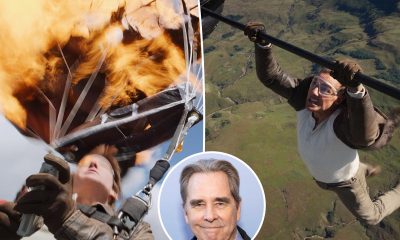

Beau Bridges says Tom Cruise ‘gets better with age’ as ‘Top Gun’ star keeps defying Hollywood odds
Tom Cruise’s “Jerry McGuire” costar Beau Bridges thinks the 63-year-old actor is getting better and better with age. “I really appreciated...


Jack Schlossberg wears grandfather John F. Kennedy’s tie for ‘good luck’
Jack Schlossberg was interviewed on Andy Cohen Live on Tuesday. Getty Images Jack Schlossberg brings a piece of his grandfather...


Heather Locklear says she lives ‘far away’ from Hollywood and stays out of the social scene
Heather Locklear is shedding light on her life outside of Hollywood’s inner circle. Locklear was a guest on the Hollywood & Devine...


Songwriter Talay Riley, who worked with Britney Spears, found dead at 35
Grammy-winning songwriter Talay Riley, who worked with Britney Spears and Dua Lipa, was found stabbed to death in London. He...


Matt Damon says Hollywood’s ‘ruthless’ nature has taken him away from fatherhood more than he’d like
After decades in the spotlight, Matt Damon is opening up about how Hollywood’s “ruthless” nature has impacted his most important...


Kim Kardashian, Alix Earle, and more
Celebs including Kim Kardashian, Alix Earle, and more touched down in Monaco for the F1 Grand Prix. See photos of...


Kate Middleton crosses paths with ex Rupert Finch at family wedding
Kate Middleton crossed paths with ex Rupert Finch at the weekend wedding of Peter Phillips and Harriet Sperling. Middleton and...


Tiger Woods set to leave rehab amid girlfriend Vanessa Trump’s cancer battle: report
Tiger Woods is heading home soon. The golf pro, who’s been holed up in a Switzerland treatment center following his...


Actor James Handy’s girlfriend’s son charged with murder
James Handy’s girlfriend’s son, Michael Gledhill, has officially been charged with one count of murder after the “Top Gun: Maverick”...
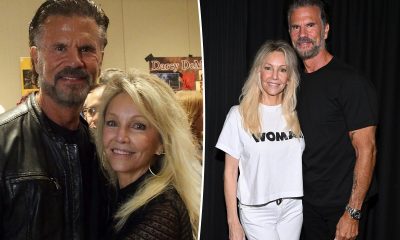

Heather Locklear speaks out about her romance with Lorenzo Lamas for the first time
Heather Locklear has spoken out about the new man in her life: Lorenzo Lamas. During an appearance on the “Hollywood & Divine”...


OnlyFans’ Lena the Plug blames identity theft for Adam22 divorce filing
Lena the Plug says she isn’t divorcing husband Adam22 and alleged that a mystery man has been filing court paperwork in...


Cara Delevingne admits she used party drug GHB daily before terrifying seizures forced her sober
Cara Delevingne pulled back the curtain on one of the darkest periods of her life. During a candid appearance on Alex...


How to watch Knicks vs. Spurs in Game 1 of NBA Finals for free
Page Six may be compensated and/or receive an affiliate commission if you click or buy through our links. Featured pricing...


Taylor Swift’s former friend Karlie Kloss scores wedding invite after rumored feud: report
Taylor Swift’s highly discussed guest list for her upcoming wedding will now apparently include one debated friend who reportedly was...


Jennifer Lopez drops her age-defying nighttime skincare routine
Page Six may be compensated and/or receive an affiliate commission if you click or buy through our links. Featured pricing...


Black Crowes singer Chris Robinson booed after mocking Florida fans’ ‘USA’ chant
Black Crowes singer Chris Robinson was booed after mocking fans for a “USA” chant at a Florida show — then...


How to watch ‘Love Island UK’ Season 13 live in the US: Time, cast
Page Six may be compensated and/or receive an affiliate commission if you click or buy through our links. Featured pricing...


‘Euphoria’ ending explained: Rue’s fate
Warning: Spoilers ahead! Do not proceed unless you’ve watched the Season 3 finale of Euphoria.” Move over, “Game of Thrones”...


How that viral ‘Off Campus’ Jennifer Lopez costume came together
Page Six may be compensated and/or receive an affiliate commission if you click or buy through our links. Featured pricing...


Tate McRae, Mindy Kaling, Jennifer Lopez, Olivia Rodrigo and more
Star snaps of the week: Tate McRae, Mindy Kaling, Jennifer Lopez, Olivia Rodrigo and more Kourtney Kardashian stocks up on...


Vanilla Ice defends Freedom 250 concert amid performer exodus
Vanilla Ice is standing by the Freedom 250 concert celebrating America’s milestone birthday after several performers pulled out this week,...


Pete Davidson praises Kim Kardashian in rare comments about his ex
The king of Staten Island has nothing but good things to say about the queen of the Kardashians. “Isn’t it...


Martina McBride quits Freedom 250 festival meant to celebrate America’s birthday
Country star Martina McBride has dropped out of the Freedom 250 concert series one day after it was announced, claiming...
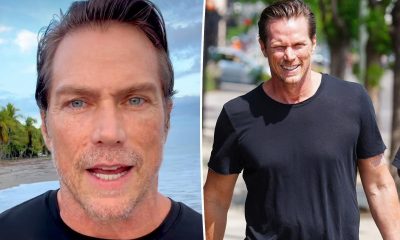

‘Sex and the City’ alum reveals surprising career move after coming out of hiding
And just like that, Jason Lewis is an author. The “Sex and the City” alum, 54, revealed he moved to...


Travis Kelce hints he and Taylor Swift are considering huge life change after highly anticipated wedding
Travis Kelce gave a sign that he and Taylor Swift are changing their last names after getting married. The NFL...


‘Summer House’ stars and more
That’s one way to mix fashion and technology. Celebrities like Maggie Gyllenhaal, Emma Roberts and Lourdes Leon stopped by Longchamp’s...
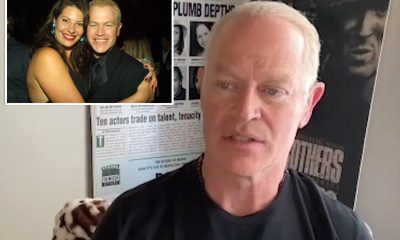

Neal McDonough says Hollywood labeled him a ‘religious nut,’ cost him his career and home
Neal McDonough is looking back on a dark moment in his life and career. During a recent interview with Fox News...


Paige DeSorbo declared this $30 Amazon cardigan ‘perfect’
Page Six may be compensated and/or receive an affiliate commission if you click or buy through our links. Featured pricing...


Hollywood icon Sally Field reminds a fractured nation of the brilliance of the Constitution
Actress Sally Field used a recent television appearance to praise the First Amendment, reflecting on the importance of free speech in...


Jennifer Lopez busts a move in lace-up jeans from 2001 ‘Ain’t It Funny’ music video
Jennifer Lopez is giving us nostalgia served hot! The pop star, 56, slipped into the exact same jeans she wore...
-
Entertainment2 weeks ago
Vrai makes the best lab-grown diamond earrings — just ask Taylor Swift
-

 Trending2 weeks ago
US marshal shot dead serving arrest warrant in Louisiana | US crime
-
Entertainment2 weeks ago
Zendaya wears angel wings at ‘The Odyssey’ NYC premiere
-

 Trending2 weeks ago
Gracie Abrams: Daughter From Hell Album Review
-

 News2 weeks ago
After a Billion Kilometres, China’s Asteroid Hunter Finally Arrives
-
 Trending2 weeks ago
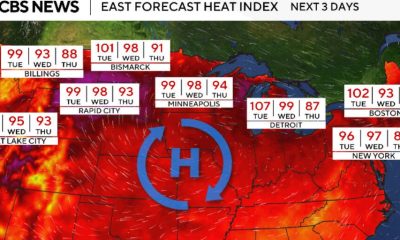
Maps show millions of Americans under heat alerts from extreme temperatures in Plains, Northeast
-
News2 weeks ago
Trump Pressures ICE to Resume Traffic Stops After They Were Halted Over Fatal Shootings
-

 News2 weeks ago
Consultant worked on $577,000 airport contract while advising Bass for free