
Trending
Ask the Developer Vol. 21: Tomodachi Life: Living the Dream — Part 1 – News

-
This article has been translated from the original Japanese content.
-
This interview was conducted before the game was released.
In this 21st volume of Ask the Developer, an interview series in which developers convey in their own words Nintendo’s thoughts about creating products and the unusual details they hone in on, we’re talking to the developers behind Tomodachi Life™: Living the Dream, a Nintendo Switch™ game that launches on Thursday, April 16, 2026.
Check out the rest of the interview
Part 1: Living beings with a will and personality
First, could you please briefly introduce yourselves?
Ryutaro Takahashi (referred to as Takahashi from this point on): Hello, I’m Ryutaro Takahashi. I’ve directed the Tomodachi Life series since its first installment, and continued to serve as the director for Tomodachi Life: Living the Dream.
Takaomi Ueno (referred to as Ueno from this point on): Hi, I’m Takaomi Ueno, one of the programming directors. I was previously involved in the development of Tomodachi Life (1) for Nintendo 3DS as the programming lead, and Miitopia (2) as the programming director.
(1) A Nintendo 3DS™ game released in April 2013 in Japan and June 2014 in North America and Europe. Players create original characters called Mii characters, which resemble themselves, their family, or other people close to them, place them on an island, and watch over them as they go about their lives.
(2) A Nintendo 3DS game released in December 2016 in Japan and July 2017 in North America and Europe. Players create a cast of their favorite Mii characters and adventure in a world filled with their acquaintances. A Nintendo Switch version was released in May 2021.
Naonori Ohnishi (referred to as Ohnishi from this point on): Hello, I’m Naonori Ohnishi. As another programming director, I collaborated with Ueno-san, while also serving as a member of the planning team. Before that, I was the programming director for the smart device app Miitomo (3), but this is my first time participating in the development of the Tomodachi Life series.
(3) A smart device application released in March 2016. Create a Mii character that looks like you and communicate with your friends. The service ended in May 2018.
Daisuke Kageyama (referred to as Kageyama from this point on): Hi, I’m Daisuke Kageyama, the art director. This is my third project as an art director, following Wii Sports Resort (4) and nintendogs + cats (5).
(4) Released in July 2009 on Wii™. Set on the tropical resort, Wuhu Island, the game offers 12 activities such as Swordplay and Air Sports.
(5) A Nintendo 3DS game released in February 2011 in Japan and March 2011 in North America and Europe. A simulation game in which you enjoy everyday life with puppies and kittens, playing with toys, going for walks, and training them.
Toru Minegishi (referred to as Minegishi from this point on): Hello, I’m Toru Minegishi. As the sound director for Tomodachi Life: Living the Dream, I organized the development of background music, sound effects, and Mii character voices, while also composing much of the background music myself. I’ve been involved in the sound development for series such as The Legend of Zelda and Splatoon, but this is my first time working on the Tomodachi Life series.
Thank you very much. Let’s kick things off with a brief introduction to the game from Takahashi-san.
Takahashi:Tomodachi Life is a series in which you and those around you, such as friends, family, or people you admire, live inside the game as Mii characters, as you take care of them and watch over their island life. While keeping faithful to the series’ style, we’ve rebuilt Tomodachi Life: Living the Dream from the ground up and developed it as an all-new, reborn Tomodachi Life.
So, what sparked development of this all-new Tomodachi Life game?
Takahashi: I believe development started around 2017, after things had settled down on Miitomo. The producer, Sakamoto-san (6), and I both have a special attachment to Tomodachi Life and have been playing the previous game on Nintendo 3DS for many years. But we’d already squeezed all we could out of that game, and Sakamoto-san said to me sadly, “There’s so much that I want my Mii characters to experience, but there’s nothing more that I can do for them.” (Laughs) So, we talked about our desire to create a new Tomodachi Life game.
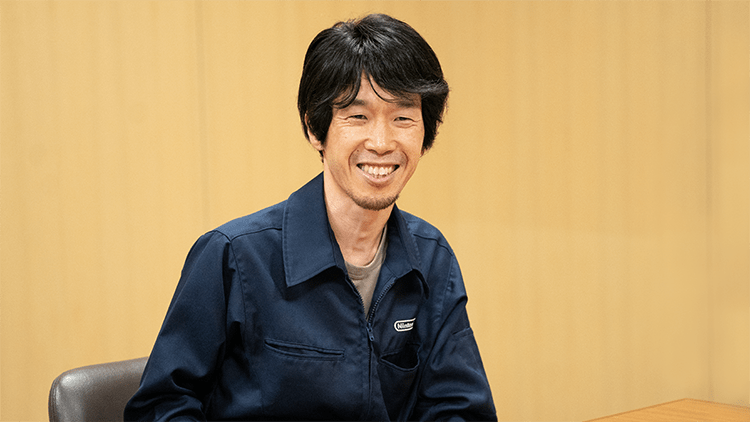
You sound just like a loving parent. (Laughs)
Takahashi: Yes, I know. (Laughs) That said, if we’d simply continued with the existing development style and added new items because we wanted them to experience new things, it would’ve inevitably turned into a quest for quantity. Besides, once players had seen everything the game had to offer, they’d have eventually tired of it again. So, we started development with the direction of leveraging user-generated content—also known as UGC—a system that allows players to create their own content to play with in the game. The concept of Tomodachi Life is to be “the ultimate inside joke game” that can be enjoyed among people who are close to each other or share things in common. We felt that UGC, which lets players create whatever they want, fit well with this concept. We thought that combining the gameplay provided by the development team with what players themselves create would open up infinite ways to enjoy the game.
Ueno: One thing that triggered the use of the UGC system was that the Mii characters’ sphere of influence had expanded from the previous game.

Now that the Mii characters could move around freely in a larger space, we wanted to take care of them in more ways.
Takahashi: The Nintendo 3DS version was also set on an island, but due to the processing power limitations of the time, we couldn’t give lots of Mii characters free rein of the island, as much as we’d have loved to. The increased power of Nintendo Switch allowed us to expand the Mii characters’ active environment, and we thought we could replicate a wider variety of inside jokes with UGC. So, in the early stages of development, we focused on verifying those two points.
I see. So, the hardware’s processing power impacts those areas. You’d think that more powerful hardware would also allow for more sophisticated graphics for the Mii characters. Was that considered?
Takahashi: When we decided to create a new Tomodachi Life game, we wanted to make Mii characters’ visuals more appealing, in line with the current generation of game consoles. But after adding all sorts of new elements to the Mii characters, something began to feel…off.
Kageyama: Normally, as hardware resolution increases, so too do the possibilities for character design. So Mii characters’ expressions have evolved little by little alongside technology. However, after speaking to the producer, Sakamoto-san, as well as Takahashi-san and the previous development team, it seemed to me that the Mii characters in Tomodachi Life are treated differently from those in other titles. The fact that they don’t see Mii characters as mere avatars, rather they pour affection into them as living beings, came through strongly. Since the characters are filled with the emotions of many people, I didn’t think we should randomly alter their design just because the resolution had increased. So, although we tried out a lot of new things, we decided against changing things that define Mii characters’ identities, such as their existing facial features and the shape of their limbs. With that in mind, we re-examined each part’s structure and design from the ground up to ensure that they wouldn’t feel outdated, even with today’s more advanced graphics. On top of that, by adding new custom features and increasing the level of freedom for players, we aimed to bring a sense of newness unique to this game.
Takahashi: We didn’t make any major changes to the part designs, but we did brush up the appearance of the Mii characters.
Kageyama: We updated their appearance based on a simple, anime-inspired toon-style, allowing players to immerse themselves in the drama between Mii characters in cutscenes, for example. As we were reviewing the toon-style, I heard that the direction matched what Sakamoto-san had envisaged for the first Tomodachi Life game, and I thought to myself, “Yes, nailed it!” In fact, the Mii characters on the packaging of the first game have more of a toon-style design, unlike how they look in the game.

Minegishi: We had a similar discussion about Mii characters’ voices too. By implementing a new text-to-speech engine for Nintendo Switch, the voice that serves as the basis for Mii characters is now very realistic, with a high level of accuracy and a human-like quality. However, if we express that realism too directly, it doesn’t sound like a Mii character anymore. So, I intentionally processed the voices to sound robotic. But I had a hard time finding the right balance. We wanted to preserve the existing Tomodachi Life feeling, while making suitable updates to adapt to the times. It was challenging to strike the perfect balance. However, I don’t think that was limited to the voice—it’s something every team has had to give a considerable amount of thought to throughout the project. There was a lot to consider in terms of adjusting the Mii characters’ movements, too.

Kageyama: I often discussed with the animation staff members as to whether it was too realistic.
Whenever movements look too realistic and cool, it stops being Mii-like. We shaped the Mii characters’ movements through trial and error―deliberately omitting the wind-up motions that usually serve to make movements appear smoother, and adding more bold, memorable movements.
So, making the character designs more elaborate, or voices and movements more realistic, in line with improved hardware performance, was actually creating a sense of inconsistency with the series?
Takahashi: That’s right. The development team had numerous discussions on this topic, pondering what makes Mii characters in Tomodachi Life unique.
Ueno: This goes not only for appearance, voice and movements, but also for actions. As the Mii characters became more capable, they started to come across as too mature. The opinion gradually emerged within the team that these characters—who were so cute in previous games—had started to feel a little off.
Takahashi: We were all like, “Hmm, it just doesn’t feel like a Mii.”
Ohnishi: We wanted them to be lovable characters that you can’t resist taking care of. (Laughs)
This desire to take care of them reminds me of the “loving parent” topic from earlier. Speaking of which, one of the game’s new features is the ability to pick up Mii characters. Was this idea there from the early stages of development?
Ueno: Picking up Mii characters was originally implemented as a debug (7) function. Since the setting has changed from an apartment block to an island with this installment, the Mii characters have much more space to move about in, making it more likely for them to stray apart. So, we added a function that let us relocate Mii characters by force so we could perform various tests. However, as we tested things out and observed how the Mii characters reacted, we started to get greedy, hoping for specific outcomes like, “It would be nice if these two characters played together.” (Laughs) So, we thought it would be more interesting if we made the ability to pick up characters an actual part of the game.
(7) The process of playing in-development games for quality assurance and investigating program issues.
Takahashi: In the previous game, even if you wished for certain Mii characters to get along with each other, all you could do was wait and hope.
It’s very intuitive and easy to understand. It seems to have ended up being an important aspect of this title. At what point did you decide to make it the essence of the gameplay?
Kageyama: It was in the latter half of development, wasn’t it?
Ohnishi: That’s right. We were able to implement the ability to pick up Mii characters, but for a long time we struggled to decide what would be exciting to see happen after you drop one Mii character next to another so they could meet.
Minegishi: We made prototypes of things like string telephones to let characters interact with each other. Players could offer characters advice, such as, “Why don’t you try discussing this over the string telephone?”
Takahashi: You could, like, choose advice from four different options. But that led to Mii characters just doing whatever the player told them to, and losing all sense of agency. The whole appeal of the game is that Mii characters act of their own accord, resulting in outcomes the player doesn’t expect. If the player forces a relationship, the game loses the element of genuine surprise, which is the series’ true charm.
Ueno: It didn’t feel right to have players dictating Mii characters’ actions, so we settled on letting them pick up characters and drop them wherever they like. But what happens after that is totally up to the character.
I see. So the degree of influence players have over Mii characters was seen as important.
Ueno: I just remembered something that left a strong impression on me during testing. One time, a character that was picked up and dropped next to another character didn’t interact with them—they just stood there, staring at them. Seeing that piqued my curiosity. I thought to myself, “Are they not interested in the other character? Or maybe they’re just hungry?” and so on. It reminded me that the real fun comes from not knowing what the Mii character is thinking, or what’s going to happen next.
Minegishi: Mii characters occasionally act the fool, don’t they? When the development team revisited what it means to be a Mii character in the context of Tomodachi Life, the description that resonated with us the most was “an innocent being, akin to an adorable child.”
Kageyama: If they make smart-aleck or witty remarks—even just a little—they don’t feel like Mii characters.
Takahashi: There are times when you can’t really tell what they’re thinking, or they’ll blurt out whatever’s on their mind. While having that kind of innocence, they’re not just childish. Sometimes they’ll come out with a surprisingly mature comment that hits you suddenly. We were conscious of putting this kind of depth into their characters. This sparks your imagination and makes you wonder, “What kind of reaction will I get if I show the character this?”
That’s true. Conversations between Mii characters can be a little spacey, and while it seems like they’re talking about the same topic, they also seem to be talking past each other. Yet they might suddenly make a very sharp comment that results in something unexpected. When I see things like that, I can’t help but smile.
Kageyama: The Mii characters aren’t grounded or logical, and that’s been important throughout the series. They’re just silly and eccentric. (Laughs)
Takahashi: Mii characters already serve a silly role, so if we also have them point out the absurdity of what other characters are saying, the joke begins and ends inside the game. That’s why we want players to take on that role. They’ve got to be the ones to say, “What are you on about?!” (Laughs)
Ohnishi: I think seeing the relationship diagram between Mii characters gives players another perfect opportunity to do this. You might see the relationship diagram of one Mii character saying, “I bet that character likes me,” only to find out the other character is actually thinking, “We’re so not compatible.” (Laughs)

Or while observing Mii characters wandering around freely, you might see some characters eating and chatting together at a restaurant. Watching good friends dine together is heartwarming, but sometimes you’ll get two characters who don’t get along sitting together and talking. The characters are doing the exact same thing—chatting in a restaurant—but this time you feel unsettled, and it stirs up the imagination in a completely different way. In this way, we deliberately refrained from over-organizing things, aiming to strike a balance that would allow unexpected things to happen.
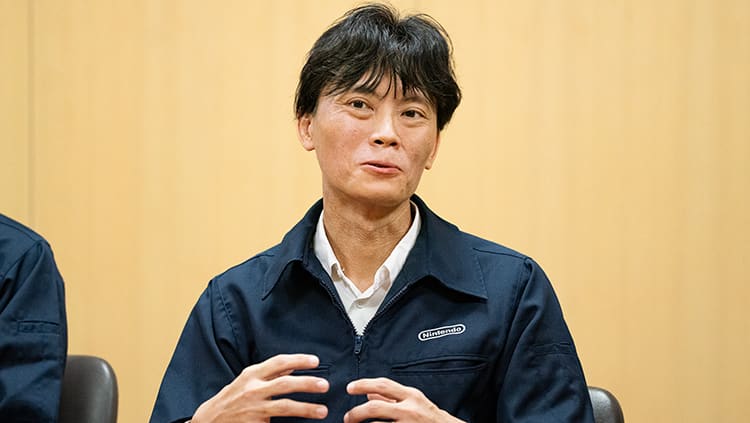
Takahashi: The Mii characters in Tomodachi Life are living beings that inhabit that world, with a will and personality.
Kageyama: What it means to be a Mii character in Tomodachi Life… The fun of observation because each character has their own personality… I think it was really important that the whole development team was aligned on these concepts from the beginning of development.

Trending
Oracle (ORCL) Stock Sinks As Market Gains: Here’s Why

In the latest close session, Oracle (ORCL) was down 1.44% at $244.58. The stock fell short of the S&P 500, which registered a gain of 0.13% for the day. On the other hand, the Dow registered a gain of 0.45%, and the technology-centric Nasdaq increased by 0.03%.
The stock of software maker has risen by 37.64% in the past month, leading the Computer and Technology sector’s gain of 11.37% and the S&P 500’s gain of 5.25%.
Analysts and investors alike will be keeping a close eye on the performance of Oracle in its upcoming earnings disclosure. The company’s earnings report is set to go public on June 10, 2026. On that day, Oracle is projected to report earnings of $1.96 per share, which would represent year-over-year growth of 15.29%. Meanwhile, our latest consensus estimate is calling for revenue of $19.09 billion, up 20.03% from the prior-year quarter.
In terms of the entire fiscal year, the Zacks Consensus Estimates predict earnings of $7.46 per share and a revenue of $67.22 billion, indicating changes of +23.71% and +17.11%, respectively, from the former year.
Investors should also take note of any recent adjustments to analyst estimates for Oracle. These revisions typically reflect the latest short-term business trends, which can change frequently. Hence, positive alterations in estimates signify analyst optimism regarding the business and profitability.
Our research demonstrates that these adjustments in estimates directly associate with imminent stock price performance. Investors can capitalize on this by using the Zacks Rank. This model considers these estimate changes and provides a simple, actionable rating system.
Ranging from #1 (Strong Buy) to #5 (Strong Sell), the Zacks Rank system has a proven, outside-audited track record of outperformance, with #1 stocks returning an average of +25% annually since 1988. Over the last 30 days, the Zacks Consensus EPS estimate has moved 0.01% lower. Oracle is currently a Zacks Rank #3 (Hold).
In terms of valuation, Oracle is presently being traded at a Forward P/E ratio of 31.06. This signifies a premium in comparison to the average Forward P/E of 16.76 for its industry.
It is also worth noting that ORCL currently has a PEG ratio of 1.8. This metric is used similarly to the famous P/E ratio, but the PEG ratio also takes into account the stock’s expected earnings growth rate. The Computer – Software was holding an average PEG ratio of 1.69 at yesterday’s closing price.
The Computer – Software industry is part of the Computer and Technology sector. This group has a Zacks Industry Rank of 158, putting it in the bottom 36% of all 250+ industries.
Trending
Recipients need to prove they work or volunteer – NBC4 Washington

Big changes are coming to a federal program that has been helping low-income families pay for food for generations.
The changes could mean millions of Americans will no longer receive Supplemental Nutrition Assistance Program (SNAP) benefits.
Starting Monday, June 1, the federal government will require certain people who receive SNAP benefits to show they are either working or volunteering for community services.
In D.C., more than 130,000 residents rely on SNAP benefits to feed their families. According to District officials, about 18,000 are at risk of losing those benefits as the Trump administration will begin enforcing work requirements Monday.
“We want to help people avoid losing benefits when that’s possible. And for that, there are three paths that we’re trying to create,” D.C. City Administrator Kevin Donahue said. “One is work requirements, so people work. That’s generally about 20 hours a week or 80 hours a month. One is work training. So they’re in a training program. Also, they have to do that about 80 hours a month or 20 hours a week. And the final one that’s very intriguing that other states have looked at is a volunteer program. You’re allowed to volunteer. The requirement for that is about eight hours a week. So it’s less than being in training or work.”
While the new requirements will affect millions of people across the country, most SNAP recipients will be exempt. Those covered by exemptions include:
- anyone under age 18, or age 65 or older
- residents with mental or physical health conditions, including pregnancy
- those who are already working 30 hours per week or already enrolled in school
- caregivers
While the requirements will take effect on June 1, recipients have three months to come into compliance, so nobody is in danger of losing benefits until sometime in September.
This isn’t the only big change for the millions of Americans who rely on assistance from the federal government; starting Jan. 1, 2027, Medicaid recipients will be held to similar work requirements. It’s estimated as many as 5 million Americans could lose their Medicaid coverage as a result.
Trending
Quiet start to the week; rain, heat, humidity return by this weekend
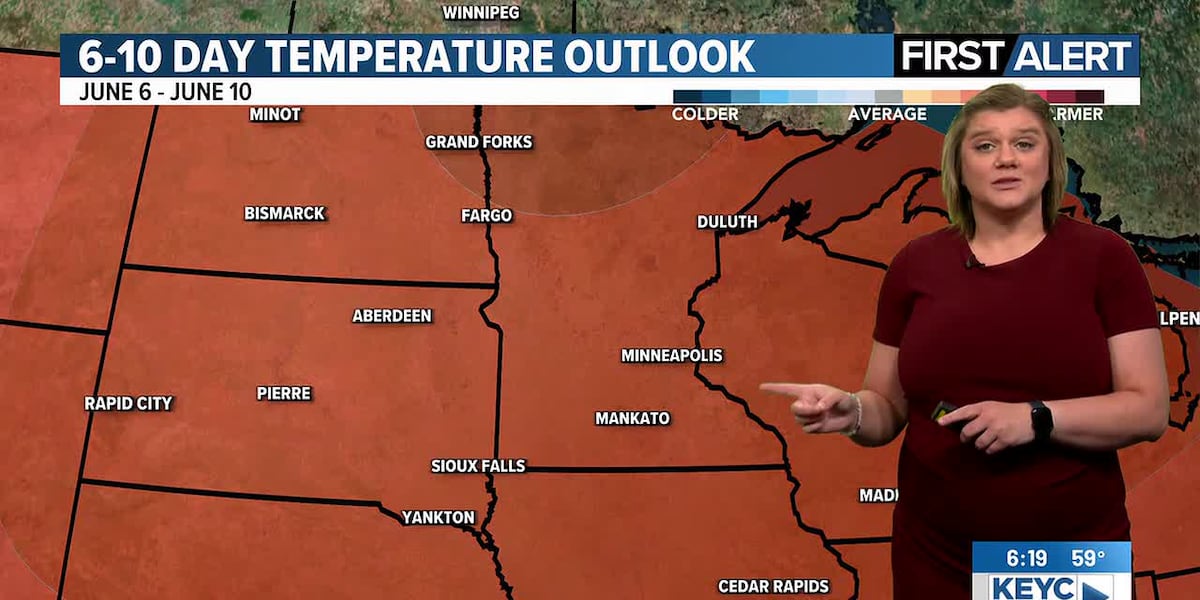
Conditions will be warm and quiet to kick off the work week before shower and thunderstorm chances ramp up bringing more heat and humidity back to the area by this weekend and next week.
Today and Tuesday will be on the quiet side with mostly sunny skies today and partly cloudy skies on Tuesday. Temperatures both days will hover in the low-80s across the area with relatively light winds averaging between 5 and 15 mph with occasional gusts up to 20 mph possible on Tuesday. Tuesday night will become mostly cloudy heading into Wednesday morning. Overnight temperatures will be comfortable, dropping into the upper-50s by Tuesday morning and by Wednesday morning.
Wednesday will then be mostly cloudy and warm as temperatures once again top out in the low-80s. Winds will be on the breezy side, hovering between 15 and 20 mph, gusts up to 30 mph possible. Showers and thunderstorms are projected to move into the area after midnight as temperatures start dropping into the mid-60s by Thursday morning.
From there, we are looking at scattered shower and thunderstorm chances throughout Thursday, Friday, and Saturday. Despite the cloudy skies and rain chances, temperatures over those three days will remain warm, topping out in the low-80s on Thursday and the mid-80s for Friday and Saturday. Winds through the three days will hover between 5 and 15 mph with occasional gusts up to 20 mph possible at times. Overnight temperatures are projected to drop into the mid-60s by the following mornings with showers and thunderstorms continuing on and off.
Rain chances are projected to wrap up throughout Saturday afternoon but isolated chances may remain in the forecast throughout Sunday. Once these rain chances taper off, humidity will ramp back up across the area along with temperatures. This will lead to hot and humid conditions with heat index values likely well into the 90s for nearly all of next week. It is important to remember to stay hydrated by drinking plenty of water and by taking breaks from the heat and sun by cooling off in air conditioned buildings. Remember that swimming, whether you’re in a pool or at the beach, is not staying hydrated or considered taking a break from the heat as you are still out in the hot and humid conditions in general.
Sunday will then be partly cloudy with a few isolated showers possible as temperatures hover in the upper-80s. With the humidity in the mix, it will likely feel more like the low to mid-90s across the area. Winds will bring a pleasant but warm breeze to the area, coming from the southeast between 10 and 15 mph, gusts up to 20 mph possible. Sunday night will remain partly cloudy as temperatures drop into the upper-60s by Monday morning.
Monday will basically be a repeat of Sunday with partly cloudy skies, highs in the upper-80s, and heat index values likely in the low to mid-90s. Winds will also be pleasant but warm, coming from the southeast between 10 and 15 mph, gusts up to 20 mph at times possible. Monday night will gradually become mostly clear as temperatures drop into the upper-60s and low-70s by Tuesday morning.
Tuesday and Wednesday will be the hottest days of next week so far. We are looking at highs in the upper-80s and low-90s with heat index values likely in the mid, possibly upper-90s across the area. Winds will be light from the south, southeast between 5 and 15 mph. Overnight conditions are expected to remain mostly clear and quiet as temperatures drop into the low-70s by the following mornings.
Click here to download the KEYC News Now app or our KEYC First Alert weather app.
Copyright 2026 KEYC. All rights reserved.



Oracle (ORCL) Stock Sinks As Market Gains: Here’s Why
In the latest close session, Oracle (ORCL) was down 1.44% at $244.58. The stock fell short of the S&P 500,...


Blue Origin Issues Official Statement on New Glenn Explosion
On May 28th, at Launch Complex-36 A (LC-36A), located at the Cape Canaveral Space Force Station (CCSFS) in Florida, Blue...


Recipients need to prove they work or volunteer – NBC4 Washington
Big changes are coming to a federal program that has been helping low-income families pay for food for generations. The...


Taylor Swift’s former friend Karlie Kloss scores wedding invite after rumored feud: report
Taylor Swift’s highly discussed guest list for her upcoming wedding will now apparently include one debated friend who reportedly was...

Quiet start to the week; rain, heat, humidity return by this weekend
Conditions will be warm and quiet to kick off the work week before shower and thunderstorm chances ramp up bringing...


Actor Nick Pasqual sentenced to 32 years to life for brutal stabbing
Nick Pasqual, an actor who appeared in “How I Met Your Mother,” has been sentenced to 32 years to life...


Jennifer Lopez drops her age-defying nighttime skincare routine
Page Six may be compensated and/or receive an affiliate commission if you click or buy through our links. Featured pricing...


International Friendly LIVE: Wales vs Ghana – score, TV coverage, radio commentary, text updates & match stats
Team news – Ampadu and Moore return as Wales make four changespublished at 19:04 BST 19:04 BST Wales v Ghana...
Iran War Live Updates: Israel Strikes Southern Lebanon After Pulling Back From Threat to Beirut
Under pressure from President Trump, Prime Minister Benjamin Netanyahu of Israel held off from attacking Beirut. But he vowed to...


Stripping U.S. citizenship for some is harder than Trump vowed : NPR
Illustration by Hanna Barczyk Stay up to date with our Politics newsletter, sent weekly. The Trump administration has vowed to...


Ceres’ Surface Is Much More Complex Than Previously Thought
The long, puzzling dwarf planet Ceres, in reality the first named asteroid, has surface features that are much more complex...


Black Crowes singer Chris Robinson booed after mocking Florida fans’ ‘USA’ chant
Black Crowes singer Chris Robinson was booed after mocking fans for a “USA” chant at a Florida show — then...


Dallas police search for missing 9-year-old boy
Dallas Police Department Dallas police are searching for a missing 9-year-old boy last seen on Monday evening. Dallas PD said...


In-person voting in California: Your last-minute guide
To vote in person, Californians, you have until Tuesday at 8 p.m. to get to a voting center and cast...


Nancy Guthrie targeted by worker who knew of Savannah, expert says
NEWYou can now listen to Fox News articles! LAS VEGAS — A leading forensic scientist who spent decades with one...


How to watch ‘Love Island UK’ Season 13 live in the US: Time, cast
Page Six may be compensated and/or receive an affiliate commission if you click or buy through our links. Featured pricing...
What to Watch For in the NY Primary: Key Races and Why They Matter
Congressional primaries in Manhattan, Brooklyn and beyond could test the strength of Mayor Zohran Mamdani’s socialist movement and reverberate across...


Charli xcx New Album Reveals Title, Release Date, Scorsese on Cover
Charli xcx‘s new era is officially upon us. The “Brat” singer revealed on Monday that her seventh studio album is...


Longest-period young transiting exoplanets discovered
It’s 2234, you’re on your annual class field trip touring exoplanets, and your teacher informs everyone they can pick one...


University of Arizona’s school population is shrinking, but it’s on purpose
The University of Arizona is getting smaller — and school officials say that’s on purpose. The first-year class starting in...


‘Euphoria’ ending explained: Rue’s fate
Warning: Spoilers ahead! Do not proceed unless you’ve watched the Season 3 finale of Euphoria.” Move over, “Game of Thrones”...


California statewide voter guide: Insurance commissioner, controller and more
Much of California has been focused on the wild race to replace Gavin Newsom as governor. But voters will also...


Live score updates for Texas Tech softball vs UCLA in Women’s College World Series
OKLAHOMA CITY — The Texas Tech softball team needs to score a win over UCLA today to avoid elimination from...


Orioles beat Blue Jays behind ninth-inning comeback
BALTIMORE — The Orioles have a belief they can win any game. They’ve said it. They’ve shown it. But at...
China’s Rise in Drug Development Looms Over U.S.
Clinical trials in China are getting attention at an international oncology gathering in Chicago. China’s surging biotechnology industry is fueling...


How that viral ‘Off Campus’ Jennifer Lopez costume came together
Page Six may be compensated and/or receive an affiliate commission if you click or buy through our links. Featured pricing...


NA ŻYWO: Iga Świątek – Marta Kostiuk w Roland Garros! Relacja i wynik live
Czterokrotna triumfatorka paryskiego Szlema imponuje od początku tegorocznej edycji. Świątek przeszła przez pierwsze trzy rundy bez straty seta, pewnie pokonując...


Lasers at the Lunar Poles Could Help Astronauts Navigate
A team of scientists is exploring ways to use dark craters at the lunar poles as sites for ultrastable lasers...


The Yankees are playing a dangerous game with Ryan Weathers
--> Ryan Weathers has not been the Yankees‘ best starting pitcher this season, but he’s arguably been the biggest surprise....


Tate McRae, Mindy Kaling, Jennifer Lopez, Olivia Rodrigo and more
Star snaps of the week: Tate McRae, Mindy Kaling, Jennifer Lopez, Olivia Rodrigo and more Kourtney Kardashian stocks up on...


Hollywood Walk of Fame killing: Family demands justice
The family of a Hollywood man is demanding justice after their loved one was attacked by a dog, beaten and...


Marlins At Mets: Bobby V And Mazzilli Enter The Mets Hall Of Fame On Saturday, With Beltrán To Follow In September
NEW YORK — The Miami Marlins (26-31) arrive at Citi Field on Friday for three games against the New York...
As Trump Mulls Decision About Iran War Deal, a Restive Middle East Waits to Hear
The president has wavered on whether to move ahead with an agreement with Iran to end the war. On Friday,...


WWE News, AEW News, Pro Wrestling Backstage News
Ric Flair alleges trademark infringement. On social media, Ric Flair said that someone is using his “Flair” trademark. He warned...


Vanilla Ice defends Freedom 250 concert amid performer exodus
Vanilla Ice is standing by the Freedom 250 concert celebrating America’s milestone birthday after several performers pulled out this week,...


MAVEN Spacecraft Finds New Plasma Squeezing at Mars
A cloaked alien invasion force is approaching Earth and coming up on Mars. The first officer looks through a viewfinder...


Backrooms Actor Avan Jogia Wants to Bring You Into His World
After two decades in the entertainment industry, Avan Jogia has definitely learned a thing or two. Getting his start in...


Pleas and political attacks fill the home stretch of California governor’s race
The top candidates for California governor crisscrossed the state Friday, all venturing to friendly political territory to woo voters and...


Pete Davidson praises Kim Kardashian in rare comments about his ex
The king of Staten Island has nothing but good things to say about the queen of the Kardashians. “Isn’t it...


WNBA betting preview: Why the Sparks-Mystics total is the play with Kelsey Plum sidelined tonight
Lost in the shuffle of the NHL and NBA Playoffs, and MLB labor talks is the fact that the WNBA...
Is Spencer Pratt for Real?
The former reality star’s dark visions of Los Angeles are resonating in a heated mayoral race, even if they’re far...


Boulder police use Flock to illegally surveil people, lawsuit alleges
The Boulder Police Department uses its fleet of Flock cameras to illegally surveil people without any probable cause, a class-action...


Martina McBride quits Freedom 250 festival meant to celebrate America’s birthday
Country star Martina McBride has dropped out of the Freedom 250 concert series one day after it was announced, claiming...


Man arrested for threats to kill Erika Kirk ahead of Turning Point USA event in San Antonio, affidavit says
SAN ANTONIO – A San Antonio man was arrested early Thursday after he was accused of threatening to kill Erika...


JWST Studies a Dark and Airless Super-Earth
There’s a planet out there called LHS 3844 b, orbiting a star about 48 light-years away. The Transiting Exoplanet Survey...


Lakers have two reasons not to pursue Thunder guard Lu Dort this summer
--> The Los Angeles Lakers will be on the prowl this offseason for the type of 3-and-D prowess that Luguentz...


Perris skydiving accident leaves one dead, one in critical condition
One person was killed and another was in critical condition following a skydiving accident in Perris on Thursday afternoon, authorities...


‘Sex and the City’ alum reveals surprising career move after coming out of hiding
And just like that, Jason Lewis is an author. The “Sex and the City” alum, 54, revealed he moved to...


ATP French Open Best Bets Including Stefanos Tsitsipas vs Matteo Arnaldi
The French Open second round on May 28 features several intriguing matchups between rising talents and experienced clay-court players. Adolfo...
Iran War Live Updates: U.S. and Iran Trade Strikes, Further Threatening Negotiations
The U.S. military said Iran had launched a ballistic missile toward Kuwait. Iran’s Revolutionary Guards said it had targeted an...


Champions League final: Why Paris St-Germain could have edge over Arsenal
Some of the numbers for individual players are eye-catching. Les Parisiens’ club captain Marquinhos has started 14 of those European...


Travis Kelce hints he and Taylor Swift are considering huge life change after highly anticipated wedding
Travis Kelce gave a sign that he and Taylor Swift are changing their last names after getting married. The NFL...


Astrophysical Calibration Could “Autotune” Gravitational Wave Detection
Ever since gravitational waves were first confirmed in 2017 by scientists at the Laser Interferometer Gravitational Wave Observatory (LIGO), over...
COMEDIAN JOSH JOHNSON TAKES ON HULK HOGAN, POLITICS EVOLVING INTO WWE AND MORE
COMEDIAN JOSH JOHNSON TAKES ON HULK HOGAN, POLITICS EVOLVING INTO WWE AND MORE By Mike Johnson on 2026-05-27 08:25:00 Comedian...


Late-season snow helps Mammoth Mountain extend skiing season
Following heavy April storms and recent low temperatures, Mammoth Mountain has extended its ski season through June 7. Mammoth Resorts...


Madison Beer Blushes While Getting Flirty With Justin Herbert As Chargers QB Crashes Pop Icon’s Live Q&A
A scene from Madison Beer’s concert soundcheck in Amsterdam for her “Locket Tour” went viral on X on Tuesday. While...


‘Summer House’ stars and more
That’s one way to mix fashion and technology. Celebrities like Maggie Gyllenhaal, Emma Roberts and Lourdes Leon stopped by Longchamp’s...
Uganda Closes Border With Congo Over Ebola Fears
Ebola response teams and a few others are exempt and will undergo “strict health screening,” a top Ugandan official said.


Vaibhav Sooryavanshi’s cool approach leaves Dasun Shanaka impressed: Haven’t seen a kid like that
At just 15, Vaibhav Sooryavanshi has already become one of the biggest stories of IPL 2026. His fearless six-hitting and...


NASA TESS Reveals Epic All-Sky Map of Distant Worlds
You’re on a camping trip with your family and your parents tell you to turn off all the lights. But,...


Houston weather: Storms possible overnight, Severe Thunderstorm Watch
HOUSTON – A Severe Thunderstorm Watch is in effect until 5 a.m. Wednesday for several Southeast Texas counties. The areas...


Neal McDonough says Hollywood labeled him a ‘religious nut,’ cost him his career and home
Neal McDonough is looking back on a dark moment in his life and career. During a recent interview with Fox News...


Spurs’ Mitch Johnson Finishes Third in Coach of the Year Voting
--> OKLAHOMA CITY — Mitch Johnson was in the running for Coach of the Year in his first full season...


Trump administration sues UCLA, alleging antisemitic environment festered
The Trump administration on Tuesday sued the University of California, alleging that UCLA is “deliberately indifferent” to antisemitic harassment of...


French Open Predictions Including Auger-Aliassime vs Altmaier
The first round of the French Open concludes on Day 3 as 20 more men’s matches take the grounds of...


Paige DeSorbo declared this $30 Amazon cardigan ‘perfect’
Page Six may be compensated and/or receive an affiliate commission if you click or buy through our links. Featured pricing...
SpaceX IPO Filing Reveals Favorable Terms for Elon Musk
The ways it set up its board and Mr. Musk’s pay appear to benefit him at the expense of other...


Here’s Why Micron (MU) is Among the 15 High Growth Stocks to Buy and Hold for the Next Decade
Micron Technology, Inc. (NASDAQ:MU) is one of the 15 High Growth Stocks to Buy and Hold for the Next Decade....


How Mars Can Help Us Understand ‘Marginal’ Exoplanets
Mars holds a special place in the Solar System. It represents marginal habitability. This means it transitioned from warm and...


Hollywood icon Sally Field reminds a fractured nation of the brilliance of the Constitution
Actress Sally Field used a recent television appearance to praise the First Amendment, reflecting on the importance of free speech in...


Charles Barkley gets into hysterical back-and-forth with Knicks star OG Anunoby about his ‘real name’
New York Knicks star OG Anunoby spoke with the “Inside the NBA” crew following his team’s blowout victory over the...


Southern California should get more of its water locally, groups say
A coalition of conservation groups wants Southern California to get 85% of its water locally, up from the 50% it...


Aaron Judge RBI drought hits career-long 10 games
NEW YORK — When Ben Rice launched his 16th home run of the season earlier this week, grabbing a share...
Toshifumi Suzuki, Who Made 7-Eleven a Giant in Japan, Dies at 93
He spent four decades building the convenience store chain into a cornerstone of daily life.


Jennifer Lopez busts a move in lace-up jeans from 2001 ‘Ain’t It Funny’ music video
Jennifer Lopez is giving us nostalgia served hot! The pop star, 56, slipped into the exact same jeans she wore...


SeaWorld Orlando expands Expedition Odyssey with new Arctic adventure
If you need help with the Public File, call (407) 291-6000 At WKMG, we are committed to informing and delighting...


A Brief-ish History of SETI. Part VII: Brief Windows and Transcendence
Welcome back to our continuing series on the Brief-ish History of SETI. In our previous installments, we looked at the...


BTS fans pack Las Vegas Chinatown as Allegiant Stadium shows begin
LAS VEGAS (FOX5) — As hundreds of thousands of fans of K-Pop group BTS head into Las Vegas for Memorial...


‘Euphoria’ kills off Jacob Elordi’s Nate Jacobs
He’s not feeling euphoric. Warning: Spoilers ahead! Do not proceed unless you’ve watched “Euphoria’s” seventh episode of Season 3. “Euphoria”...


Potential crack on Garden Grove chemical tank, reducing explosion risk
With evacuation shelters reaching capacity as more than 40,000 people were asked to leave their homes, officials laboring to prevent...


James Harden, Carmelo Anthony & the AI-Powered Hollywood Pivot
James Harden has spent more than a decade as one of basketball’s most mercurial superstars — an MVP, multiple-time scoring...


Rocket League On Unreal Engine 6 Announced At Paris Major
During the ongoing 2026 Rocket League Championship Series Paris Major, Epic Games and Psyonix delivered on a major announcement they’d...
Kyiv, Ukraine, Hit in Russian Missile Attack
Buildings rattled in the Ukrainian capital for hours early Sunday. Russia launched an Oreshnik intermediate-range ballistic missile for only the...


Robert De Niro had no idea ‘Taxi Driver’ would become a classic
You talkin’ to him? Robert De Niro had no idea his 1976 film “Taxi Driver” would be lauded as a...


Sabalenka, Swiatek, Svitolina… qui pour succéder à Coco Gauff à Roland-Garros ?
En vous abonnant, vous accédezà la source de référence sur l’actu sportive.En vous abonnant, vous accédez à la source de...


SpaceX’s Next-Gen Starship Passes Its First Flight Test Despite Snags
SpaceX’s next-generation Starship V3 rocket got off to a glorious start for its first test flight, and although not all...


Knicks made a Donovan Mitchell adjustment the Cavaliers have no answer for
--> Of the many adjustments the New York Knicks made in Game 1 against the Cleveland Cavaliers, the decision to...


Laura Clery praises first responders after being crushed by fridge
Comedian and social media star Laura Clery praised the first responders who helped her after she was pinned beneath a...


How will the Orange County chemical crisis be resolved? Here is what we know
• The temperature inside the failing tank has risen to 90 degrees, up from 77 a day earlier. The boiling...


The St. Louis Cardinals have an emerging star in Jordan Walker
On this day, 24 years ago, Jordan Walker was born. Happy Birthday! Young by baseball standards, it feels like we’ve...
Iran and U.S. Officials Signal Progress as Cease-Fire Hangs in Balance
As people across the Middle East braced for the possibility of renewed fighting, officials from both sides said there were...


SVU Is Doubling Down on 1 Beloved Character in Season 28
Law & Order: SVU Season 28 is set to bring back a fan-favorite character. The showrunner recently teased a major...


Scarlett Johansson says ‘there is no work-life balance’ in candid interview
Scarlett Johansson has finally admitted that the idea of a good work-life balance does not exist. During an interview with CBS Sunday...


Mars Fungi Could Make Red Planet Regolith Fertile for Crops
You’re on the fourth human mission to Mars, and you’ve been tasked with establishing the first self-sustaining food crop on...


Portland’s CityFair opens Friday with fireworks, food and family fun
PORTLAND, Ore. (KATU) — CityFair kicks off Friday evening at Portland Waterfront Park. KATU is the new home of the...


‘Housewives’ star Erika Girardi settles $25-million civil lawsuit
Pop crooner and “Real Housewives of Beverly Hills” star Erika Girardi quietly put an end to a long and splashy...


Yankees vs. Rays odds, prediction, line, time: 2026 MLB picks for May 22 from proven model in Gerrit Cole’s return
Gerrit Cole will make his 2026 season debut when the New York Yankees battle the American League East Division-rival Tampa...


Miley Cyrus wears vintage Versace dress for Hollywood Walk of Fame Star ceremony
Miley Cyrus wore a vintage Atelier Versace gown for her Hollywood Walk of Fame Star ceremony. John Salangsang/Shutterstock From one...
Move Over, Private Equity. It’s Great to Be a Banker Again.
They played second fiddle to private equity and hedge funds for years, but 2026 is shaping up to be “the...


NBC, ABC & CBS Evening News Ratings Surprise: Who’s Viewership Is Up?
What To Know CBS Evening News was the only major evening newscast to see week-over-week gains. Despite these gains, CBS...


‘Supergirl’ actress Milly Alcock mocks critics, says a lot of them are Christian dads
New ‘Supergirl’ star Milly Alcock pushed back against online critics ahead of the film’s release, saying many of the people criticizing...


Blake Lively and Ryan Reynolds are $2M deep in contractor debt
Blake Lively and Ryan Reynolds are staring down more than $2.1 million in unpaid contractor debt tied to their sprawling...


‘Top Gun’ actor Miles Teller defends his reputation after self-imposed, decade-long media ban from ‘mishandled’ profile
Miles Teller attempted to reclaim a negative narrative after being labeled “kind of a d–k” more than one decade ago. The...


Blake Lively, Olivia Wilde, more celebrities at the Fendi Baguette Re-Edition party
In the words of Carrie Bradshaw: It’s not a bag, it’s a Baguette. In the years since it first hit...


Jon Stewart surprises Stephen Colbert with a surprise serenade from Andra Day
“The Daily Show” host Jon Stewart was one of Stephen Colbert’s final guests as “The Late Show” continues its final...


Meryl Streep and Martin Short prove romance is still going strong with London dinner date
It’s [not] complicated. Meryl Streep and Martin Short’s romance was proven to be still going strong after they were photographed...


John Travolta reacts to attention his viral Cannes beret looks have gotten
John Travolta explained his bold looks at the 2026 Cannes Film Festival, particularly, his choice to rock different colored berets....


Shakira gets massive 8-figure payout after acquittal in tax fraud case
Shakira has been acquitted in her tax fraud case after an “eight-year ordeal” — and she’s receiving a massive payout...


Shania Twain, Kacey Musgraves, more
Yee-haw! Country music’s biggest stars stepped out Sunday night for the 61st Academy of Country Music Awards. Hosted by Shania...


Julianne Moore slammed for saying she avoids movies with ‘explosions and guns’
Julianne Moore ruffled some feathers online after saying she doesn’t like movies with “explosions and guns.” During a recent interview...


Kevin Jonas shows off shocking shredded physique in gym video
Kevin Jonas’ wife, Danielle Jonas, is burnin’ up for his ripped new bod. Danielle shared video of Kevin, 38, working...


Taylor Swift and Travis Kelce enjoy dinner date in NYC
Taylor Swift and fiancé Travis Kelce were pictured enjoying a date night in New York City on Friday, ahead of...


Anna Wintour’s daughter Bee Shaffer and Franco Carrozzini split
Bee Shaffer and her husband, Francesco Carrozzini, have split after nearly eight years of marriage, Page Six can reveal. The...


Why stars are flocking back to ‘outdated’ TV dramas
Like vinyl, broadcast TV may be en vogue again. Amid Hollywood contraction, old-school network jobs are suddenly sought after —...


Kyle Richards says these under-$20 sunglasses are ‘giving Tom Ford’
Page Six may be compensated and/or receive an affiliate commission if you click or buy through our links. Featured pricing...


‘Squatters’ host Flash Shelton slams broken system that hands intruders the keys to your home
He thought it would be a simple call to law enforcement. Instead, when intruders took over his late father’s home...


Michael Che pulled out of Kevin Hart roast before shading white writers for racist jokes
Michael Che spoke out about the controversial jokes made on “The Roast of Kevin Hart” after pulling out of the...


‘The Americans’ star Matthew Rhys slams ‘out of control’ trend of playing videos out loud in public
Matthew Rhys is sounding off on the public behavior driving him “bananas.” “The Americans” star isn’t hiding his irritation with...


Meghan Markle pairs $63K diamond necklace with white T-shirt in new As Ever promo pics
Meghan Markle rocked a five-figure diamond necklace alongside a white tee in new As Ever promo pics, shared Monday. As...


‘Survivor’ host Jeff Probst’s brother dies
“Survivor” host Jeff Probst has lost a beloved member of his tribe. One of the television personality’s brothers, Brent, announced...


Tom Brady savagely drags Kevin Hart’s affair into revenge roast: ‘F–k it’
Tom Brady got his revenge on Kevin Hart during Sunday’s Netflix roast. The retired NFL player dragged the comedian’s 2017...


Return of the Jedi’ actor dead at 82
Michael Pennington, who had a role in “Star Wars: Episode VI: Return of the Jedi,” has died. The actor passed...


Justin Theroux’s unrecognizable ‘Devil Wears Prada 2’ role baffles viewers
One actor who appears in the new sequel to “The Devil Wears Prada” appears so unrecognizable in the film that...


Carrie Underwood responds to Nikki Glaser feud rumors
Carrie Underwood promises there is no bad blood between her and Nikki Glaser. Last month, online chatter revved up after...


‘Summer House’ star Ciara Miller accuses West Wilson of sleeping with ‘RHONJ’ alum Jennifer Fessler
Ciara Miller accused her ex West Wilson of sleeping with “Real Housewives of New Jersey” alum Jennifer Fessler after the...


Heidi Klum worried Anna Wintour wouldn’t approve her Met Gala 2026 prosthetics
Heidi Klum brought the Halloween spirit to her Met Gala look. Dressing as an actual marble statue — prosthetics and...


Jerry Seinfeld claims ‘Friends’ copied his sitcom ‘Seinfeld’
Jerry Seinfeld thew a little shade at “Friends” during at the 2026 Netflix Is a Joke Festival, claiming the show...


Kylie Jenner carries $63K blue Birkin to Knicks playoff game with Timothée Chalamet
She’s keeping up with the Knicks. Following Monday night’s Met Gala, Kylie Jenner and boyfriend Timothée Chalamet were once again...


Christina Ricci leaves shady comment on Katy Perry Met Gala photo
Christina Ricci left a savage — but succinct — comment on an Instagram carousel of pics featuring Katy Perry and...


Kylie Jenner describes ‘crazy’ mushrooms trip that left her in tears
Kylie Jenner once had a “crazy” magic mushroom trip — in public — that left her in tears. The “Kardashians”...


Blue Ivy ignores requests to remove sunglasses at Met Gala
Blue Ivy’s Met Gala debut didn’t go off quite as smoothly as it appeared, as dad Jay-Z seemingly pleaded with...


The real $60M winners from Blake Lively, Justin Baldoni’s career immolation — and whether either can ever come back
After 18 months of bare-knuckle brawling, Blake Lively and Justin Baldoni’s legal saga ended with a whimper. The two sides settled their claims...


Beyoncé is a sparkly skeleton on the Met Gala 2026 red carpet with Blue Ivy and Jay-Z
Beyoncé walked the Met Gala red carpet alongside Jay-Z and Blue Ivy Getty Images Beyoncé’s latest look is anything but...


Princess Eugenie reveals she’s pregnant with third child in return to Instagram
Princess Eugenie is pregnant! The royal shared she is pregnant with her and husband Jack Brooksbank’s third child on her...


Kylie Jenner, Timothée Chalamet join Kim Kardashian and mom Kris to see ‘The Fear of 13’ on Broadway
Timothée Chalamet and Kylie Jenner enjoyed a Broadway outing with her sister Kim Kardashian and her mom, Kris Jenner. The...


Charlize Theron says her daughters will have to earn jobs and their first car
Charlize Theron is making it clear her children won’t be growing up with a Hollywood safety net. During a candid conversation,...


Sharon Stone turns heads with ‘perfect’ unfiltered bikini pic at 68
A rolling Stone gathers no moss. Sharon Stone turned heads with a radiant and unfiltered bikini pic shared to her...


Zayn Malik cancels sellout US tour dates amid health struggles
Zayn Malik has shocked fans by announcing the cancellation of his latest sellout tour. In an announcement made on Friday,...


Tara Lipinski’s surrogate suffers ‘devastating loss’
Tara Lipinski revealed that her surrogate experienced a pregnancy loss while carrying her and husband Todd Kapostasy’s second child. “A few...


Author Cheryl Strayed reveals husband Brian Lindstrom has ‘serious, fatal illness’
Author Cheryl Strayed has revealed that her husband, filmmaker Brian Lindstrom, has been diagnosed with a “serious, fatal illness.” The...


Patriots QB Drake Maye finally breaks silence on Mike Vrabel, Dianna Russini photo scandal
New England Patriots quarterback Drake Maye has finally broken his silence on coach Mike Vrabel’s photo scandal with sports reporter...


Keke Palmer, Zara Larsson, Teyana Taylor and more
The Billboard Women in Music Awards 2026 took place in Los Angeles Wednesday night and honored Teyana Taylor with the...


What Rita Wilson told Tom Hanks after she was diagnosed with breast cancer
Rita Wilson told Tom Hanks after her breast cancer diagnosis in 2015 that if she were to die, she wanted...


King Charles’ personal gift to President Trump carries deep historical message
King Charles’ gift to President Donald Trump holds a deeply historical significance regarding relations between the US and the British...


Taylor Swift breaks cover for NYC dinner outing with dad Scott ahead of Travis Kelce wedding
Taylor Swift broke cover to have an outing with her dad, Scott Swift, and her best friend, Ashley Avignone, ahead...


Inside Demi Lovato’s celebration for her MSG show
Demi Lovato celebrated her sold out show at Madison Square Garden for her “It’s Not That Deep Tour” singing along...


Sally Field refused this iconic role, reveals it was never her ‘cup of tea’
Sally Field almost landed a role in one of the most iconic movies in history and is finally revealing why she ended...


Jennifer Lopez, 56, shows off washboard abs following early morning gym session
Jennifer Lopez is flaunting her impressive abs with sultry selfies. The 56-year-old entertainer posted pics of herself during an early...


Why Golden Globe-winning actress Ann Jillian quit Hollywood at her career peak
Ann Jillian went from a Disney child star to a ’80s sitcom favorite, even portraying her own battle with cancer...


Al Pacino and Beverly D’Angelo reunite for his 86th birthday
Al Pacino and Beverly D’Angelo may have split in 2004, but that didn’t stop them from celebrating the “Godfather” star’s...


‘Wicked’ star Marissa Bode claims she was denied boarding Southern Airways flight over her wheelchair
“Wicked” actress Marissa Bode claimed she was denied boarding her Southern Airways flight because she uses a wheelchair — and...


Kaia Gerber launches second Vuori workout wear collaboration
Page Six may be compensated and/or receive an affiliate commission if you click or buy through our links. Featured pricing...


Dianna Russini deletes X account
Diana Russini deleted her X account (formerly known as Twitter) as drama surrounding photos of herself with Patriots head coach...


Victoria and David Beckham don matching blue outfits for NYC dinner and more star snaps
Bethenny Frankel hits the beach, Dakota Johnson and Role Model keep close on a stroll and more snaps…


Ciara Miller and Maura Higgins join ‘Dancing With the Stars’ Season 35
“Dancing With the Stars” has officially been renewed for a 35th season this fall, with two reality stars heading up...


from Joey King to Kaia Gerber
Jacob Elordi doesn’t have much in common with his volatile character in “Euphoria” — aside from his success with the...


Mike Vrabel dodges questions about Dianna Russini’s resignation
Mike Vrabel dodged multiple questions off-camera pertaining to the Dianna Russini photo scandal following his lengthy statement on the matter....


Ted Danson says Bill Clinton grilled him about his ‘intentions’ with Mary Steenburgen using Secret Service
Ted Danson’s early romance with Mary Steenburgen included a high-stakes moment at the White House. Danson, 78, recalled an intense one-on-one with...


Aidan Quinn reveals why he’s really not in ‘Practical Magic 2’
“Practical Magic” star Aidan Quinn said he wasn’t asked to be part of the sequel. Quinn, 67, played detective Gary...


Jane Seymour continues her 75th birthday celebration with her ‘Dr. Quinn, Medicine Woman’ co-stars
Jane Seymour celebrated her 75th birthday with her former “Dr. Quinn, Medicine Woman” co-stars. Although the actress’ actual birthday is February 15,...


How Meghan Markle’s new candle line gives sweet nod to kids Prince Achie and Princess Lilibet
Meghan Markle’s new collection for her As Ever lifestyle brand includes candles inspired by her and Prince Harry’s children, Prince...


Nicole Kidman recalls learning of mom’s death at Venice Film Festival
Nicole Kidman is opening up about the day she found out her mother had died. The 58-year-old actress spoke at the...


Christina Applegate’s friends fearing the worst as ‘hellish’ details of star’s hospitalization are revealed: report
Christina Applegate’s friends are reportedly worried for the “Married … With Children” star following her recent hospitalization, fearing the worst...


‘Summer House’ stars Amanda Batula and West Wilson kiss, hold hands at Yankees game
Amanda Batula and West Wilson are continuing to put their romance on display. The couple was spotted kissing on live...


Which stars welcomed kids this year
Hollywood’s next generation is here! Page Six is rounding up the celebs who have given birth or adopted babies this...


Christina Applegate hospitalized amid MS battle: report
Christina Applegate is reportedly hospitalized in Los Angeles, according to a report from TMZ. The actress, 54, who has battled...


After Dianna Russini exit, Times staffers slam Athletic’s ‘reflexive’ response to Mike Vrabel photos
The Gray Lady is feeling a little exposed, it seems. Page Six hears that the Dianna Russini-Mike Vrabel scandal has...


‘Hunger Games’ actor arrested for assault with a deadly weapon, intent to kill
“Hunger Games” star Ethan Jamieson was arrested for allegedly assaulting three men with a deadly weapon with the intent to kill....


Katy Perry under investigation by Australian cops after Ruby Rose’s sexual assault allegation
Katy Perry is being investigated by Australian officials over Ruby Rose’s bombshell sexual assault allegation. “Melbourne Sexual Offenses and Child...


Dave Portnoy claims Dianna Russini’s resignation letter makes ‘zero sense’
Dave Portnoy says Dianna Russini’s resignation from the Athletic makes “zero sense” after the sports journalist’s letter announcing her exit...


Country star Ella Langley says ‘very scary’ Alabama church haunted house led to her getting ‘saved again’
Ella Langley is opening up about what it was like for her growing up in a small town as a Southern...


How to watch new ‘Boy Band Confidential’ docuseries for free
Page Six may be compensated and/or receive an affiliate commission if you click or buy through our links. Featured pricing...


‘I Dream of Jeannie’ star Barbara Eden turns heads at 94 in new photo with husband
Barbara Eden turned heads after sharing a new photo that left fans doing a double take. Eden, 94, stunned in a...


No Doubt guitarist Tom Dumont diagnosed with early-onset Parkinson’s disease
No Doubt guitarist Tom Dumont was diagnosed with early-onset Parkinson’s disease “a number of years ago.” The musician shared the...


Sabrina Carpenter apologizes for mistaking fan’s cultural chant with yodeling in awkward Coachella moment
Sabrina Carpenter delivered an apology after she misidentified a fan’s celebratory Arabic call as “yodeling” during her Coachella headlining set...


‘Love on the Spectrum’ stars Abbey Romeo and David Isaacman break silence after split
“Love on the Spectrum” stars Abbey Romeo and David Isaacman have confirmed their split. “Abbey and David spent four and...


Charli D’Amelio, Madelyn Cline, Alix Earle and more
Celebrities braved the threat of dust storms and rain to flock to the desert once again for the 25th edition...


How ex-Prince Andrew is dividing royal family as his two surprising allies are revealed
Princess Anne and Prince Edward are Andrew Mountbatten-Windsor’s remaining allies. The disgraced royal’s siblings have reportedly still been in contact...


Natasha Lyonne attends NYC movie premiere days after being removed from Delta flight
Natasha Lyonne resurfaced at the NYC premiere of “Lorne” just days after she was booted from a Delta Airlines flight....


Cardi B and Stefon Diggs spark reconciliation rumors 2 months after split
She likes it like that. Cardi B and Stefon Diggs sparked reconciliation buzz after the athlete attended his ex’s Little...


‘The Pitt’ star cries as he reveals show helped pay off $80K debt
Patrick Ball broke down in tears while revealing how his role on “The Pitt” paid off his college debt. Ball...


Rod Stewart wife Penny Lancaster says she deserves a medal for marriage to rock legend
After 26 years of partnership and 18 years of marriage to Rod Stewart, Penny Lancaster says she deserves a medal. In a...


Catherine O’Hara ‘wasn’t talking much’ before her tragic death at age 71
Catherine O’Hara’s brother is opening up about the “Schitt’s Creek” star’s final days. On Sunday’s episode of his “Dreams of...


‘Brady Bunch’ star Mike Lookinland says he went ‘fully off the rails’ in his 20s after growing up on hit show
“Brady Bunch” star Mike Lookinland admitted his behavior was “fully off the rails” after finding mega stardom with “The Brady...


Savannah Guthrie returns to ‘Today’ after absence as search continues for missing mom Nancy
Savannah Guthrie returns to the “Today” show after more than two months as the search for her missing mother, Nancy...


Meghan Markle shares a peep at Prince Archie and Princess Lilibet’s Easter festivities
Meghan Markle took to social media on Easter Sunday to share a series of adorable glimpses of her kids enjoying...


Iconic ’90s TV star unrecognizable in sequin skirt and blond wig for new role
David Duchovny looked unrecognizable as he stepped out in a sequin skirt and a blond wig for a forthcoming movie....


Carl Radke and Lindsay Hubbard reunite for Uber Eats
“Summer House” stars Carl Radke and Lindsay Hubbard met up for an emotional reunion while indulging in Uber Eats. The...


Taylor Frankie Paul vacations with her older kids amid Ever custody dispute, domestic violence scandal
Taylor Frankie Paul embarked on a family vacation with her two older kids — after losing temporary custody of her...


Paige DeSorbo, Hannah Berner show support for Ciara Miller after ‘Summer House’ betrayal
Paige DeSorbo and Hannah Berner are throwing their support behind their former “Summer House” co-star Ciara Miller after Amanda Batula...


Vanessa Trump breaks silence on boyfriend Tiger Woods’ DUI arrest
Vanessa Trump subtly addressed her boyfriend Tiger Woods’ DUI arrest via Instagram on Friday. “Love you,” she wrote on her...


Zendaya’s ‘The Drama’ NYC premiere gown is covered in 27 shades of ‘something blue’
And the bride wore something blue. Zendaya arrived at the New York City premiere of “The Drama” on Thursday night...


Jim Belushi’s Oregon ranch is his ‘spiritual’ sanctuary with sweat lodge, roaming cattle
Jim Belushi has it all: success in a decades-long career, legions of friends in high and low places, and a...


Brooks Nader and Taron Egerton kiss during LA date night
Brooks Nader and Taron Egerton once again couldn’t keep their hands off each other during a date night in Santa...


Roseanne Barr reveals heart issue, fears she’ll die during surgery
Roseanne Barr received a stark diagnosis — a “damaged” heart — a warning that left her fearing she could “die on...


Kendra Duggar hires lawyer as aunt urges divorce and parents break silence on Joseph arrest
Kendra Duggar reveals she hired her own lawyer in a jail call with husband Joseph as new details emerge in...


Amanda Peet exposes ‘desperation galore’ behind Hollywood fame
Amanda Peet is pulling back the threadbare curtain on life underneath the spotlight. The 54-year-old actress called out Hollywood as nothing...


Charlie Puth details his new album with Page Six Radio
Taylor Swift declared Charlie Puth should be a bigger artist, and now she’s in luck. The musician is releasing new...


Arnold Schwarzenegger’s look-alike son, Joseph Baena, wins first bodybuilding competition
Just call them twins. Arnold Schwarzenegger’s look-alike son Joseph Baena proved the apple doesn’t fall too far from the tree...


Kim Kardashian accused of heavily editing Khloé’s face in photos from Japan trip
Another Photoshop fail? Kim Kardashian was called out by fans for heavily editing her sister Khloé Kardashian’s face in new...
-
News1 week ago
Trump administration sues UCLA, alleging antisemitic environment festered
-
Trending2 weeks ago
Knicks made a Donovan Mitchell adjustment the Cavaliers have no answer for
-
Trending1 week ago
Spurs’ Mitch Johnson Finishes Third in Coach of the Year Voting
-

 Trending2 weeks ago
‘Lee Cronin’s The Mummy’ Comes to Digital, But When Will ‘The Mummy’ 2026 Be Streaming Free on HBO Max?
-
Trending2 weeks ago
The St. Louis Cardinals have an emerging star in Jordan Walker
-

 Trending2 weeks ago
David Bednar blows save in ninth as Yankees lose to Mets
-

 Trending2 weeks ago
How to watch Giants vs. Athletics
-
News6 days ago
Iran War Live Updates: U.S. and Iran Trade Strikes, Further Threatening Negotiations